Wet carpet that dries slowly is more than an inconvenience, it is an invitation for mold, mildew, and a musty smell that lingers for weeks. A carpet dryer, also known as an air mover, blasts a focused stream of air across and under the carpet to slash drying time from days to hours. Whether you just steam-cleaned the living room or you are recovering from a small leak, the right air mover and a little technique can mean the difference between a clean, dry floor and a costly mold problem.
What a Carpet Dryer Is
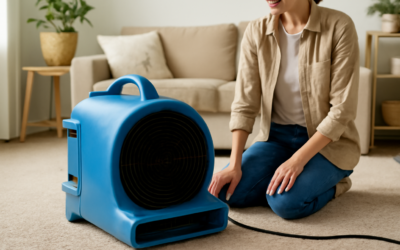
A carpet dryer is a compact, powerful fan engineered to push a high volume of air at a low angle across a surface. Unlike a household box fan that stirs the room generally, an air mover concentrates airflow right at the carpet, accelerating evaporation where the moisture actually sits. Many models can be tilted to different angles or laid on their side to direct air precisely.
The science is simple. Moving air sweeps away the saturated layer of humid air clinging to the wet fibers, allowing fresh, drier air to take its place and pull more moisture out. Keep that exchange going and the carpet dries far faster than it would on its own.
Types of Air Movers
There are a few common designs, each suited to different jobs:
- Centrifugal (snail) air movers: The classic squat, drum-shaped units that deliver strong, focused airflow. Great for general carpet drying.
- Axial air movers: Larger fan-style units that move huge volumes of air over a bigger area, useful for whole rooms and flood recovery.
- Low-profile movers: Slim units that slide partly under furniture or direct air at a very low angle for under-edge drying.
For most homeowners cleaning a room or two, a single centrifugal air mover handles the job. Larger losses or open floor plans benefit from axial units or multiple movers working together.
When to Use One
Reach for a carpet dryer any time the carpet is wetter than a light surface dampness. Typical situations include:
- After deep cleaning or steam extraction, to finish drying quickly
- Following a spill, overflow, or appliance leak
- After a minor flood once standing water is extracted
- In damp basements where carpet stays cool and slow to dry
Speed matters because mold can begin to grow within 24 to 48 hours on damp materials. The faster you get the carpet and its padding dry, the lower the risk.
How to Position the Dryer
Placement makes a big difference. Aim the air mover so it sweeps across the surface at a low angle rather than blowing straight down, which just pushes air into the carpet without moving the humid layer. For best results:
- Extract or blot as much water as possible first; air movers dry, they do not remove standing water.
- Set the mover at a corner or edge and angle it to push air across the whole wet area.
- For larger rooms, use multiple units arranged to create a circular airflow pattern around the space.
- Lift carpet edges where possible to dry the padding and subfloor beneath.
- Reposition every few hours to target spots that are still damp.
Pair the air mover with a dehumidifier when you can. The fan moves moisture into the air, and the dehumidifier pulls it out of the room so it does not just resettle elsewhere.
Sizing and Power
Air movers are rated by airflow, measured in cubic feet per minute. Higher CFM means faster drying over a larger area. A single mid-range unit suits a typical bedroom or living room, while large spaces or serious water events need several units or a high-capacity axial model.
You can rent professional-grade air movers from a hardware or equipment rental store for roughly $20 to $40 a day, or buy a homeowner unit for $80 to $200. For occasional use, renting is economical; if you have a damp basement or recurring issues, owning one pays off.
Preventing Mold and Odor
Drying speed is your main defense against mold, but a few extra steps help. Make sure the padding and subfloor dry too, not just the carpet face, because trapped moisture underneath breeds mold and odor even when the surface feels dry. Check by lifting a corner or pressing a paper towel into the pad.
Keep air circulating and humidity low until everything is fully dry, then confirm with a moisture meter if you have one. If the carpet was contaminated by a sewage backup or sat wet for more than a couple of days, the padding may need replacement and professional remediation rather than just drying.
Safety and Smart Use
Air movers draw real power, so plug them into a properly rated outlet and avoid overloading a single circuit when running several units. Keep cords out of the wet zone and clear of foot traffic, and never run electrical equipment in standing water. If you smell a strong musty odor or see discoloration after drying, treat it as possible mold and address it promptly.
Used correctly, a carpet dryer is one of the most effective tools for protecting your floors and your indoor air. Extract the water, position the air mover at a low angle across the wet area, add a dehumidifier, and dry everything fully, and you can turn a wet-carpet emergency into a quick recovery.
Air Mover Versus a Regular Fan
It is tempting to grab the box fan from the closet, but a household fan is a poor substitute for a real air mover. A standard fan circulates air broadly around the room rather than concentrating a strong stream right at the wet surface, so it moves far less air where it counts and dries carpet much more slowly. That extra time is exactly the window in which mold takes hold.
An air mover is engineered to push a high volume of air at a low angle, sweeping the humid layer off the fibers efficiently. In a pinch a box fan is better than nothing and can help finish a lightly damp area, but for any real water event, a purpose-built air mover dries the floor in a fraction of the time and gives mold far less opportunity to develop.
Knowing When the Carpet Is Truly Dry
Surface dryness fools people. The carpet face can feel dry to the touch while the padding and subfloor underneath stay saturated, which is where odor and mold begin. Lift a corner and press a paper towel firmly into the pad; if it picks up moisture, keep drying. A handheld moisture meter gives a more definitive reading and is worth owning if you have a damp-prone area.
Trust verification over assumption, and keep the air mover and dehumidifier running until everything reads dry, not just the top layer. Rushing to call it done is the most common mistake, and it is the one most likely to leave you with a musty smell weeks later. A little extra drying time is cheap insurance against a far more expensive mold problem down the road.