Walk into any carpet showroom and you will see a wall of samples that look confusingly similar until you run your hand across them. The difference between a stair runner that still looks new after ten years and one that mats down in eighteen months almost always comes down to carpet pile. Pile is the yarn surface you walk on, and the way that yarn is cut, twisted, and packed decides how your carpet wears, cleans, and feels underfoot.
- What Pile Actually Means
- Loop Pile: Durable and Textural
- Cut Pile Options: Plush, Saxony, Frieze
- Berber: A Category of Its Own
- Cut and Loop Patterns
- Choosing Pile Height for the Room
- Fiber Choice Drives Wear
- Padding and Installation Affect Pile Life
- Maintaining the Pile You Chose
- Sampling Before You Buy
What Pile Actually Means
Pile refers to the upright fibers tufted into the carpet backing. Every broadloom roll is built from loops of yarn punched through a primary backing, then either left looped or sheared open to create tufts. Two numbers matter most: pile height, measured in inches from backing to tip, and face weight, measured in ounces per square yard. A plush bedroom carpet might run 0.75 inch tall at 50 oz face weight, while a commercial loop might be 0.18 inch at 26 oz.
Density is the quieter specification that separates good carpet from disappointing carpet. Bend a sample backward. If you see a lot of backing through the yarn, fibers are thin on the ground and the carpet will mat quickly under foot traffic.
Loop Pile: Durable and Textural
Loop pile keeps the yarn uncut, so each fiber has both ends anchored in the backing. This construction resists crushing and hides footprints, which is why you see it in hotels, offices, and family rooms with big dogs. Level loop uses equal-height loops for a clean, tailored look. Multi-level loop mixes heights to sculpt pattern into the surface.
The tradeoff is texture. Loop pile feels firmer under bare feet and catches pet claws if you have cats or large dogs that like to stretch. Look for loops tufted into woven polypropylene backing for the best longevity.
Cut Pile Options: Plush, Saxony, Frieze
When loops are sheared, you get cut pile, which feels softer and more formal. Three cuts dominate the market.
- Plush (velvet): short, dense, smooth tips. Shows vacuum tracks and footprints. Best in low-traffic bedrooms.
- Saxony: slightly longer tufts, twisted and heat-set so the tips stand up. Elegant in formal living rooms but reveals wear patterns along hallway tracks.
- Frieze (pronounced free-zay): highly twisted yarn that kinks and tumbles. The irregular surface camouflages crumbs, pet hair, and traffic marks beautifully.
Frieze has become the modern favorite for whole-house installs because it wears well without the rigid look of a commercial loop.
Berber: A Category of Its Own
Berber started as a nickname for thick, flecked loop pile inspired by hand-woven rugs from North Africa. Today most Berber carpet is machine-tufted from olefin, nylon, or wool in chunky level loops. The distinctive color flecks hide soil between vacuum sessions and the tight loop structure stands up to toy cars, desk chairs, and stair use.
One caution: pulled snags on olefin Berber can run like a sweater. Trim snags flush with sharp scissors rather than yanking them.
Cut and Loop Patterns
Cut-and-loop combines sheared tufts with surrounding loops to sculpt pinstripes, grids, and floral motifs into the surface. The pattern gives you visual interest without a printed design, and the varying heights help hide dirt. These styles work well in transitional spaces like home offices and dining rooms.
Choosing Pile Height for the Room
Pile height should match how you use the room. Use these ranges as a starting point:
- Stairs and hallways: 0.25 to 0.375 inch, loop or tight frieze. Low profile prevents tripping on nosings.
- Family rooms and offices: 0.375 to 0.5 inch frieze or cut-and-loop. Hides traffic, still feels soft.
- Bedrooms: 0.5 to 0.75 inch Saxony or plush. Luxury underfoot where wear is minimal.
- Closets and guest rooms: Any pile works; buy on budget.
Fiber Choice Drives Wear
Pile style is only half the equation. Solution-dyed nylon like Stainmaster PetProtect or Shaw Anso handles stains and heavy foot traffic the best and runs $4 to $7 per square foot installed. Polyester (PET, Triexta) feels softer and resists most household spills at $2.50 to $5 per square foot but crushes faster in hallways. Olefin is cheap and bleach-cleanable, ideal for basements. Wool remains the premium natural choice at $8 to $15 per square foot installed.
Padding and Installation Affect Pile Life
Even the best carpet pile fails over a cheap pad. Specify 6 to 8 pound rebond pad, 3/8 to 7/16 inch thick, under residential cut pile. Over radiant heat, drop to 5/16 inch memory pad to keep warmth moving up. Power-stretch installation, not knee-kickers alone, prevents the ripples that grind pile tips against each other and accelerate matting.
Maintaining the Pile You Chose
Vacuum twice a week with a height-adjustable beater bar, raising the brush for long pile so it grooms rather than scrubs. Rotate furniture an inch or two every few months to even out compression. Schedule hot-water extraction cleaning every 12 to 18 months and blot spills with a clean white cloth instead of rubbing, which splays fiber tips and creates permanent dull spots. Treat the pile gently and even budget cut-pile carpet can deliver a solid decade of service.
Sampling Before You Buy
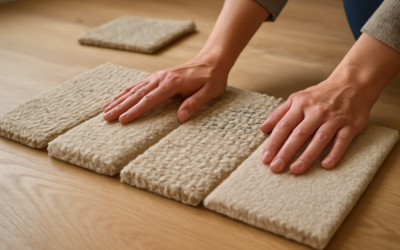
Take home at least four full-size samples and live with them for a week. View each sample in morning light, afternoon sun, and lamplight, and on the actual floor rather than held up against a wall. Walk across the samples barefoot and in shoes. Spill a drop of coffee on the edge of a sample you already like and watch how it releases. A twenty-dollar sample investment prevents a three-thousand-dollar regret, and the carpet pile style that looked perfect in the showroom often reads differently once it comes home.