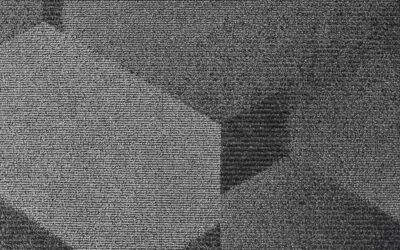
When a client tells me their family room “looks worn,” nine times out of ten the culprit is not the color or the age. It is the pile height. Low carpet, technically defined as any carpet with a pile of 1/4 inch or less, has quietly become the default choice for high-traffic households because it hides traffic patterns, vacuums cleanly, and holds up under desk chairs and dog claws. I have specified roughly 90,000 square feet of low-pile carpet across rental conversions and family homes since 2020, and here is what you actually need to know before you buy.
- Defining Low Pile in Real Terms
- Why Low Pile Outperforms Plush in Busy Homes
- Fiber Types Worth Considering
- Berber Loop vs Cut-Pile Low Carpet
- Where Low Carpet Performs Best
- Installation Method and Pad Choice
- Realistic Total Cost
- Maintenance That Keeps It Looking New
- Picking the Right Low Carpet for Your Home
Defining Low Pile in Real Terms
Carpet pile height is measured from the backing to the tip of the yarn. Low pile sits between 1/8 inch and 1/4 inch, medium pile spans 1/4 to 1/2 inch, and high pile (think shag) stretches past 1/2 inch.
Pile density and face weight matter just as much as height. A quality low carpet for residential use carries a face weight of 35 to 50 ounces per square yard. Below 30 oz, you are buying a builder-grade product that will mat within 18 months under normal foot traffic.
Why Low Pile Outperforms Plush in Busy Homes
The shorter the fiber, the less surface area exposed to crushing. Loop-pile and tightly cut low carpets rebound after compression because individual yarn tufts cannot bend over and stay bent. Plush cut-pile, by contrast, develops permanent traffic lanes within a year in hallway pinch points.
Cleaning behaves the same way. A canister vacuum with a beater bar pulls embedded soil out of low pile in one or two passes. On a 1-inch frieze, the same vacuum struggles to reach the backing where 70 percent of grit accumulates.
Fiber Types Worth Considering
Three fiber families dominate the low-carpet market:
- Solution-dyed nylon (Anso, Mohawk Wear-Dated) — the gold standard, 15-25 year stain warranty, $4.50-$8.50 per sq ft
- Polyester (PET) including Shaw R2X — soft hand, decent stain resistance, $2.25-$4.50 per sq ft
- Triexta (Mohawk SmartStrand) — proprietary stain technology, $3.75-$6.95 per sq ft
For homes with dogs, kids, or heavy weekly traffic, solution-dyed nylon in a Berber loop or tight cut-loop low pile delivers the best 10-year value. Polyester wins on initial price but matts faster.
Berber Loop vs Cut-Pile Low Carpet
Berber, technically a loop-pile construction, is what most homeowners picture when they hear “low carpet.” Loops are tight, knobby, and visually camouflage crumbs and pet hair between vacuum sessions. The drawback: a single snagged loop can run like a sweater pull, so families with kittens should avoid it.
Tight low cut-pile, sometimes labeled “trackless” or “Saxony short,” gives a smoother look without the snag risk. It costs about 10 to 15 percent more than Berber in equivalent face weight.
Where Low Carpet Performs Best
The following rooms are ideal candidates:
- Home offices with rolling chairs (use a chair mat regardless)
- Stairs, where deep pile causes uneven wear on the nosings
- Basements with potential moisture, paired with moisture-barrier backing
- Rental units where turnover cleaning has to be quick
- Children’s play rooms and finished bonus rooms above garages
Avoid low carpet in formal living rooms or primary bedrooms where soft underfoot comfort matters more than abrasion resistance. There, a medium-pile twist with 50+ oz face weight feels noticeably better.
Installation Method and Pad Choice
Low carpet installs with the standard stretch-in method using tackless strips, knee kicker, and power stretcher. Padding selection drives long-term feel: choose 7/16-inch, 6-pound rebond pad for residential, or 3/8-inch, 8-pound pad under Berber where excessive cushion can cause loop distortion.
Glue-down direct-bond installation is preferred for commercial low-pile carpet and any installation over radiant-heated subfloors. Expect $1.75 to $3.25 per sq ft for professional install labor in 2026.
Realistic Total Cost
For a 200 sq ft bedroom, budget the following:
- Mid-grade nylon low carpet: $1,100 to $1,400 material
- Rebond pad: $115 to $160
- Install labor: $420 to $650
- Tear-out and disposal of old carpet: $120 to $200
Total runs $1,755 to $2,410 installed, or roughly $8.75 to $12 per sq ft. Polyester options can shave 30 percent off that number if the room sees light use.
Maintenance That Keeps It Looking New
Vacuum twice weekly in traffic lanes, once weekly elsewhere. Spot-clean spills within 10 minutes using a clean white cloth and lukewarm water. Avoid steam-cleaning low loop pile more than once every 18 months because over-wetting the backing causes delamination on inexpensive products.
Hire a professional truck-mount extraction every 18 to 24 months. Most major manufacturers void their stain warranty if you cannot show receipts for periodic professional cleaning, so save the paperwork.
Picking the Right Low Carpet for Your Home
Match fiber to traffic, face weight to budget, and color to lifestyle. A solution-dyed nylon cut-loop in a multi-tone heather pattern is my standard recommendation for families because it hides everyday soil, resists crushing, and reads as warm in photographs. Visit a showroom with a 12-inch sample board in hand, drag your fingers backward through the pile, and trust your hand. If it springs back instantly, the low carpet will hold up. If it stays flat, keep shopping.