Cheap carpet in a busy hallway can look worn and matted within 18 months, while the right product still looks fresh after a decade. Heavy duty carpet is engineered to survive constant foot traffic, rolling chairs, pets, and kids without crushing, fraying, or showing wear paths. Whether you’re flooring a family room, a basement rec area, or a small office, choosing the correct fiber, construction, and rating saves you from replacing carpet twice. This guide explains exactly what makes carpet heavy duty and how to pick the right one.
- What Makes a Carpet "Heavy Duty"
- The Best Fibers for Durability
- Loop vs. Cut Pile Construction
- Understanding Durability Ratings
- The Pad Underneath Matters Too
- Where to Use Heavy Duty Carpet
- Carpet Tiles: The Modular Heavy-Duty Option
- Stain Resistance and Cleaning
- Reading the Warranty Fine Print
- Making the Right Choice
What Makes a Carpet “Heavy Duty”
Heavy duty isn’t a marketing term you should take at face value. It comes down to three measurable factors: fiber type, face weight, and twist. Face weight measures the ounces of yarn per square yard; anything at 40 ounces or higher is built for traffic, with 50 to 60 ounces qualifying as truly durable. Twist refers to how tightly the fibers are wound, rated on a scale where 5 or higher resists matting. Finally, density, how closely the tufts are packed, determines how well the carpet holds up underfoot. Dense, tightly twisted, high-face-weight carpet shrugs off wear that flattens budget products.
The Best Fibers for Durability
Fiber choice is the single biggest durability factor. Each material behaves differently under stress and stains.
- Nylon: The gold standard for high-traffic durability. It’s the most resilient fiber, springing back from compression better than any other, and modern solution-dyed nylon resists stains well. Expect $3 to $7 per square foot.
- Polyester (PET): Softer and stain-resistant, especially against acidic spills, but it crushes more easily than nylon, making it better for moderate traffic. Runs $1.50 to $4 per square foot.
- Olefin (polypropylene): Excellent moisture and stain resistance, which makes it popular for basements and outdoor-adjacent areas, but it matts under heavy foot traffic. Best in loop constructions. Costs $1 to $3 per square foot.
- Triexta (SmartStrand): A newer fiber with nylon-like resilience and built-in stain resistance, strong for homes with kids and pets. Around $3 to $6 per square foot.
Loop vs. Cut Pile Construction
How the fibers are looped or cut matters as much as the fiber itself. Loop-pile carpets, like Berber and level-loop commercial styles, are the toughest because the uncut loops resist crushing and hide wear. They’re the go-to for hallways, stairs, and offices. Cut-pile carpets feel softer and more luxurious but show traffic patterns and footprints sooner. A cut-and-loop hybrid splits the difference, using pattern to camouflage wear while keeping a plush feel. For genuine heavy-duty performance, a tight level-loop in nylon is hard to beat.
Understanding Durability Ratings
Manufacturers assign a PAR (Performance Appearance Rating) or a similar traffic rating from 1 to 5. For high-traffic residential areas, look for a rating of 3.5 or above; for commercial spaces, target a carpet rated for “heavy commercial” traffic. Carpet tiles designed for offices often carry an ASTM-tested wear rating and a warranty of 10 to 20 years specifically because they’re built for abuse. Always read the warranty’s fine print, since a long warranty paired with a low face weight is a red flag.
The Pad Underneath Matters Too
A common and costly mistake is pairing durable carpet with a cheap, thick pad. For heavy duty applications, you want a firm, dense pad rather than a soft, plush one. A high-density pad of 8-pound rating or more and no thicker than 7/16 inch supports the carpet backing and prevents the fibers from flexing and breaking down. An overly soft pad lets the carpet move, which accelerates wear and can void the manufacturer warranty. In commercial settings, carpet is often glued directly down with no pad at all for maximum stability.
Where to Use Heavy Duty Carpet
Match the product to the room’s demands. Entryways, hallways, stairs, and family rooms see the most punishment and justify a 50-ounce-plus nylon loop. Basements and playrooms, where moisture is a concern, do well with solution-dyed olefin or triexta. Home offices with rolling chairs benefit from a low-profile commercial loop or carpet tiles, which also let you replace a single stained tile instead of the whole floor. For bedrooms and low-traffic spaces, you can drop down to a softer cut pile and save money.
Carpet Tiles: The Modular Heavy-Duty Option
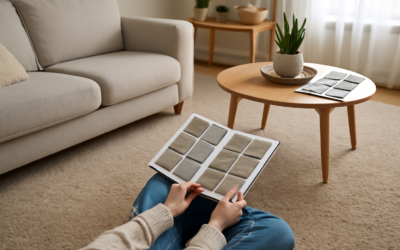
For the busiest spaces, modular carpet tiles deserve serious consideration. Common in commercial offices for good reason, these 18-by-18-inch or 24-by-24-inch squares glue directly to the subfloor and are engineered for relentless traffic. Their biggest advantage is replaceability: when one tile gets stained or worn, you swap that single square instead of replacing the whole floor, which is a huge cost saver in homes with pets, kids, or a home office. Quality carpet tiles run $2 to $5 per square foot and often carry 10-to-20-year commercial warranties. Lay them in a quarter-turn pattern to disguise seams and even out wear.
Stain Resistance and Cleaning
Durability isn’t just about resisting matting, it’s also about surviving spills in a high-use room. Solution-dyed fibers, where the color is locked into the fiber rather than applied to the surface, resist fading and bleaching from cleaners and even diluted bleach, making them the most stain-proof choice. Many heavy-duty carpets add a factory stain-protection treatment, though these wear off over time and benefit from reapplication. For cleaning, vacuum high-traffic carpet twice a week to prevent grit from grinding down the fibers, blot spills immediately rather than rubbing, and schedule a professional hot-water extraction once a year to lift embedded soil that vacuuming misses.
Reading the Warranty Fine Print
Manufacturer warranties on heavy-duty carpet can run 10, 15, or even 25 years, but the headline number means little without understanding what it actually covers. Most warranties separate wear (fiber loss), texture retention (matting and crushing), and stain resistance into distinct terms, and the longest figure usually applies only to the least likely failure. The texture-retention warranty is the one that matters most for high-traffic areas, since matting is what makes carpet look worn. Read the conditions carefully: many warranties are voided by the wrong pad thickness, improper installation, or skipping professional cleaning at the recommended intervals. Keep your receipt and cleaning records so a claim actually holds up.
Making the Right Choice
For most homeowners furnishing a busy space, a solution-dyed nylon loop with a face weight of 45 ounces or higher, a twist rating above 5, and a firm 8-pound pad delivers the best balance of durability, stain resistance, and value. Budget $4 to $9 per square foot installed. Invest a little more upfront in genuine heavy duty carpet, and you’ll skip the early replacement and the worn-out traffic paths that plague bargain flooring.