Wrinkles and ripples in carpet are more than an eyesore. They are a tripping hazard, and the more you walk over them, the faster the carpet wears out along the ridges. A carpet stretcher rental gives you the same professional tool installers use to pull the carpet tight and re-secure it, often for a fraction of the cost of hiring out the job. With a day’s rental, a few simple tools, and some patience, most homeowners can flatten a buckled room themselves. This guide explains the tool types, what they cost to rent, and how to use them safely.
- Why Carpet Develops Wrinkles
- Types of Carpet Stretchers You Can Rent
- Carpet Stretcher Rental Costs
- Tools and Supplies You Will Need
- How to Use a Power Stretcher
- Tips for a Professional Result
- Power Stretcher vs. Knee Kicker: Why You Need Both
- How Long the Job Takes
- When to Call a Professional Instead
- Is a Carpet Stretcher Rental Worth It?
Why Carpet Develops Wrinkles
Carpet ripples for a few predictable reasons. Improper installation is the most common, when the original installer used a knee kicker alone instead of a power stretcher and never got the carpet truly tight. Humidity changes cause backing to expand and contract. Dragging heavy furniture, especially on rolling casters, can shove carpet out of position. Over years, even a well-installed carpet can loosen. The fix is to re-stretch it back to the tack strips at the room’s edges.
Types of Carpet Stretchers You Can Rent
There are two main tools, and serious jobs use both together.
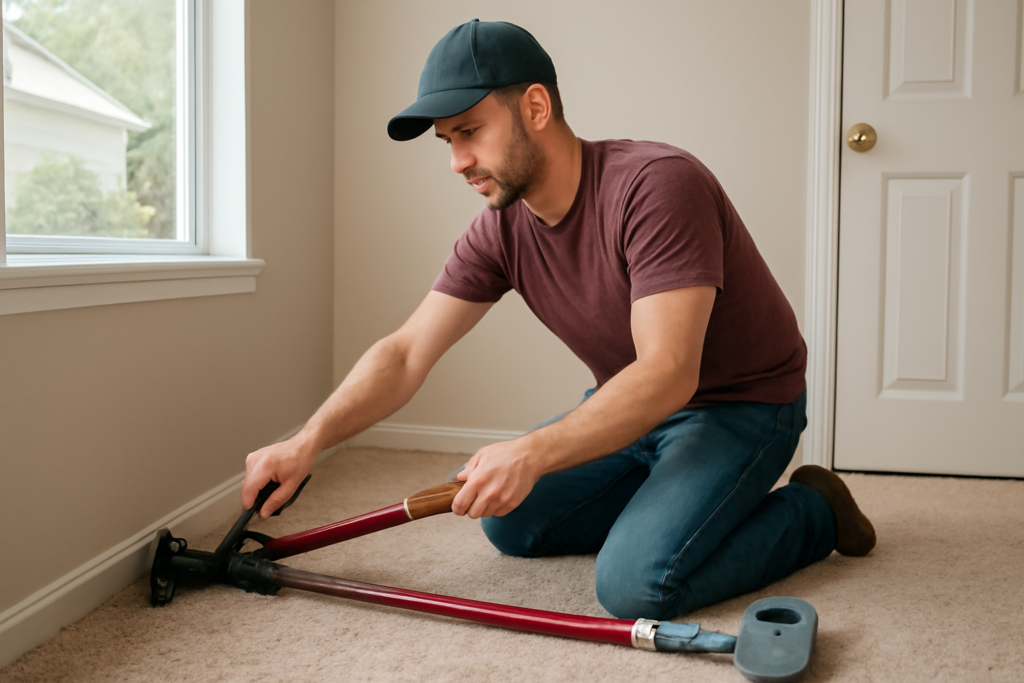
- Power stretcher: A long, lever-operated tool that spans the room and uses leverage to pull carpet tight across large areas. This is the tool that delivers a lasting, wrinkle-free result.
- Knee kicker: A short tool you bump with your knee to nudge carpet into corners and along edges. It is good for tucking and small adjustments but cannot replace a power stretcher for full rooms.
For a single room re-stretch, rent the power stretcher and pair it with a knee kicker. Many rental counters offer them as a set.
Carpet Stretcher Rental Costs
Rental pricing varies by region and store, but general ranges help with planning:
- Power stretcher: roughly $30 to $50 per day at home centers and tool rental shops.
- Knee kicker: roughly $15 to $30 per day, or bundled with the power stretcher.
- Weekend or multi-day rates are often discounted versus a single day.
Compared with professional re-stretching, which can run well over $100 to $300 per room, a rental can save real money if you are comfortable with the work. Factor in a small deposit and possible damage waiver at checkout.
Tools and Supplies You Will Need
Beyond the stretcher itself, gather:
- A carpet knife or utility knife with fresh blades.
- A stair tool or stiff putty knife for tucking edges.
- Pliers and a hammer.
- Knee pads and gloves.
- Replacement tack strips and a few nails, in case any are damaged.
How to Use a Power Stretcher
Re-stretching a room follows a clear sequence. Work one direction at a time and take your time.
- Clear the room completely and pull up the carpet along one or two edges to free it from the tack strips.
- Set the head of the power stretcher near the wall you want to stretch toward, and brace the tail end against the opposite wall using the extension poles and a padded block to protect the baseboard.
- Press the lever to stretch the carpet tight toward the wall. You should feel and see the wrinkles pull flat.
- Hold the tension and press the carpet down onto the tack strips along that edge.
- Trim excess carpet, then tuck the edge neatly with a stair tool.
- Repeat across the room, working in overlapping directions until the entire floor is taut and flat.
- Use the knee kicker for corners and tight spots the power stretcher cannot reach.
Tips for a Professional Result
A few habits separate a clean job from a callback. Always stretch toward the walls, never away from them. Protect baseboards with a block of scrap wood under the stretcher’s tail to avoid dents. Replace any tack strips that are corroded or have flattened pins, since they will not grip new tension. Cut blades dull fast on carpet backing, so change them often for clean edges. And do not over-stretch delicate or older carpet, which can tear the backing.
Power Stretcher vs. Knee Kicker: Why You Need Both
A common mistake is trying to fix a whole room with only a knee kicker, which is the tool many budget installers misuse. The knee kicker can only move carpet a few inches at a time over a short span, so it cannot pull the deep, even tension a full room needs. That is precisely why carpets installed with a knee kicker alone tend to ripple within a year or two. The power stretcher spans the entire room and uses mechanical leverage to apply firm, uniform tension that holds for years. Use the power stretcher for the heavy lifting across the room, and reserve the knee kicker for tucking edges and reaching corners the big tool cannot.
How Long the Job Takes
For a single average bedroom, expect to spend roughly two to four hours once you have the tools in hand, including clearing the room, freeing the carpet, stretching, and tucking. Your first room will be slower as you learn the rhythm of bracing and stretching; later rooms go faster. Because most rental shops charge by the day, plan to tackle several rooms in one rental period to get the most value. Clear the furniture and gather your supporting tools before you pick up the stretcher so the rental clock is spent stretching, not shopping.
When to Call a Professional Instead
Renting a stretcher works well for straightforward single-room re-stretches on standard carpet. Consider hiring a pro if the carpet has seams that need re-bonding, if you are dealing with stairs, if the carpet is delicate wool or a high-end Berber prone to damage, or if large areas across multiple rooms are involved. A professional has the experience to avoid tearing and can usually finish faster.
Is a Carpet Stretcher Rental Worth It?
For the right job, absolutely. If you have a wrinkled room or two and you are comfortable with hands-on home projects, a $30 to $50 daily rental plus a few hours of labor can restore a safe, flat carpet and extend its life by years. Plan the work, gather the right supporting tools, and stretch toward the walls, and you will get results close to what a professional installer would deliver.