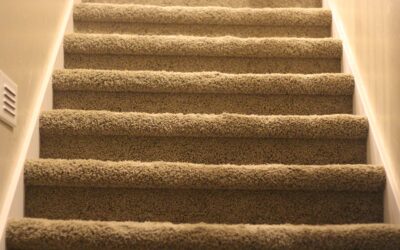
Polished hardwood stairs are beautiful and genuinely slippery — in socks, for aging knees, and for dogs whose paws get no purchase on smooth finish. Carpet treads for wood stairs solve the traction problem without carpeting the staircase: individual rectangles or wraps of carpet attach to each step, leaving the wood visible at the edges while adding grip, quiet, and cushioning exactly where feet land. They cost a fraction of a carpet runner, install in an afternoon with no tack strips, and come off cleanly when you want the wood back. Here is how to choose the right treads, attach them so they stay put, and avoid the versions that slide or peel.
Part of our Stairs & Stair Flooring guide — explore the full guide →
What Stair Treads Are and Why People Choose Them
A stair tread is a pre-cut, edge-bound piece of carpet — typically 8 to 10 inches deep and 24 to 36 inches wide — sized to cover the walking zone of one step. Sets of 7, 13, 14, or 15 match common staircase lengths. Unlike a runner, which is one continuous piece installed over pad with tack strips or extensive stapling, treads are individual and largely damage-free to install.
The motivations are practical and consistent: traction for kids, older adults, and pets (dogs especially struggle on bare wood); protection of the wood finish from claw scratches and grit wear in the walking path; noise reduction on echoing wood staircases; and a softer landing on a surface where falls do real harm. The Consumer Product Safety Commission has long counted stairs among the most common sites of home injuries, and traction is the cheapest variable you can change.
Types and Materials
Treads split into a few families worth knowing before you shop:
- Rectangular flat treads: The standard — a bound carpet rectangle sitting on the horizontal tread only. Cleanest look, easiest install.
- Bullnose (wraparound) treads: Shaped to wrap over the step’s rounded front edge and secure underneath. More coverage where shoes actually strike, more secure feel, slightly fussier install.
- Adhesive-backed treads: Peel-and-stick backing covers the whole underside. Convenient, but adhesive quality varies wildly and removal can leave residue on finish.
- Material choices: Nylon and polypropylene dominate for durability and stain resistance; wool blends cost more and feel richer; indoor-outdoor olefin suits basement and utility stairs. Low pile (under 1/2 inch) is safer than plush — thick soft treads feel unstable underfoot and catch heels.
Pricing runs roughly $3 to $10 per tread for basic synthetic sets (a 13-pack commonly costs $40 to $120) and $15 to $40 each for premium wool, hand-bound, or custom-width treads.
Sizing: Measure Before You Order
Standard US stair treads measure about 10 to 11.5 inches deep and 36 to 42 inches wide, but older homes wander from standard. Measure the tread depth from the riser to the nose, and the width you want covered — most people leave 3 to 6 inches of visible wood on each side. The carpet tread should sit about 1 inch back from the nose edge unless it is a bullnose style made to wrap it, and it must never overhang loose, which creates the very trip hazard you bought them to prevent.
Count your steps and note landings. Split staircases and pie-shaped winder steps need either custom treads or careful selection, since a rectangular tread on an angled winder leaves the walking line partially bare.
Attachment: The Part That Determines Success
Every bad review of stair treads traces back to attachment. Four methods, in ascending order of permanence:
- Non-slip rug pads or gripper strips: Cut-to-size rubberized mesh under each tread. Zero damage, zero residue, moderate hold — fine for light-traffic homes, not enough for stairs that see running kids and big dogs.
- Double-sided carpet tape: The mainstream answer. Quality tape holds firmly for years and removes with mild residue that cleans off finished wood. Tape the full perimeter of each tread, not just the corners.
- Hook-and-loop (velcro-style) systems: One side adheres to the step, the mate sews or sticks to the tread — excellent for treads you remove regularly for washing.
- Staples or tacks along the back edge: Maximum security, small holes in the wood. Reasonable on painted or utility stairs, a last resort on fine hardwood.
Whatever the method, clean each step with a wood-safe cleaner and let it dry fully before attaching — dust is the enemy of every adhesive. Press each tread down and test it with a hard sideways foot-scuff before calling the job done.
Safety Details That Matter
A tread that shifts is worse than bare wood, so recheck adhesion monthly for the first season and re-tape any corner that lifts. Keep pile low and edges bound tight. If anyone in the house uses a cane or has low vision, choose treads that contrast with the wood so step edges read clearly — a genuine, documented fall-prevention factor. And skip bargain treads with thin foam backing that crumbles; the debris is slippery on wood, defeating the entire purpose.
Care, Cleaning, and Lifespan
Vacuum treads weekly along with the stairs — grit grinds down carpet pile faster on stairs than anywhere else in a house. Most synthetic treads tolerate spot-cleaning with standard carpet cleaner, and hook-and-loop or pad-mounted treads can go outside for a proper beating and airing twice a year. Expect 3 to 7 years from mid-grade synthetic sets in a busy household before the walking path mats down, and longer from wool. When one tread wears out early — usually the bottom step — better sets sell singles as replacements, one more reason to buy from an established line rather than a closeout.
Style Choices That Flatter the Staircase
Treads read as a design element, not just safety equipment, so proportion and color deserve a minute of thought. Widths that leave equal wood reveals of 4 to 6 inches per side look intentional; treads nearly as wide as the stair read like a runner that shrank. Darker treads on light wood hide traffic soil and define each step crisply, while tone-on-tone choices keep the staircase quiet and let the railing carry the look.
Patterned and sisal-look weaves disguise wear on busy family stairs better than solid plush ever will. If the staircase is visible from the front door, order one extra tread and audition it in place for a week before committing the whole set — color casts differently in stairwell lighting than in product photos.
Treads, Runner, or Full Carpet?
Choose carpet treads for wood stairs when you want traction and quiet while preserving the hardwood look, when you rent, or when the budget is a weekend-project number: a full set installed yourself runs $50 to $200. Step up to a proper runner ($500 to $2,000 installed) when you want a continuous designer statement and permanent installation, and to full carpeting when warmth and maximum fall-cushioning outrank aesthetics entirely. For most homes with good-looking wood stairs and a traction problem, treads are the 90-percent solution at 10 percent of the price — which is why the humble stair tread never goes out of production.