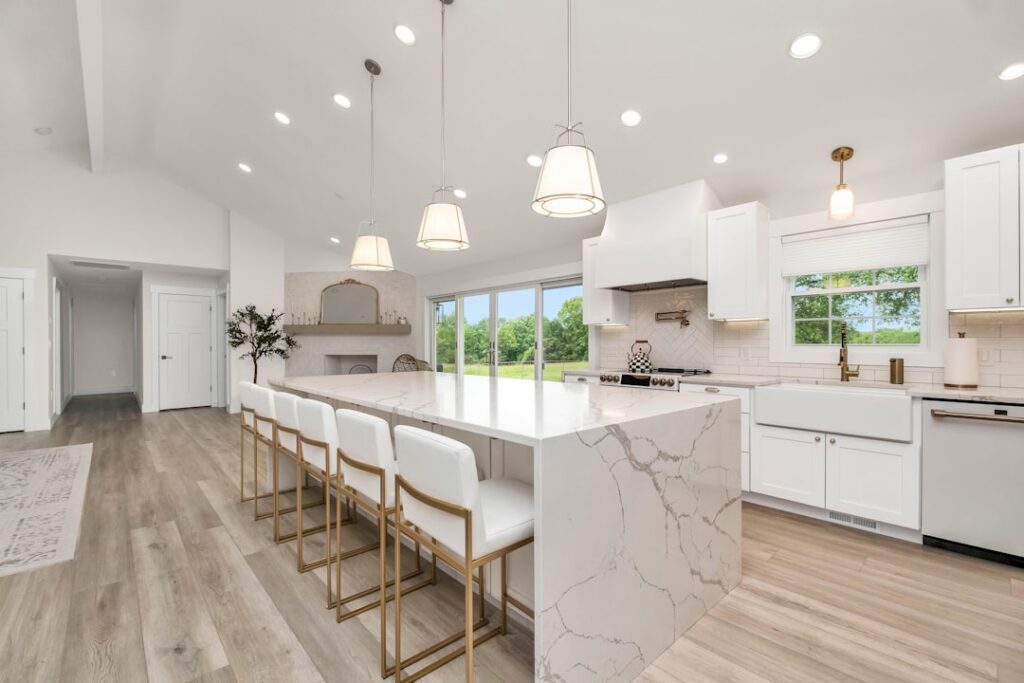
If you love the soft white-and-gray look of Italian marble but worry about staining and etching, engineered stone offers a compelling alternative. Carrera quartz is the popular term for quartz countertops designed to mimic the appearance of classic Carrara marble, giving you that timeless veined look with the toughness of a man-made surface. Before you shop, it helps to understand what this material is, how it is made, and where it shines.
Part of our Countertops guide — explore the full guide →
One quick note on spelling: the famous marble quarried in Italy is properly called Carrara, while “Carrera” is an extremely common misspelling that has stuck in many product searches and showroom conversations. Whatever you call it, the goal is the same, a quartz slab that captures the look of that white marble.
What Carrera Quartz Actually Is
Engineered quartz is made by combining ground natural quartz with resins and pigments, then forming and curing the mixture into hard, dense slabs. The pigments and patterning are what create the Carrara-style appearance: a white or soft gray background crossed by gentle gray veining that echoes the natural marble it imitates.
Because the look is engineered rather than quarried, manufacturers can control the consistency of the pattern. That means a Carrara-look quartz can deliver a more predictable, repeatable veining than natural marble, where every slab is unique. Many homeowners appreciate being able to preview a pattern that closely matches what arrives at their home.
Carrara Marble vs. Carrera Quartz
Understanding the difference between the inspiration and the engineered product helps set expectations. Natural Carrara marble is a quarried stone prized for its beauty, but it is porous and relatively soft, so it can stain from spills and etch from acids like lemon juice or vinegar. The quartz look-alike trades the prestige of natural stone for greater everyday resilience.
Here is how they generally compare:
- Appearance: Marble offers one-of-a-kind natural veining; the quartz version offers a controlled, consistent imitation of that look.
- Porosity: Marble is porous and typically needs sealing; engineered quartz is non-porous and does not require sealing.
- Stain and acid resistance: Quartz generally resists staining and acid etching far better than marble.
- Maintenance: Quartz needs only routine cleaning, while marble demands more careful, ongoing care.
If you want the marble look without the babying, the engineered route is usually the practical winner.
Pros of Choosing Carrera Quartz
The appeal of this material comes down to combining beauty with low maintenance. Because quartz is non-porous, it resists stains from common kitchen culprits like wine, coffee, and oil, and it does not need periodic sealing the way marble does. The dense surface is also hard and durable, standing up well to daily kitchen use.
On top of that, the consistent appearance makes planning easier. You can choose a veining style you love and expect the installed counter to match it closely. For busy kitchens and family bathrooms, that blend of looks and toughness is hard to beat.
Cons and Considerations
No surface is perfect, and quartz has a few limits worth knowing. While it tolerates everyday warmth, quartz is not as heat-tolerant as some natural stones, and direct contact with very hot pots can damage the surface or the resin binder. Always use trivets and hot pads rather than setting cookware straight from the burner onto the counter.
Some homeowners also feel that even the best engineered imitation does not fully replicate the depth and individuality of genuine marble veining. If authentic natural stone is a priority for you, that trade-off matters. Finally, prolonged direct sunlight can affect some quartz products over many years, so consider placement in sun-drenched spaces and check the manufacturer’s guidance.
Where It Works Best
The combination of marble looks and quartz durability makes this material a strong fit for several spaces:
- Kitchen countertops and islands, where stain resistance and a bright, classic look both matter.
- Bathroom vanities, which benefit from a non-porous surface around water and toiletries.
- Backsplashes that carry the veining up the wall for a seamless marble effect.
- Waterfall edges and feature surfaces where you want a dramatic, cohesive look.
Because the pattern reads as light and airy, it tends to brighten rooms and pair well with both warm wood cabinets and cool-toned modern designs.
Caring for Carrera Quartz
Maintenance is refreshingly simple. For daily cleaning, wipe the surface with warm water and a mild dish soap or a cleaner labeled safe for quartz, then dry with a soft cloth. Avoid harsh abrasive pads and strong chemicals like bleach or high-alkaline cleaners that can dull the finish over time; follow your specific product’s care recommendations.
To keep the surface looking its best, wipe up spills promptly even though quartz resists staining, use cutting boards rather than slicing directly on the counter, and always protect it from direct heat with trivets. These small habits preserve both the look and the integrity of the slab.
Color, Veining, and Style Options
One reason this look endures is its flexibility. Carrara-style quartz ranges from crisp, bright white backgrounds with delicate hairline veining to softer warm-white or gray-tinted fields with bolder, more pronounced veins. The lighter, subtler patterns read as calm and contemporary, while heavier veining makes more of a statement and draws the eye. Think about how busy you want the surface to feel against your cabinets and backsplash before you settle on a slab.
Edge profiles and finishes add another layer of choice. A polished finish amplifies the bright, glossy marble look and reflects light, while a honed or matte finish reads softer and more natural. Simple eased or beveled edges keep the look modern, while ogee or other decorative edges lean traditional. Viewing a full slab rather than a small sample is the best way to judge how the veining will flow across your actual counter run, since patterns can vary noticeably from one slab to the next within the same product line.
Is It Right for You?
The decision usually comes down to priorities. If you are drawn to the bright, veined elegance of Italian marble but want a surface that shrugs off spills, skips the sealing routine, and handles a busy household, engineered quartz in a Carrara look is an excellent match. If you specifically want genuine natural stone and are willing to maintain it, true marble may be worth the extra care.
For most homeowners chasing that classic white-and-gray aesthetic with real-world practicality, Carrera quartz delivers the best of both worlds. Compare slab patterns in person, ask the supplier about the specific product’s heat and care guidance, and you will end up with a countertop that looks beautiful and lives easily for years.