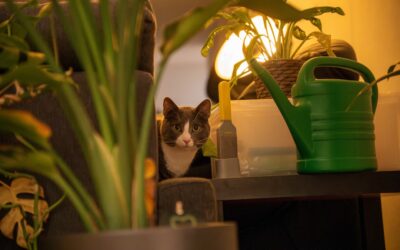
Roughly 50% of common houseplants are toxic to cats, and a single nibble on a lily or pothos leaf can trigger vomiting, kidney failure, or worse. Choosing cat safe house plants lets you fill your home with greenery without a panicked midnight trip to the emergency vet. This guide covers the best non-toxic species, where to place them, and how to keep both your plants and your cats thriving under the same roof.
- Why Plant Toxicity Matters for Cat Owners
- Top 10 Cat Safe House Plants That Actually Look Great
- Boston Fern (Nephrolepis exaltata)
- Spider Plant (Chlorophytum comosum)
- Calathea (Calathea spp.)
- Parlor Palm (Chamaedorea elegans)
- African Violet (Saintpaulia spp.)
- Polka Dot Plant (Hypoestes phyllostachya)
- Cast Iron Plant (Aspidistra elatior)
- Haworthia (Haworthia spp.)
- Peperomia (Peperomia spp.)
- Prayer Plant (Maranta leuconeura)
- Common Toxic Plants to Remove Immediately
- Smart Placement Strategies for Cat Households
- Soil and Fertilizer Safety Considerations
- Signs Your Cat Has Ingested a Toxic Plant
- Building a Cat-Friendly Indoor Jungle
Why Plant Toxicity Matters for Cat Owners
Cats are obligate carnivores, but many still chew on leaves out of curiosity, boredom, or to settle an upset stomach. The ASPCA Poison Control Center handled over 400,000 cases involving pets and plants in a single year, with cats accounting for nearly 40% of those calls. Toxic compounds like saponins, oxalates, and cardiac glycosides can cause symptoms ranging from mild drooling to organ failure depending on the species and amount ingested.
The safest approach is to keep only verified non-toxic plants in any room your cat can access. The ASPCA maintains a searchable database of over 1,000 plants classified as toxic or non-toxic to cats, and it should be your primary reference before bringing any new plant home.
Top 10 Cat Safe House Plants That Actually Look Great
Boston Fern (Nephrolepis exaltata)
Boston ferns produce lush, arching fronds that look stunning in hanging baskets or on plant stands. They prefer indirect light, temperatures between 60 and 75 degrees Fahrenheit, and consistent humidity. Mist the fronds twice a week or place the pot on a pebble tray with water. Completely non-toxic to cats per the ASPCA.
Spider Plant (Chlorophytum comosum)
Nearly indestructible and safe for cats, spider plants tolerate low light, irregular watering, and temperature swings. They produce dangling plantlets that cats love to bat at, so hang them high enough that the babies stay out of paw’s reach. Spider plants also rank among NASA’s top air-purifying species, filtering formaldehyde and xylene from indoor air.
Calathea (Calathea spp.)
Calatheas offer some of the most dramatic foliage patterns available in non-toxic plants. Varieties like Calathea medallion, rattlesnake plant, and peacock plant feature striped, spotted, or two-toned leaves in greens, purples, and pinks. They need medium indirect light and consistently moist soil. Avoid direct sunlight, which bleaches the intricate leaf patterns.
Parlor Palm (Chamaedorea elegans)
This compact palm tops out at 3 to 4 feet indoors and adds a tropical feel to any room. It handles low light conditions well, making it ideal for north-facing rooms or offices. Water when the top inch of soil dries out, and feed with a balanced liquid fertilizer once a month during spring and summer. Completely safe for cats and dogs.
African Violet (Saintpaulia spp.)
African violets deliver continuous blooms in purple, pink, white, and bicolor varieties. They prefer bright indirect light, temperatures around 65 to 75 degrees Fahrenheit, and bottom watering to avoid leaf spotting. These compact plants fit perfectly on windowsills and are entirely non-toxic to cats.
Polka Dot Plant (Hypoestes phyllostachya)
Bright pink, red, or white speckled leaves make the polka dot plant a colorful accent piece. It grows 12 to 18 inches tall, prefers bright indirect light, and needs pinching back to prevent leggy growth. Safe for cats and easy to propagate from stem cuttings.
Cast Iron Plant (Aspidistra elatior)
True to its name, this plant tolerates neglect, low light, temperature fluctuations, and infrequent watering. The dark green, leathery leaves grow up to 2 feet long and create a bold, architectural look. It grows slowly but lives for decades with minimal care. Verified non-toxic by the ASPCA.
Haworthia (Haworthia spp.)
If you love the look of aloe but need a cat-safe alternative, haworthia delivers similar rosette shapes and thick, textured leaves without the toxicity. These succulents need bright indirect light, well-draining soil, and watering every two to three weeks. They stay compact at 3 to 5 inches tall.
Peperomia (Peperomia spp.)
With over 1,500 species, peperomia offers incredible variety in leaf shape, color, and texture. Watermelon peperomia, baby rubber plant, and ripple peperomia are popular choices. All are non-toxic to cats. They prefer bright indirect light, light watering, and well-draining potting mix.
Prayer Plant (Maranta leuconeura)
Named for leaves that fold upward at night like praying hands, this plant features striking herringbone patterns in red, green, and cream. It thrives in medium to low light with consistent moisture and humidity above 50%. Entirely cat safe and a conversation starter in any room.
Common Toxic Plants to Remove Immediately
If you currently own any of these popular houseplants, relocate them to a room your cat cannot access or rehome them entirely. Lilies are the most dangerous, with all parts of Lilium and Hemerocallis species causing acute kidney failure in cats even from minor exposure.
- Lilies (Lilium spp.) — potentially fatal kidney failure
- Pothos (Epipremnum aureum) — oral irritation, vomiting, difficulty swallowing
- Dieffenbachia — intense oral burning, drooling, vomiting
- Sago Palm (Cycas revoluta) — liver failure, potentially fatal
- Snake Plant (Sansevieria) — nausea, vomiting, diarrhea
- Philodendron — oral irritation, swelling, GI distress
- Aloe Vera — vomiting, diarrhea, tremors
Smart Placement Strategies for Cat Households
Even with non-toxic plants, many cat owners prefer to minimize contact between their pets and their greenery. Hanging planters mounted to ceiling hooks keep trailing plants well above jumping height. Wall-mounted shelves at 6 feet or higher work for compact species like succulents and African violets. Terrariums with glass enclosures protect delicate plants from curious paws while creating a miniature display.
For floor-level plants, heavy ceramic pots with wide bases resist tipping from a cat rubbing against them. Avoid lightweight plastic pots, which topple easily and spill soil across your floors. If your cat digs in plant soil, cover the surface with decorative stones or a layer of pine cones, which most cats find unpleasant to touch.
Soil and Fertilizer Safety Considerations
Some potting mixes contain perlite, vermiculite, or slow-release fertilizer granules that look like small beads. While perlite and vermiculite are generally non-toxic, concentrated fertilizer granules can cause GI upset if a cat eats a mouthful. Use organic potting mixes without synthetic fertilizer beads, and apply liquid fertilizer diluted to half strength instead of granular formulas.
Cocoa shell mulch, sometimes used as a decorative top dressing, contains theobromine, the same compound that makes chocolate toxic to pets. Avoid it entirely in a cat household. Use shredded bark, sphagnum moss, or the stone top-dressing method instead.
Signs Your Cat Has Ingested a Toxic Plant
Watch for drooling, pawing at the mouth, vomiting, diarrhea, lethargy, or loss of appetite within hours of potential exposure. Lily ingestion specifically may show decreased urination within 12 to 24 hours as kidney function declines. If you suspect your cat has eaten any plant material and shows symptoms, contact your veterinarian or the ASPCA Animal Poison Control Center at (888) 426-4435 immediately. Bring a sample or photo of the plant to help with identification.
Building a Cat-Friendly Indoor Jungle
Start with three to five cat safe house plants from the list above and expand as you learn what thrives in your home’s light conditions. Group plants with similar water and humidity needs together for easier maintenance. A north-facing bathroom window suits ferns and calatheas, while a bright living room works for palms and peperomias. With the right species selection, you can enjoy a lush indoor garden and complete peace of mind knowing every leaf is safe for your cat.