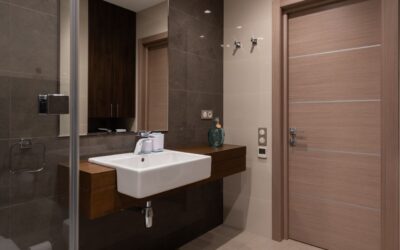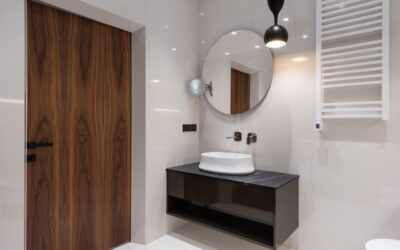
A cavity slider pocket door is a door that slides sideways into a hollow cavity built inside the wall, disappearing completely when open instead of swinging out into the room. This clever design reclaims the floor space a swinging door would sweep through, roughly a 3-by-3-foot arc, which makes pocket doors a favorite for tight bathrooms, closets, laundry rooms, home offices, and any spot where a standard hinged door would be in the way. When open, the door vanishes into the wall; when closed, it functions like a normal door.
Part of our Windows & Doors guide — explore the full guide →
The term “cavity slider” is widely used in Australia, New Zealand, and increasingly the United States for the engineered pocket-door frame kit and its track hardware. Understanding how the system works, what the wall framing requires, and what installation costs will help you decide whether a cavity slider is right for your space. This guide covers the mechanics, install, and trade-offs.
How a Cavity Slider Works
The system consists of a pre-engineered frame kit that installs inside a stud wall. The kit includes a header track at the top, split jamb studs that form the hollow pocket, and roller hardware. The door hangs from rollers that glide along the top track, and the door slides horizontally into the cavity between the two wall skins. A guide at the floor keeps the bottom of the door aligned as it moves.
Because the pocket is hollow, that section of wall cannot hold much weight or contain plumbing and electrical in the door’s path. The frame kit is engineered so the drywall attaches to special clips or a split-stud system that keeps the pocket clear for the door to slide freely. Quality kits from brands like Johnson Hardware, Cavity Sliders USA, and Eclisse provide smooth, long-lasting operation.
Where Cavity Sliders Shine
Pocket doors solve specific spatial problems better than any hinged door:
- Small bathrooms and powder rooms where a swinging door would hit the toilet or vanity
- Ensuites and closets where floor space is precious
- Laundry and utility rooms that need a door but have no room for its swing
- Open-plan spaces where you occasionally want to close off a room, like a home office off a living area
- Accessible design, since a wide pocket door with the right hardware is easier for wheelchair users than a swinging door
- Double pocket doors that meet in the middle to close off a large opening between rooms
Anywhere the door’s swing competes with fixtures, furniture, or traffic, a cavity slider frees up usable space.
Framing Requirements
The single biggest consideration is that a pocket door needs a wall roughly twice the width of the door opening to house both the opening and the cavity the door slides into. A standard 30-inch door needs about 60 inches of continuous wall to accommodate the opening plus the pocket. If your wall is not long enough, a cavity slider will not fit.
The wall must also be a non-load-bearing partition, or the framing must be engineered to carry the load around the cavity, which adds cost and complexity. Critically, no plumbing pipes, electrical wiring, or ductwork can run through the section of wall that becomes the pocket, because the cavity must stay hollow. Relocating utilities out of that wall section is a common added expense in retrofits.
New Construction vs. Retrofit
Installing a cavity slider is dramatically easier during new construction or a full remodel when the wall is open to the studs. The frame kit drops into the framed opening before drywall goes up, and everything is straightforward.
Retrofitting a pocket door into an existing finished wall is far more involved. It requires removing the drywall on at least one side of the wall, possibly relocating wiring, outlets, or plumbing, reframing the opening and pocket, installing the kit, and then re-drywalling, taping, and finishing. This is why retrofits cost several times more than the door hardware alone. If the wall happens to be load-bearing or full of utilities, a retrofit may not be practical.
Installation Overview
For a new-construction or open-wall install, the general steps are:
- Frame the rough opening to the width the kit specifies, which is about double the door width.
- Assemble and set the cavity slider kit, leveling the header track carefully since the door’s smooth glide depends on a level track.
- Attach the split studs and drywall clips that form the pocket while keeping it hollow.
- Hang the door on the rollers and adjust the height so it slides freely and closes flush.
- Install the floor guide to keep the door aligned at the bottom.
- Hang and finish the drywall, then add trim, jamb, and the pocket-door pull hardware.
Getting the header track perfectly level is the make-or-break detail; even a slight tilt causes the door to drift open or closed on its own.
Pros and Cons to Weigh
Cavity sliders offer clear benefits but also real trade-offs. On the plus side, they save floor space, look clean and modern, work well for accessibility, and can close off spaces that a swinging door could not serve. On the downside, they need a long stretch of clear wall, are much harder to repair if a roller fails since the door is inside the wall, offer less sound and privacy insulation than a solid hinged door with a full jamb seal, and cannot go in a wall carrying pipes or wires in the pocket zone. Standard pocket-door pulls are also flush, which some people find less convenient than a knob.
Cost Expectations
Costs vary widely between new construction and retrofit:
- Cavity slider frame kit and hardware: $150 to $500 depending on quality and door size
- The door slab itself: $100 to $600-plus
- New-construction installation labor: $200 to $500
- Retrofit into an existing wall: $1,000 to $3,500 including demo, possible utility relocation, framing, and drywall finishing
Hardware and Soft-Close Upgrades
The quality of a cavity slider comes down largely to its hardware, since the door’s smooth glide and long-term reliability depend on the rollers and track. Premium kits use ball-bearing rollers rated for the door’s weight and offer add-ons that noticeably improve the experience:
- Soft-close and soft-open dampers that catch the door and glide it gently the last few inches instead of slamming into the pocket or jamb
- Self-closing mechanisms that pull the door shut automatically from a partly open position
- Privacy latches and locks designed for pocket doors, essential for bathrooms and bedrooms
- Flush edge pulls that sit into the door face so nothing protrudes into the pocket
For heavier solid-core doors, choosing hardware with a higher weight rating prevents the sagging and dragging that plague cheap kits. Because the door lives inside the wall, repairing failed hardware later is disruptive, so investing in quality rollers and track from a reputable brand at install time pays off for the life of the door.
Privacy and Sound Considerations
Pocket doors trade a little privacy and sound control for their space savings, so plan accordingly. Because the door slides rather than sealing against a full jamb with a latch and weatherstrip, it typically lets more sound through than a hinged door, and standard versions leave small gaps at the edges. For a bathroom or bedroom, this is worth addressing.
Options to improve privacy include choosing a solid-core door slab rather than a hollow one to block more sound, adding a privacy latch designed for pocket doors, and specifying kits with jamb seals or brush strips that close the edge gaps. Some higher-end cavity slider systems offer better sealing and even soft-close on both directions. If maximum sound isolation is critical, such as between a bedroom and a living area, weigh whether a hinged solid door might serve better, or accept the trade-off in exchange for the reclaimed floor space that makes pocket doors so appealing in tight rooms.
The takeaway on cost is to install cavity sliders during construction or a remodel whenever possible, since retrofitting multiplies the price. If you are already opening a wall or building new, adding a cavity slider pocket door is an affordable, high-value upgrade that gives you a full-function door while giving back the floor space a swinging door would waste.