Most homes are lit by whatever fixture the builder bought in bulk — the infamous “boob light” — and swapping it is the highest-impact $100 upgrade in the house. Choosing a ceiling light starts with one number: ceiling height. That single measurement sorts every fixture family — flush mount, semi-flush, pendant, chandelier, recessed, and track — into the ones that will work in your room and the ones you will hit your head on. From there it is lumens, scale, and color temperature. This guide walks the whole fixture menu with the sizing math that designers actually use.
- Flush Mount: The 8-Foot Ceiling Workhorse
- Semi-Flush: The 9-Foot Sweet Spot
- Pendants: Task Lighting With a Neck
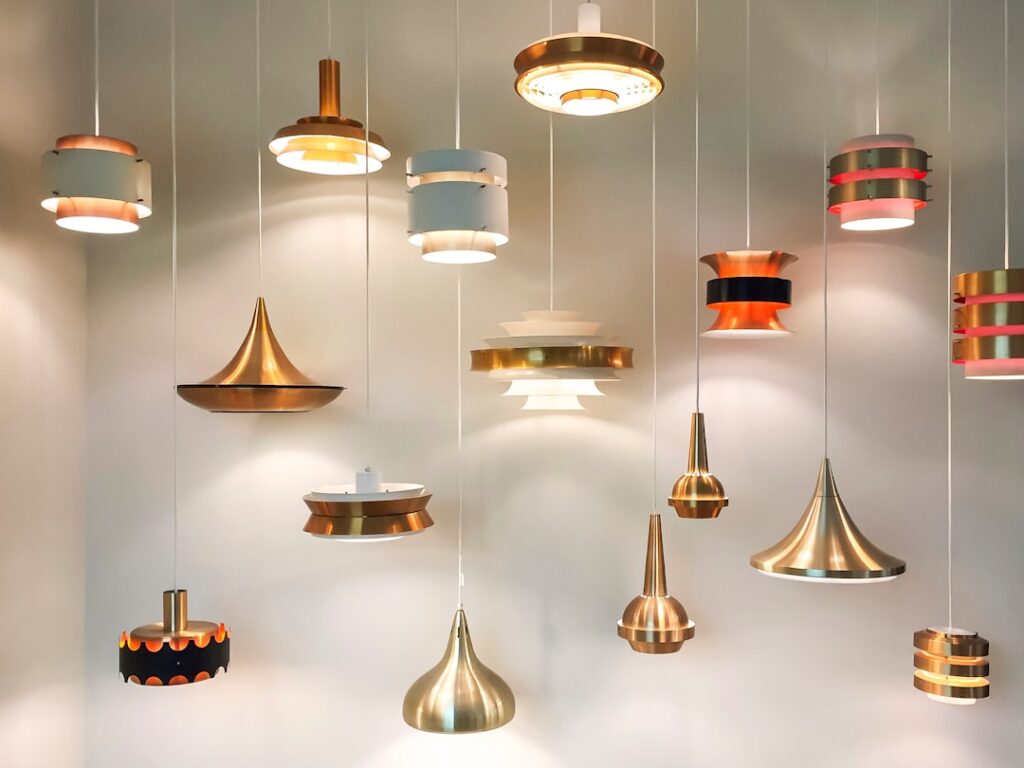
- Chandeliers: Scale Math Over Style
- Recessed and Track: The Layer Builders
- Fan-Lights and Specialty Mounts
- Lumens, Kelvin, and Dimmers
- Room-by-Room Quick Picks
- Installation Reality Check
- Smart Ceiling Lighting: Worth It?
- Choosing in One Pass
Flush Mount: The 8-Foot Ceiling Workhorse
Flush mounts hug the ceiling with no gap, which makes them the default for 7.5-to-8-foot ceilings, hallways, closets, and bedrooms where headroom is precious. Modern LED versions have escaped the frosted-mushroom era — drum shades, crystal-accented discs, and slim 1-inch-profile panels now dominate. Typical costs run $30 to $150, with integrated-LED discs at the low end and dressed designs above. Two buying notes: choose replaceable-bulb models or integrated LEDs rated 25,000+ hours from brands that will exist in a decade, and check the diameter — 13 to 16 inches suits bedrooms, while hallways want 11 to 13 inches every 8 to 10 feet of run.
Semi-Flush: The 9-Foot Sweet Spot
Semi-flush fixtures drop 4 to 12 inches on a short stem, adding shape and letting light wash the ceiling as well as the floor — which makes rooms feel taller, not shorter. They are the right answer for 9-foot ceilings, entries, and dining nooks where a full pendant would swing at eye level. Expect $80 to $300 for quality lantern, drum, and sputnik styles. The design win over flush mounts is uplight: a fixture open at the top eliminates the cave effect that fully enclosed discs create in larger rooms.
Pendants: Task Lighting With a Neck
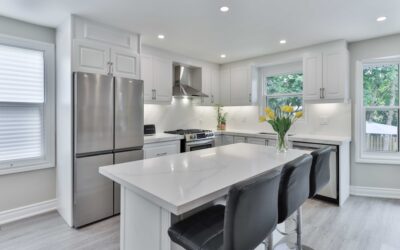
A pendant is a single light on a rod, chain, or cord, and it is fundamentally task lighting — it belongs over something. Kitchen islands are the classic assignment: hang pendants 30 to 36 inches above the countertop, one per 2 to 2.5 feet of island length, typically two for a 6-foot island and three for 8 feet and up. Sinks, reading corners, and nightstand-replacement bedside pendants follow the same logic. Sizing rule for a pendant over a table or island: fixture diameter in inches roughly equals the surface width in feet times 12, minus a few inches of breathing room. Prices span $40 mini-pendants to $400+ statement glass; buy the adjustable-cord version whenever offered, because ceiling heights lie.
Chandeliers: Scale Math Over Style
Chandeliers are multi-arm or multi-tier fixtures that serve as a room’s jewelry, and the failures are almost always scale failures, not style ones. The designer formula: room length + width in feet = chandelier diameter in inches. A 12×14 dining room wants a fixture around 26 inches across. Over a dining table, keep the diameter to one-half to two-thirds of the table’s width and hang the bottom 30 to 36 inches above the tabletop on an 8-foot ceiling — add 3 inches of height per additional foot of ceiling. In two-story foyers, the fixture’s bottom should clear 7 feet above the floor and hang level with or slightly below the second-floor fascia. Budget honestly: convincing fixtures start around $150, and weight matters — anything over 50 pounds needs a properly braced box, not the plastic cup that held the boob light.
Recessed and Track: The Layer Builders
Recessed cans — today, mostly 4-to-6-inch canless LED wafers at $15 to $30 each — provide the ambient wash that decorative fixtures cannot. Space them roughly half the ceiling height apart (4 feet apart under an 8-foot ceiling), keep them 2 to 3 feet off the walls, and resist the builder habit of gridding the whole ceiling: cans supplement, they do not decorate. Wafer lights install in an afternoon with a hole saw and a remodel junction box, which made them the great retrofit story of the last decade. Track and monorail systems serve the same layer with aimable heads — right for art walls, kitchens with shifting work zones, and rentals of taste, at $100 to $300 per run.
Fan-Lights and Specialty Mounts
When one ceiling box must both light and cool a bedroom, the fan-with-light-kit is the compromise everyone makes — modern fans carry 800-to-2,000-lumen dimmable LED discs that genuinely carry a bedroom. Enclosed low-profile fans blur into lighting territory entirely. If that hybrid is the direction, sizing and picks live in our black ceiling fan style guide and the broader fan articles. Rounding out the specialty shelf: damp-rated flush mounts for bathrooms and covered porches, wet-rated fixtures where rain reaches, and cage or Schoolhouse-style semi-flush units that handle mudrooms and laundry rooms with grace.
Lumens, Kelvin, and Dimmers
Fixture shopping fails without light math. Target total room lumens: bedrooms and living rooms, about 20 lumens per square foot (a 12×12 bedroom wants roughly 3,000 lumens across all sources); kitchens and baths, 60 to 80 per square foot concentrated over work zones. Color temperature sets mood: 2700K warm white for bedrooms and living spaces, 3000K for kitchens and baths, 4000K only in garages and workshops. And put every ceiling light on a dimmer — LED-compatible dimmers (Lutron Diva, about $25) are the cheapest quality-of-life upgrade in lighting, but confirm the fixture’s driver is dimmable before buying, because “integrated LED” and “dimmable” are separate spec lines.
Room-by-Room Quick Picks
Applying the rules produces predictable winners. Kitchens: recessed wafers for the ambient layer, pendants over the island, and an under-cabinet strip for counters — three layers, all 3000K, all dimmable. Dining rooms: one correctly sized chandelier on a dimmer, nothing else needed under 200 square feet. Bedrooms: a 14-inch flush or semi-flush plus lamps, or a fan-light where summers demand it. Bathrooms: a damp-rated flush mount for general light plus vertical sconces or a lighted mirror at the vanity — ceiling light alone shadows every face it is supposed to serve. Hallways and stairs: flush mounts every 8 to 10 feet, with three-way switching at both ends of every run. Laundry and garage: 4000K flush LEDs or shop lights, where flattering light loses to seeing lint and labels.
Closets get a special note because code cares: incandescent fixtures near shelving started enough fires that modern code requires enclosed LED or fluorescent fixtures with minimum clearances from storage — a $25 flush LED disc satisfies it everywhere.
Installation Reality Check
Swapping like-for-like on an existing box is a 30-to-60-minute DIY job: breaker off, verify dead with a tester, support the old fixture while unwiring, match black-to-black, white-to-white, ground-to-green. Three situations call for an electrician: no existing box where you want light (cutting in a new box and fishing cable runs $150 to $400 per fixture), fixtures over 50 pounds needing brace bars, and any aluminum-wired 1960s-70s house. Recessed wafer retrofits sit in between — comfortable DIY for anyone at ease in an attic or with a fish tape.
Smart Ceiling Lighting: Worth It?
Smart control has reached the ceiling light aisle from two directions, and the cheaper one is usually right. Smart switches (Lutron Caséta, Kasa, roughly $20 to $60) make every fixture on the circuit schedulable and voice-controlled while keeping normal wall operation — the robust choice for whole rooms. Smart fixtures and bulbs add color-tuning and zone control within one fixture, at the cost of dying when their electronics do and confusing guests when the wall switch cuts their power. The sane split: smart switches for flush mounts, recessed runs, and chandeliers; smart bulbs only in lamps and fixtures where per-bulb color control genuinely matters.
Choosing in One Pass
Run the decision in order: ceiling height picks the family (under 8 feet, flush; 9 feet, semi-flush; 10-plus or over furniture, pendants and chandeliers), the room’s job sets the lumens, the length-plus-width formula sets the size, and 2700-3000K on a dimmer covers the rest. A ceiling light chosen by that sequence — rather than by whatever glowed prettiest on the showroom wall — is the difference between a room that photographs well once and a room that lives well for twenty years.