Cabinets eat up the biggest slice of almost any kitchen budget, often 30 to 40 percent of the total, so it is no surprise homeowners hunt for ways to spend less. The good news is that a cheap kitchen cabinet does not have to mean a flimsy one that falls apart in three years. The trick is knowing which corners are safe to cut and which will cost you more down the road. This guide breaks down real budget options, the construction details that actually matter, and where your dollars are best spent.
Part of our Kitchen Remodeling guide — explore the full guide →
What “Cheap” Really Costs
Set expectations before you shop. Stock cabinets, the ones sold in fixed sizes off the shelf, are the budget tier and run roughly $60 to $200 per linear foot installed. Ready-to-assemble (RTA) cabinets ordered online often land even lower, around $50 to $150 per linear foot before assembly labor. By contrast, semi-custom cabinets start near $150 and custom work can exceed $500 per linear foot. For a standard 10-by-10 kitchen, a well-chosen budget line might total $2,000 to $5,000 for the boxes.
Where It Is Safe to Save
Not every upgrade is worth the money, and several premium features add cost without adding much value. You can comfortably skip these on a budget:
- Exotic wood species: a painted MDF or thermofoil door looks clean and hides seams better than cheap real wood.
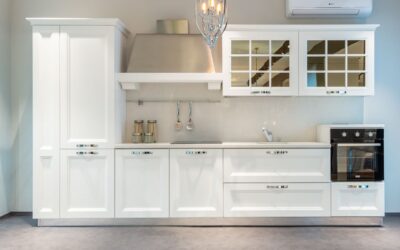
- Glass-front or specialty doors: beautiful but pricey; use one or two as accents, not throughout.
- Interior organizers: add roll-out trays and dividers later with aftermarket kits for a fraction of the built-in cost.
- Ultra-thick slab tops on the cabinet: standard box construction performs the same.
Spending less here rarely shows in daily use, and it frees up budget for the parts that do.
Where Cutting Corners Backfires
Some cheap features fail fast, and replacing them costs far more than buying quality up front. Watch out for the details that determine whether cabinets survive years of slamming doors and heavy pots. Cabinet boxes made of thin particleboard sag under a loaded countertop and swell the first time they get wet. Stapled or hot-glued joints loosen, and drawers on cheap epoxy slides bind and rattle within a year.
Insist on these minimums even at the budget level: a 3/4-inch plywood or thick furniture-board box, dovetailed or well-jointed drawer boxes, full-extension soft-close drawer glides, and six-way adjustable door hinges. These raise the price only modestly but make the difference between cabinets that feel cheap and cabinets that simply cost less.
Best Budget Cabinet Options
Several routes deliver solid cabinets without the semi-custom price tag:
- Home-center stock lines: brands like Hampton Bay and Diamond NOW offer in-stock and quick-ship boxes at the lowest per-foot cost.
- RTA online sellers: plywood-box RTA cabinets ship flat and assemble with a screwdriver and a rubber mallet, often at half the price of pre-built.
- IKEA SEKTION: a durable particleboard-and-melamine system with a strong warranty and endless organizer add-ons.
- Cabinet liquidators and overstock: discontinued or surplus lines at steep discounts if you can match sizes to your layout.
Refacing and Refinishing as Alternatives
If your existing cabinet boxes are sound, you may not need new cabinets at all. Refacing replaces just the doors, drawer fronts, and visible veneer, typically costing $4,000 to $9,000 for a full kitchen, far less than full replacement. Painting is cheaper still. A careful DIY paint job with a bonding primer and a durable cabinet enamel can transform tired oak cabinets for a few hundred dollars in materials plus a weekend or two of labor.
Smart Ways to Stretch the Budget
Beyond the cabinets themselves, a few tactics keep the total down without hurting the result. Keep your existing kitchen layout so you avoid moving plumbing and electrical, which are the hidden budget killers. Mix tiers by using an inexpensive stock line for the bulk of the run and one nicer statement piece, like an island in a contrasting color. And handle the demolition and painting yourself while leaving the box hanging and countertop work to pros.
- Buy standard sizes and design around them instead of forcing custom fillers.
- Shop end-of-quarter sales and floor-model clearances at home centers.
- Add stylish knobs and pulls, a $150 to $400 upgrade that makes budget cabinets look far more expensive.
Making a Cheap Cabinet Look Expensive
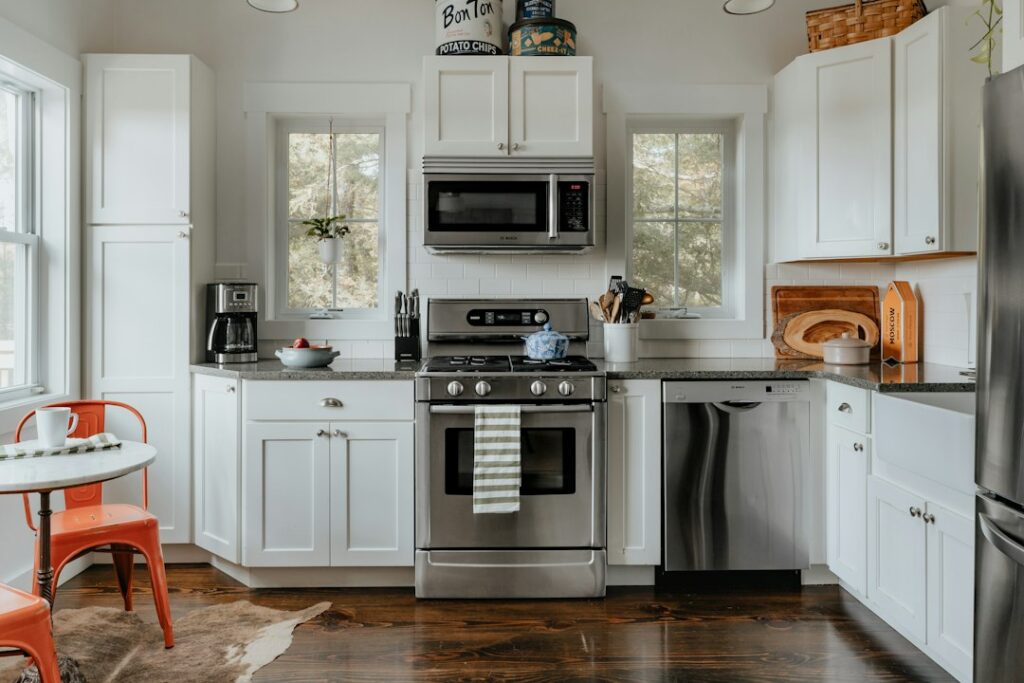
The finishing touches carry most of the visual weight. Upgraded hardware, a crisp coat of paint, under-cabinet lighting, and crown molding at the top of wall cabinets all cost little but read as high-end. A quality countertop also lifts the whole kitchen, so if you have to choose, put a bit more into the counter and slightly less into the boxes underneath.
Stock Sizes and How to Design Around Them
Stock cabinets come in fixed widths, typically in 3-inch increments from 9 to 48 inches, and understanding this saves real money. When you design your kitchen around these standard sizes, you avoid paying for custom fillers and modifications that quietly inflate a budget. Base cabinets are a standard 24 inches deep and 34.5 inches high before the countertop, and wall cabinets are usually 12 inches deep. Plan your run so the standard boxes fill the space, then use inexpensive filler strips to close any small gaps at the ends.
If a wall measures an awkward length, it is almost always cheaper to absorb the difference with a filler or a slightly larger cabinet than to order a custom-width box. Sketch the wall to scale, drop in the nearest stock sizes, and you will see how little custom work a typical kitchen actually needs.
The Bottom Line
A cheap kitchen cabinet is a smart buy when you protect the fundamentals: a sturdy box, good drawer glides, and solid hinges. Save on species, glass fronts, and built-in organizers, then reinvest in hardware, lighting, and a nice counter. Do that, and a budget kitchen can look and function like one that cost twice as much, while leaving money in your pocket for the rest of the remodel.