Fencing a quarter-acre yard can swing from $1,200 for basic wire to over $14,000 for cedar privacy panels, and the gap is mostly about which material you pick. The cheap types of fences still on the market deliver real function (containing dogs, marking property lines, basic security) for $5 to $18 per linear foot installed. The catch is that low-cost options sacrifice either privacy, aesthetics, or longevity, and matching the right cheap fence to the actual job site saves more money than chasing the absolute lowest price. A vinyl-coated chain link for the dog run plus a privacy panel only on the visible street side, for example, can cut total spend by 60 percent over fencing the whole lot in cedar.
Part of our Decks & Outdoor guide — explore the full guide →
Welded Wire and T-Post (Cheapest Functional Option)
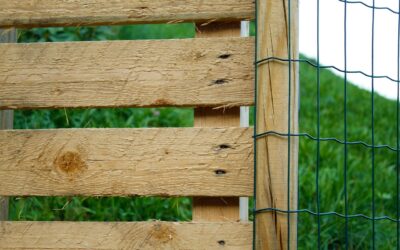
At $3 to $5 per linear foot in materials, welded wire on steel T-posts is the absolute cheapest functional fence. A 100-foot roll of 4-foot galvanized welded wire from Tractor Supply runs about $90, and 6-foot T-posts cost $6 each at 10-foot spacing. Total materials for a 100-foot run come in around $200.
This style works well for rural property lines, garden enclosures, and chicken yards. It will not stop a determined dog or provide privacy, and the visual is purely utilitarian. Expect 15 to 20 years of life from galvanized wire in dry climates and 10 to 12 in humid coastal areas before rust takes over.
Chain Link (Best Value for Security)
Chain link sits at $8 to $15 per linear foot installed for a 4-foot height and $14 to $22 for 6-foot. A standard 100-foot run with one walk gate runs about $1,100 to $1,800 from a fencing contractor. DIY installation cuts material-only cost to roughly $6 per foot but requires concrete-set terminal posts at every corner and gate.
Vinyl-coated chain link (black or dark green PVC over galvanized steel) costs about 30 percent more but visually disappears against landscaping in a way bare galvanized never does. It also doubles useful lifespan to 30-plus years. For a backyard dog area where appearance matters slightly, this is the sweet spot of the cheap types of fences.
Split Rail (Cheap for Long Property Lines)
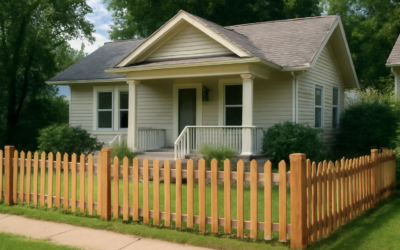
Pressure-treated pine or cedar split rail runs $12 to $18 per linear foot installed. Posts space at 8-foot intervals and rails simply slot through pre-drilled holes, making installation fast. A 200-foot run averages about $2,800 from a contractor or $1,400 in DIY materials.
Split rail does nothing for privacy or pet containment by itself, but adding 4-foot welded wire on the inside (another $2 per foot in materials) creates an attractive containment fence at well under half the cost of a solid wood privacy fence. This combo is common across the Mid-Atlantic and Southeast for horse properties and large suburban lots.
Pressure-Treated Wood Privacy
If you need actual privacy on a budget, pressure-treated southern yellow pine pickets on standard pre-built panels run $18 to $28 per linear foot installed for a 6-foot height. A 150-foot perimeter averages $3,000 to $4,200. Compare that to $5,500 to $7,500 for the same run in western red cedar.
The trade-off is appearance and lifespan. Pressure-treated pine starts greenish-brown and weathers to silver-gray within a year unless sealed. Expect 15 to 20 years before warping and rot require panel replacement. Sealing with Thompson’s Water Seal ($25 per gallon, covers 200 square feet) every three years extends life by another 5 to 7 years.
Bamboo Roll Screens (Cheapest Privacy Visual)
Bamboo roll fencing costs $4 to $8 per linear foot for materials and installs in a single afternoon by wiring it to an existing chain link or wood post frame. A 100-foot screen runs $400 to $800 in materials. This is the fastest way to convert an ugly chain link into a private backyard without permits or excavation.
Lifespan is the limit. Untreated bamboo lasts 3 to 5 years in most US climates before cracking and color loss. Reed and brushwood alternatives offer similar pricing with comparable lifespans. Plan to replace rather than repair.
Permits, Setbacks, and HOA Rules
Most municipalities require a permit for any fence over 6 feet tall and many require one for fences over 4 feet. Permit fees run $25 to $150 depending on jurisdiction. Call before you dig, since utility marking through 811 is free and federally mandated. Hitting a buried gas or fiber line costs thousands in repairs and possible fines.
Setback rules typically require fences to sit 6 inches inside the property line, not on it. Putting a fence directly on the line creates legal headaches if a survey ever proves the line is elsewhere. HOAs often restrict materials and heights, so review the covenants before ordering anything.
DIY vs Hire a Contractor
Labor accounts for 40 to 60 percent of installed fencing cost on most projects. DIY installation of chain link, welded wire, or split rail is realistic for a homeowner with a post hole digger or rented auger. Save roughly $4 to $8 per linear foot.
Hire out wood privacy installations longer than 100 linear feet. Setting 20-plus posts plumb and aligned, with concrete footings extending below frost line (typically 36 to 42 inches in the northern half of the US), is more labor than most weekend projects warrant. Get three bids, verify the contractor carries general liability insurance, and never pay more than one-third up front.
Maintenance Costs Over Time
The cheapest fence on day one is rarely the cheapest fence over 20 years. Welded wire costs $3 per foot installed but rusts and sags by year 10, requiring full replacement at another $3 per foot. Total 20-year cost: $6 per foot. Vinyl-coated chain link costs $14 per foot installed but lasts 30 years with no maintenance. Total 20-year cost: $14 per foot, or $0.70 per year.
Pressure-treated wood needs sealing every three years at $0.40 per linear foot in materials and labor, adding $2.40 per foot over 20 years on top of the $20 per foot install cost. Vinyl privacy fencing costs $25 to $35 per foot installed but needs no maintenance beyond occasional power washing. Among the cheap types of fences, vinyl-coated chain link delivers the lowest cost per year of useful life for most applications, while vinyl privacy delivers the lowest lifetime cost for full-privacy installations.