Light gray and cream rugs dominate showroom floors, but anyone with kids, pets, or a busy household eventually learns the hard truth: pale rugs show every crumb, paw print, and coffee splash. A chocolate rug flips that problem on its head. Deep brown reads as warm and grounding, works as a rich neutral in almost any color scheme, and hides everyday dirt better than nearly any other shade. If you have been overlooking brown in favor of trendier neutrals, here is why a chocolate rug deserves a serious look and how to decorate around one.
- Why Choose a Chocolate Brown Rug
- Colors That Pair Beautifully With Chocolate
- Where a Chocolate Rug Works Best
- Materials and Pile Options
- Sizing and Placement
- Avoiding a Room That Feels Too Dark
- Cleaning and Maintenance
- Shades of Chocolate to Consider
- Textures That Make Chocolate Shine
- The Bottom Line
Why Choose a Chocolate Brown Rug
Brown is the color of wood, leather, and earth, which is exactly why it feels so naturally cozy in a home. A chocolate rug brings that warmth to the floor and anchors a room the way a dark hardwood does. Practically speaking, it is one of the most forgiving colors you can put underfoot. Dirt, pet hair, and small stains disappear into the deep tone instead of announcing themselves.
It also functions as a true neutral. Chocolate pairs with warm and cool palettes alike, slips into traditional and modern rooms, and lets you swap out pillows and accents over the years without ever clashing. That versatility makes it a smart long-term investment rather than a trend you will tire of.
Colors That Pair Beautifully With Chocolate
Building a room around a chocolate rug is easy once you know its best partners. Reliable combinations include:
- Cream and beige: Soft, classic contrast that keeps a brown-heavy room from feeling dark.
- Blue: From powder blue to navy, blue and brown is a timeless, sophisticated pairing.
- Blush and dusty pink: Warm brown makes pink feel grown-up and elegant.
- Teal and turquoise: Adds a fresh, spa-like pop against the earthy base.
- Gold and brass: Metallic accents glow against chocolate for a luxe, layered look.
- White: Crisp and clean, keeping the room feeling airy and modern.
If you want a monochromatic, enveloping feel, layer chocolate with tan, camel, and caramel for a warm tonal scheme that reads as cozy and intentional.
Where a Chocolate Rug Works Best
The dirt-hiding superpower makes brown ideal for the busiest rooms in the house. It shines in:
- Living rooms: Grounds the seating area and hides the traffic of daily life.
- Family and playrooms: Forgiving of snacks, spills, and constant foot traffic.
- Entryways and hallways: Camouflages tracked-in dirt right where it accumulates.
- Home offices and dens: Reinforces a warm, focused, library-like atmosphere.
- Dining rooms: Disguises the inevitable crumbs and drips under the table.
In a small or dim room, balance the depth of a chocolate rug with lighter walls and plenty of layered lighting so the space stays bright and open rather than heavy.
Materials and Pile Options
The fiber and pile height shape both the look and the feel of a brown rug. Consider your priorities:
- Wool: Naturally stain-resistant and durable, with a rich depth of color that makes chocolate look luxurious.
- Polypropylene: Affordable, fade-resistant, and easy to clean, great for high-traffic and casual rooms.
- Shag or high pile: Plush and cozy, perfect for a bedroom where you want softness underfoot.
- Low pile or flatweave: Practical and easy to vacuum, ideal for dining rooms and entries.
A deep chocolate looks especially rich in a plush pile, where the shifting shadows of the fibers add dimension. For high-traffic zones, a durable low-pile wool or synthetic keeps maintenance simple.
Sizing and Placement
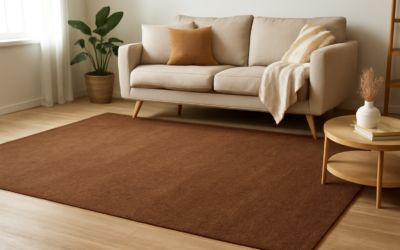
Scale a chocolate rug to the room like any area rug. In the living room, choose a size large enough that at least the front legs of your sofa and chairs sit on it, tying the furniture together. Under a dining table, leave roughly 24 inches of rug beyond the table on all sides so chairs stay on the rug when pulled out. Because a dark rug visually grounds a space, a generously sized chocolate rug can make a large room feel more cohesive and intimate.
Avoiding a Room That Feels Too Dark
The one risk with a deep brown rug is a room that tips into heavy or cave-like. A few moves prevent it. Keep walls and larger furniture pieces lighter to balance the dark floor. Add texture and light-reflecting accents like mirrors, brass, and glossy ceramics. And bring in a few crisp white or cream elements to create contrast that keeps the eye moving. Done right, chocolate feels warm and enveloping rather than dim.
Cleaning and Maintenance
A chocolate rug is one of the lowest-maintenance colors you can own day to day, since the deep tone swallows the crumbs, dust, and pet hair that make lighter rugs look grubby within hours of vacuuming. That forgiving quality is exactly why it suits busy households so well. Even though brown hides dirt, regular care keeps the rug healthy and the color rich. Vacuum weekly to remove embedded grit that dulls the fibers over time. Blot spills promptly rather than rubbing. Rotate the rug every few months so foot traffic and any sunlight wear it evenly, since dark rugs can show fading in sun-exposed spots. A rug pad underneath adds cushioning and keeps the rug from slipping. For wool, occasional professional cleaning preserves both the fibers and the depth of the chocolate tone.
Shades of Chocolate to Consider
“Chocolate” covers a spectrum of browns, and the exact shade changes the feel of the rug. Knowing the range helps you match it to your room:
- Dark chocolate: A deep, near-espresso brown that reads almost as a neutral dark anchor, ideal for grounding a light room.
- Milk chocolate: A warmer, medium brown with more visible warmth, cozy and inviting in family spaces.
- Chocolate with red or amber undertones: Adds richness and pairs beautifully with warm woods and traditional decor.
- Cool or taupe-leaning chocolate: A grayed brown that suits modern, muted palettes and cool wall colors.
Check the undertone against your existing flooring and furniture. A warm chocolate over cool gray hardwood can clash slightly, while a cool-leaning chocolate blends right in. When ordering online, request a swatch if possible, since screen images rarely capture a brown’s true undertone.
Textures That Make Chocolate Shine
Because deep brown is a solid, quiet color, texture is what keeps a chocolate rug from looking flat. A high-low or carved pile creates subtle patterns of light and shadow that add dimension. A plush shag catches the light differently across its surface, giving the color depth and movement. Even a flatweave with a subtle woven texture adds interest without introducing competing colors.
This makes chocolate an excellent choice when you want a rich, grounding rug that reads as calm rather than busy. Layering texture also lets a solid brown rug hold its own in a room full of pattern elsewhere, providing a restful anchor for the eye. If your space already has bold wallpaper or patterned upholstery, a textured solid chocolate rug balances it beautifully.
The Bottom Line
A chocolate rug is one of the smartest and most underrated choices for a real, lived-in home, combining cozy warmth, endless versatility, and unmatched dirt-hiding practicality. Pair it with cream, blue, blush, or gold to bring out its richness, choose a pile that matches how the room is used, and balance the depth with lighter walls and good lighting. The result is a warm, grounded space that stays looking clean long after a pale rug would have surrendered.