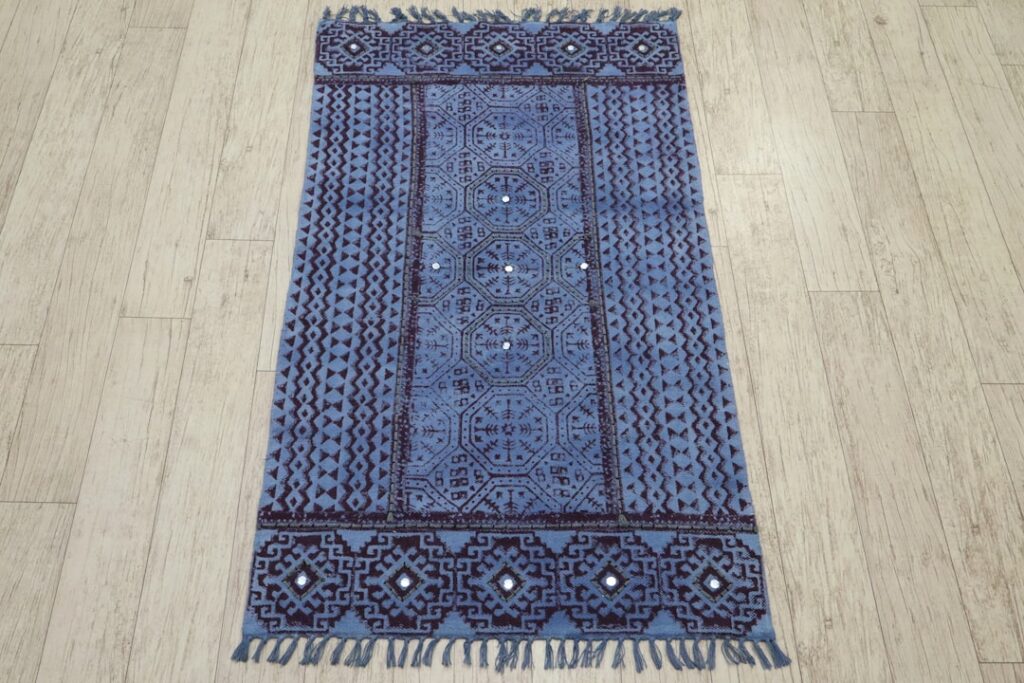
A dusty blue rug brings a soft, muted serenity to a room that few other colors can match, sitting somewhere between powder blue and slate with a gentle grey undertone. Because a dusty blue rug is calming rather than bold, it works as both a quiet neutral and a subtle color statement, which is why it has become a favorite in bedrooms, living rooms, and coastal-inspired spaces. This guide explains how to style it, what materials to consider, and how to choose the right size and care routine.
What Makes Dusty Blue So Versatile
Dusty blue is a desaturated, softened blue, meaning grey has been mixed in to knock down the brightness. That muted quality is exactly why it reads as sophisticated rather than juvenile. Unlike a vivid royal or navy, dusty blue behaves almost like a neutral, pairing effortlessly with a wide range of colors and never dominating a room.
The color shifts subtly with light. In bright daylight it can appear closer to a soft periwinkle, while in evening or lamplight it deepens toward a moody grey-blue. This chameleon quality means a dusty blue rug keeps a space interesting throughout the day without ever feeling loud.
Rooms That Suit a Dusty Blue Rug
The calming nature of dusty blue makes it ideal for spaces where you want to relax or focus. It performs especially well in:
- Bedrooms: Blue is widely associated with restfulness, and a dusty blue rug reinforces a serene, spa-like mood.
- Living rooms: Adds a gentle wash of color that grounds neutral furniture without competing with artwork or decor.
- Nurseries: Soft and soothing, it suits a calm nursery palette far better than a saturated primary blue.
- Home offices: Cool tones are known to aid concentration, making dusty blue a smart choice underfoot at a desk.
It is also a natural fit for coastal, French country, and Scandinavian-inspired interiors, where muted, weathered colors define the whole aesthetic.
Colors That Pair Beautifully
One of the biggest advantages of dusty blue is how many palettes it complements. Here are combinations that consistently work:
- White and cream: Crisp and airy, this pairing leans coastal and keeps the room feeling light.
- Warm wood tones: Oak, walnut, and rattan add warmth that balances the coolness of the blue.
- Blush and terracotta: Soft warm tones create a gentle, romantic contrast against dusty blue.
- Grey and charcoal: A tonal, monochrome scheme that feels modern and understated.
- Brass and gold accents: Metallics warm up the palette and add a touch of quiet luxury.
Avoid pairing dusty blue with equally muted, competing pastels in large amounts, since the room can start to feel washed out. Anchor it with at least one crisp or warm element to keep the scheme grounded.
Choosing the Right Material
The fiber affects both how the color looks and how the rug wears over time. Different materials render dusty blue in slightly different ways:
- Wool: Renders the muted blue richly and resists stains naturally. Expect $400 to $2,000 depending on size and weave, and count on years of durability.
- Polypropylene: Affordable at $100 to $500 and highly stain-resistant, though the color can look slightly flatter than in wool.
- Polyester: Soft with vivid color depth, often $150 to $500, but prone to flattening in high-traffic areas.
- Viscose blends: Add a subtle sheen that makes dusty blue look luxurious, though these are delicate and best in low-traffic rooms.
For a bedroom or formal living room where softness matters, wool or a wool blend is worth the investment. For a family space, a durable polypropylene dusty blue rug shrugs off spills and traffic.
Patterns and Textures to Consider
Dusty blue appears across many rug styles, and the pattern sets the tone. A faded vintage or distressed Persian design in dusty blue feels collected and timeless, softening the color further. Geometric and trellis patterns in dusty blue and cream lean modern and fresh. A solid or heathered dusty blue rug offers the most flexibility, acting almost like a colored neutral you can build any room around.
Texture matters too. A high-low pile or hand-loomed weave adds subtle dimension that catches light and enhances the color’s shifting quality, while a flat weave gives a crisp, casual look that suits coastal and Scandinavian rooms.
Sizing and Placement
Size the rug to the room and its furniture rather than the color. In a living room, choose a rug large enough for at least the front legs of your seating to rest on it, leaving 8 to 18 inches of bare floor around the edges. Popular living-room sizes include 8×10 and 9×12, with 5×8 for smaller spaces.
In a bedroom, position the rug so the lower two-thirds of the bed sits on top, creating a soft blue border to step onto each morning. Under a dining table, leave 24 inches on all sides so chairs stay on the rug when pulled out. Tape out the footprint before buying to confirm the scale feels right.
Care and Keeping the Color True
Muted colors like dusty blue can fade in strong sunlight, so keep the rug out of direct, prolonged sun or rotate it 180 degrees every few months to spread any fading evenly. Vacuum weekly to lift grit, and blot spills immediately with a clean cloth and cool water rather than rubbing.
Use a rug pad underneath for cushioning and slip resistance, and address stains promptly since lighter blues show marks more than dark or busy rugs. For wool, schedule a professional cleaning every 18 to 24 months to refresh the fibers and restore the soft, dusty tone. With a light maintenance routine and thoughtful placement, a dusty blue rug delivers a calm, timeless elegance that quietly elevates whatever room you place it in.
Design Styles That Suit Dusty Blue
Dusty blue is deeply tied to several enduring design aesthetics, which explains its lasting popularity. Coastal and Hamptons-inspired interiors rely on soft, weathered blues to evoke sea and sky without resorting to nautical clichés. French country style pairs dusty blue with creamy whites, natural linen, and distressed wood for a relaxed, timeworn elegance.
Scandinavian rooms use muted blues as gentle accent tones against white walls and pale wood floors, while modern farmhouse schemes lean on dusty blue to warm up an otherwise neutral palette. Even traditional and transitional rooms welcome the color as a softer alternative to navy. Because it behaves like a colored neutral, a dusty blue rug slots into most of these looks without demanding a full redesign around it.
Common Buying Mistakes to Avoid
A few missteps can undercut an otherwise great rug. Watch for these:
- Judging color from a screen: Monitors distort muted tones badly, often making dusty blue look brighter or greyer than it is. Always order a sample if you can.
- Ignoring undertones: Some dusty blues lean green, others lean grey or lavender. Match the undertone to your room rather than assuming all dusty blues are identical.
- Placing it in harsh sun without protection: Muted colors fade faster than saturated ones, so factor in sun exposure and rotation.
- Choosing delicate fibers for busy rooms: A viscose dusty blue rug looks stunning but will not survive a high-traffic family space. Match durability to use.
Sidestep these pitfalls and a dusty blue rug rewards you with a serene, adaptable foundation that flatters furniture, softens hard floors, and brings quiet character to a room without ever overwhelming it.