If you want a rug that feels fresh and current without making a loud statement, a blue and tan rug is one of the easiest wins in home decor. The pairing of cool blue with warm, sandy tan is naturally balanced, the same logic behind coastal interiors, where sea and sand sit comfortably side by side. It’s calming, versatile, and forgiving, blending into both modern and traditional rooms while hiding everyday dirt better than crisp whites or pale grays. This guide covers why the combination works so well, how to style it, and what to look for when you buy.
Why Blue and Tan Just Works
The magic is in the temperature contrast. Blue is a cool color that calms and recedes, while tan is a warm neutral that grounds and softens. Put them together and neither overwhelms; the blue keeps the room from feeling flat, and the tan keeps the blue from feeling cold. Because tan is essentially a sophisticated neutral, it acts like a bridge that lets the blue play well with almost any wall color, wood tone, or furniture finish in the room. The result is a palette that feels relaxed and put-together at the same time.
The Looks It Creates
Depending on the shades and pattern, a blue and tan rug can carry several different styles:
- Coastal and Hamptons: Soft sky or denim blues with sandy tan evoke beach houses and breezy, relaxed living.
- Transitional: A muted navy paired with greige-tan reads as updated traditional, great for blending old and new furniture.
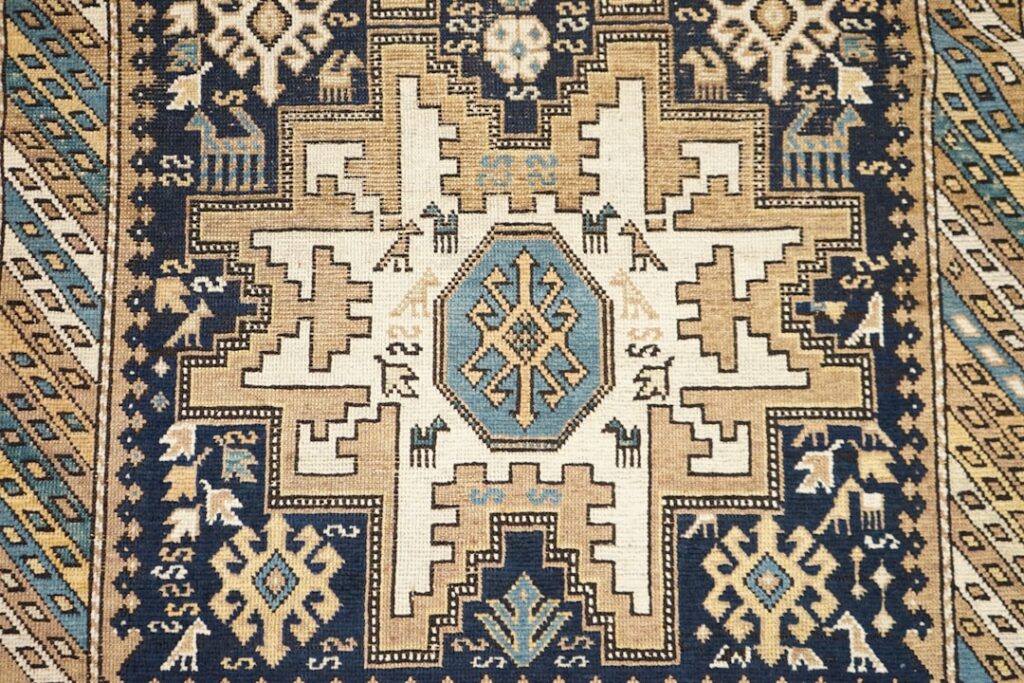
- Bohemian: Tan or camel fields with indigo geometric or tribal patterns feel layered and globally inspired.
- Modern farmhouse: Faded blue with warm tan and a distressed or vintage-washed look fits the cozy, lived-in farmhouse aesthetic.
The same two colors can feel crisp and coastal or warm and rustic depending entirely on the depth of the blue and the pattern, so match those to the mood you’re after.
Where It Fits Best
This is one of the most placement-flexible palettes you can choose. In living rooms, a blue and tan rug grounds a seating area while staying easy on the eyes. In bedrooms, the calming blue and soft tan create a restful feel underfoot. It’s a natural in coastal-themed sunrooms and family rooms, and the tan’s dirt-hiding quality makes it practical for entryways and high-traffic hallways. Because tan reads as neutral, the rug coordinates with brown leather, gray sofas, white slipcovers, and natural wood alike.
Styling Around It
A blue and tan rug is so adaptable that you have a lot of freedom. A few reliable moves:
- Echo the blue in throw pillows, ceramics, or art to make it feel intentional throughout the room.
- Add natural textures like rattan, jute, linen, and light wood to lean into the relaxed, organic side of the palette.
- Bring in white or cream as a third color to keep the look airy and fresh.
- Warm it up with brass or gold accents and a few greenery touches for a more layered, finished feel.
Because tan is a neutral, you can shift the whole vibe of the room just by changing your accent colors around the rug without ever replacing it.
Material Choices
Pick the fiber based on where the rug is going and how hard it’ll be used:
- Wool: Soft, durable, and naturally stain-resistant, wool keeps its color and texture for years and feels great underfoot. Ideal for living rooms and bedrooms.
- Cotton: Lighter and more casual, often machine-washable in flat-weave form, good for casual and lower-traffic spaces.
- Polypropylene and synthetics: Budget-friendly, fade- and moisture-resistant, and easy to clean, which makes them the smart pick for high-traffic areas, kids, pets, and indoor-outdoor use.
- Jute and natural blends: Add organic texture that plays beautifully with the coastal feel, though they’re less plush and harder to clean.
For a porch, sunroom, or busy family space, an indoor-outdoor polypropylene rug in blue and tan resists fading and hoses clean. For the main living room, wool gives the best feel and longevity.
Sizing It Right
Don’t go too small. In a living room, the front legs of your seating should rest on the rug at a minimum, with an 8×10 covering most standard rooms and a 9×12 for larger open layouts. Under a dining table, allow at least 24 inches of rug beyond the table on every side. In a bedroom, leave a comfortable border of rug showing on three sides of the bed. A properly sized rug makes the whole room feel pulled together rather than cramped.
Care and Maintenance
One quiet advantage of this palette is forgiveness; the tan field hides everyday dust and soil far better than a white or pale rug. Vacuum regularly with the beater bar off or raised, rotate the rug twice a year for even wear, and use a rug pad to prevent slipping and reduce abrasion. Blot spills immediately from the outside in, and clean according to the fiber, machine-washable cotton in the wash, wool and synthetics with appropriate cleaners or periodic professional service. Keep an eye on the blue areas if the rug sits in strong sunlight, and rotate to keep fading even.
Choosing the Right Shade of Blue
The blue you pick changes the entire personality of the rug. Soft sky and powder blues paired with tan feel light, airy, and coastal, perfect for sunrooms and bright living spaces. Denim and chambray blues read casual and relaxed, great for family rooms. A deep navy against tan turns the palette more formal and grounded, leaning transitional or even traditional. Slate and grayish blues feel modern and sophisticated. As a rule, lighter blues open up and brighten a room, while deeper blues add weight and contrast. Hold a swatch against your wall color and the largest piece of furniture in the room, since the same tan-and-blue rug can feel completely different next to a white sofa versus a brown leather one.
Pattern Choices That Suit the Palette
Blue and tan adapts to almost any pattern, and the pattern sets the style as much as the colors do. Geometric and trellis patterns feel clean and contemporary. Traditional medallion and floral designs lean classic and formal. Distressed or vintage-washed patterns give that popular faded, lived-in farmhouse look. Stripes and simple borders read coastal and tailored. Solid or tonal textured rugs in these colors create a calm, understated base for a busier room. If your furniture and decor are already patterned, choose a quieter rug; if the room is mostly solids and neutrals, a bolder blue-and-tan pattern adds welcome interest underfoot.
The Bottom Line
A blue and tan rug delivers a calm, coastal-inspired look that fits almost any room and any decor style, all while hiding dirt better than lighter alternatives. Choose your blue’s depth and the pattern to set the mood, pick wool for plush longevity or synthetic for high-traffic practicality, size it generously, and accessorize around it. It’s a low-risk, high-reward choice that stays relevant through changing trends and keeps your space feeling fresh.