Few color combinations have stood the test of time like a blue and red rug. It’s the palette of classic Persian and Oriental carpets, of nautical New England interiors, and of countless traditional living rooms, and it works because the two colors are complementary opposites that balance each other. Red brings warmth and energy; blue cools and grounds it. Put them together in a rug and you get a piece that feels both lively and stable, formal yet livable. The trick is choosing the right shade balance and pattern for your room, then styling around it. Here’s how to do both.
Why Blue and Red Works
On the color wheel, blue and red sit far enough apart to create contrast without clashing, which is what makes the combination read as rich rather than busy. Warm red advances toward the eye and energizes a space, while cool blue recedes and calms it. A rug that blends the two creates visual tension that keeps a room interesting. It’s also deeply rooted in tradition; the indigo-and-madder palette of antique Persian rugs has been prized for centuries, which is why a blue and red rug instantly signals a classic, collected look.
Classic Patterns to Know
This color pairing shows up across many rug styles, each with a different feel:
- Persian and Oriental: Intricate medallions, florals, and borders in deep navy and rich red. Formal, timeless, and forgiving of foot traffic.
- Tribal and Caucasian: Bolder, more geometric designs with strong red fields and blue accents. A little more rustic and casual.
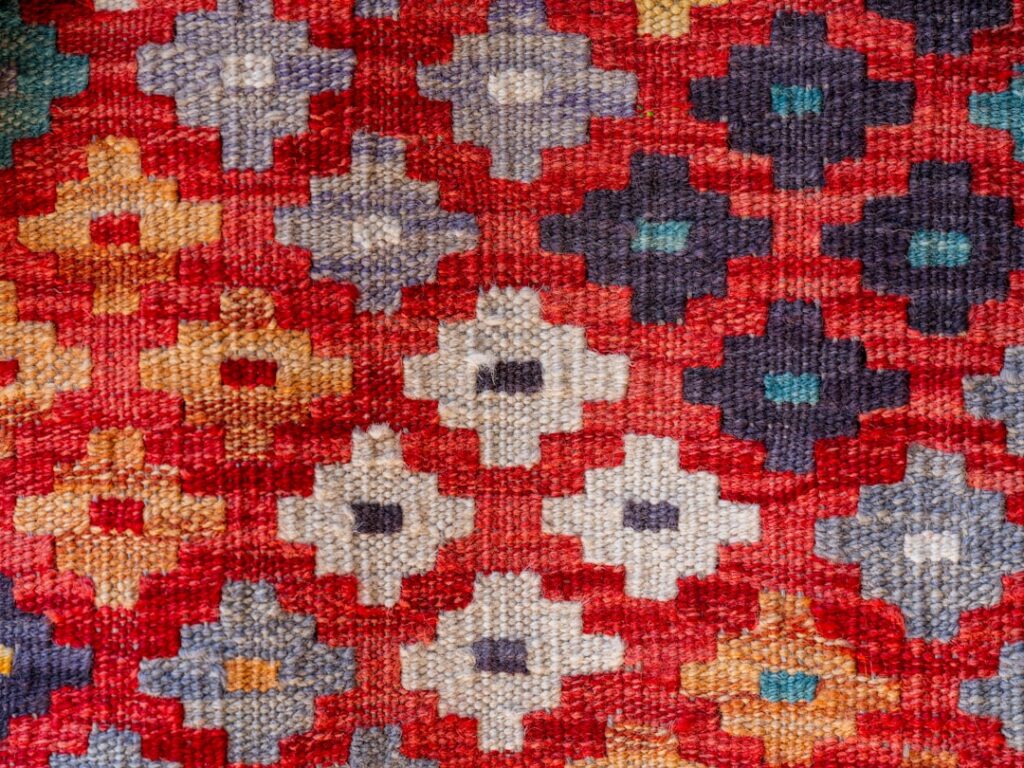
- Southwestern and kilim: Flat-woven geometric patterns mixing reds and blues for a warmer, earthier statement.
- Modern abstract: Contemporary rugs that use blue and red in painterly or color-block designs for a fresh, current take on the classic combo.
Match the pattern’s formality to the room. A detailed Persian suits a traditional living or dining room; a geometric kilim feels right in a casual den or sunroom.
Which Color Should Dominate?
The balance between the two colors changes the mood completely. A red-dominant rug feels warm, energetic, and bold, great for grounding a neutral room or adding life to a formal space. A blue-dominant rug feels calmer and more serene, easier to live with in a bedroom or a busy family room. If you’re nervous about a strong statement, lean blue-heavy with red as the accent. If your room feels flat and needs energy, let red lead. Either way, the rug becomes the anchor that the rest of the room takes its cues from.
Styling the Room Around It
A patterned blue and red rug does a lot of visual work, so let it be the star. Some reliable approaches:
- Keep large furniture neutral. Cream, gray, beige, or white upholstery lets the rug pop without competing.
- Pull one accent color out. Echo the rug’s red in throw pillows or the blue in curtains or a lampshade to tie the room together.
- Add a touch of metal or wood. Brass, gold, or warm wood tones complement the traditional feel of the palette.
- Don’t add competing patterns. If the rug is busy, keep walls and major pieces solid so the eye has somewhere to rest.
For a more modern look, pair a blue and red rug with clean-lined contemporary furniture; the unexpected contrast between traditional palette and modern shapes looks intentional and current.
Choosing the Right Material
The fiber matters as much as the pattern. Your main options:
- Wool: The classic choice. Naturally stain-resistant, durable, soft, and holds dye beautifully, which keeps the reds and blues vivid for decades. Best for living and dining rooms.
- Cotton: Lighter, more casual, and washable in flat-weave styles. Good for kitchens, sunrooms, and lower-traffic spots.
- Synthetics (polypropylene, polyester): Budget-friendly, fade-resistant, and easy to clean. The practical pick for high-traffic areas, kids, pets, and outdoor or indoor-outdoor use.
For a rug you want to keep for years, wool is worth the premium. For a busy household or a quick refresh, a quality synthetic in the same palette looks great and shrugs off spills.
Sizing It Properly
The most common mistake is going too small. In a living room, the front legs of your sofa and chairs should sit on the rug at minimum; an 8×10 fits most standard rooms, with 9×12 for larger open spaces. Under a dining table, the rug should extend at least 24 inches past the table edge so chairs stay on it when pulled out. In a bedroom, frame the bed with rug showing on three sides. A bold pattern like blue and red looks more grounded and intentional when the rug is generously sized.
Keeping It Looking Good
Vacuum regularly with the beater bar off or set high to avoid pulling fibers, and rotate the rug twice a year so traffic and sunlight wear it evenly. Use a quality rug pad to prevent sliding and reduce wear. Blot spills immediately from the outside in, never rub, and reach for professional cleaning every few years on wool pieces. The good news with this palette: the busy pattern and deep colors hide everyday soil far better than a solid or light rug would.
Best Rooms for a Blue and Red Rug
This palette earns its keep in specific spaces. In a formal living room, a Persian-style blue and red rug instantly adds a collected, established feel that newer furniture borrows credibility from. In a dining room, the rich colors and busy pattern hide the inevitable crumbs and spills while dressing up the table. Home offices and libraries take well to the traditional, studious mood the colors create. Entryways and hallways benefit from the dirt-hiding pattern in a high-traffic zone. The combination also works in a child’s room or playroom, where the bold colors feel cheerful and the busy pattern forgives the mess. About the only place to think twice is a strictly minimalist, all-neutral space, where a heavily patterned rug may fight the aesthetic, though even there a subtle abstract version can work.
Warm vs. Cool Versions of the Palette
The specific shades you choose shift the whole feel. A version built on deep navy and brick or burgundy red reads as classic, traditional, and a little formal. A brighter palette of true red and cobalt or royal blue feels more energetic and playful, well-suited to a casual or eclectic room. Faded, vintage-washed blues and reds give a relaxed, lived-in look that pairs with farmhouse and boho styles. Think about your room’s existing temperature, warm woods and earthy tones pair beautifully with the richer, deeper versions, while cooler grays and whites let a brighter blue and red pop as a vivid focal point.
The Bottom Line
A blue and red rug is a timeless choice that brings warmth, energy, and classic style to almost any room. Decide which color you want to lead, pick a pattern that matches your room’s formality, choose wool for longevity or synthetic for practicality, size it generously, and let it anchor a mostly neutral space. Get those decisions right and you’ll have a rug that looks deliberate and collected for years.