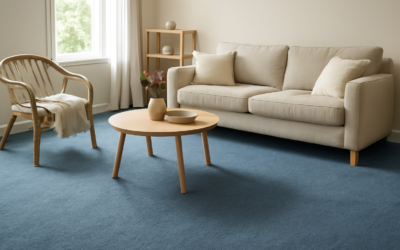
A well-chosen solid blue rug does something a busy pattern rarely can — it anchors a room without competing with furniture, art, or wood tones already in the space. Blue is one of the most forgiving colors in home design because it reads as both calming and versatile, working equally well in a coastal living room, a moody navy study, or a bright kids’ playroom. But “blue” covers a lot of ground, from a near-black navy to a soft powder wash, and the shade you pick changes the entire feel of a room far more than most homeowners expect before they order one online and unroll it on the floor.
Choosing the Right Shade of Blue
Navy is the most popular solid blue for a reason — it functions almost like a neutral, pairing with warm wood tones, black metal fixtures, and white trim without ever looking out of place. It hides stains and shading from vacuum lines better than lighter blues, which makes it a practical pick for a busy living room or a dining area under a table that sees regular spills.
Denim blue sits a step lighter than navy and brings a slightly more casual, worn-in feel, often chosen for family rooms or reading nooks where a slightly softer look is wanted. Powder blue and other pale, dusty blues work beautifully in bedrooms and nurseries but show dirt, pet hair, and foot traffic patterns much more readily, so they’re a better fit for lower-traffic rooms. Teal-leaning blues — those with a hint of green mixed in — tend to pair well with brass hardware and green houseplants, giving a room a slightly more jewel-toned, layered look. Cobalt, a saturated, true blue, works as a bold statement in an otherwise neutral room but can feel overwhelming if the walls and furniture are already colorful.
Material Options and How They Wear
Wool remains the benchmark material for a solid-color rug because it hides imperfections in dye lots well, resists crushing under furniture legs, and naturally repels dirt thanks to the lanolin still present in the fiber. A wool rug in a solid blue will typically show less visible wear and vacuum-line shading over the years than a synthetic equivalent, though it comes at a higher price point and needs more careful spot-cleaning.
Polypropylene (often labeled as “indoor/outdoor” or simply synthetic) is by far the most budget-friendly and stain-resistant option, making it a strong pick for households with young kids, pets, or anyone nervous about red wine near a light blue rug. The tradeoff is a slightly plastic-like hand feel underfoot and a tendency to flatten under heavy furniture over time. Jute-blend rugs, which mix natural jute fibers with wool or cotton, bring texture and a more organic look, but pure jute doesn’t take dye evenly, so most jute-blend “solid blue” rugs are actually wool-or-cotton-faced with a jute backing rather than a fully jute pile.
Pile Height and How It Changes the Look
A low-pile or flatwoven blue rug, generally under about 1/4 inch thick, works well under dining tables since chair legs won’t sink or catch on the weave, and it’s easier to vacuum crumbs out of a flat weave than a plush pile. Flatweaves also tend to read a bit more casual and are common in kitchens and entryways where durability matters more than plushness.
A mid-pile rug, roughly 1/2 inch to 3/4 inch, is the most common choice for living rooms, offering a comfortable underfoot feel without becoming difficult to vacuum or push furniture across. Plush or shag-style rugs with pile heights of 1 inch or more feel luxurious in a bedroom but aren’t practical for high-traffic areas or under rolling office chairs, since the fibers crush and the surface becomes uneven over time.
Sizing Rules That Actually Matter
Getting rug size right matters more to how a room looks than the color choice itself. In a living room, the general rule is that at minimum the front legs of every major piece of furniture (sofa, chairs) should sit on the rug, and ideally all four legs of at least the sofa should be on it for a fully grounded look. An 8×10 rug is the standard size for a mid-sized living room arranged around a sofa and two chairs, while a 9×12 rug suits larger rooms or a full sectional setup.
In a dining room, the rug needs to extend at least 24 inches beyond the edge of the table on all sides so that chairs stay on the rug even when pulled out to sit down — for a standard 6-person table, that typically means a rug in the 8×10 or 9×12 range rather than anything smaller. Bedrooms work a little differently: a rug placed under the bottom two-thirds of the bed, extending 18-24 inches on each side, tends to look more intentional than a small rug centered under just the nightstands. Runners, typically 2.5 to 3 feet wide, work well in hallways and narrow galley kitchens where a full-size rug wouldn’t fit anyway.
Cleaning and Everyday Maintenance
Solid-color rugs, blue included, show dirt and stains more visibly than busy patterns simply because there’s no print to camouflage a spot. Regular vacuuming, ideally weekly for high-traffic rooms, prevents grit from working down into the fibers and wearing them out prematurely. For wool rugs, blot spills immediately with a clean white cloth rather than rubbing, and use a wool-safe cleaner rather than an all-purpose carpet spray, since some cleaning chemicals can strip natural lanolin and leave the fibers looking dull.
Synthetic polypropylene rugs are far more forgiving and can often handle a mild dish soap and water solution for spot cleaning, and some smaller sizes are even machine washable — always check the manufacturer’s care tag before assuming. Rotating a rug 180 degrees every 6-12 months evens out fading and wear patterns from sunlight and foot traffic, which matters more for solid colors than patterns since uneven fading is far more noticeable on a single flat color.
Sun Fading and How to Prevent It
Blue dye, particularly on wool and natural fibers, is genuinely more prone to UV fading than darker neutrals like charcoal or brown, and a rug that sits in direct afternoon sun for years can visibly lighten or shift in tone along the sun-exposed section. Navy and darker blues resist visible fading longer than pale powder or sky blues simply because the color shift is less noticeable against a darker base. UV-blocking window film, sheer curtains, or simply rotating the rug periodically all reduce uneven fading meaningfully over a rug’s lifespan.
Homeowners placing a solid blue rug in a sunroom or a room with large south-facing windows should lean toward synthetic fibers with UV-stabilized dyes, since these are specifically engineered to resist the fading that natural wool and cotton fibers are more susceptible to under sustained sun exposure.
Price Ranges by Material
Budget expectations vary widely depending on material and size. A polypropylene solid blue rug in an 8×10 size typically runs $80-$250, making it the most accessible option for renters or anyone furnishing a room on a budget. A wool 8×10 solid blue rug generally costs $300-$900, with hand-knotted or higher-grade wool construction pushing past $1,200 for the same size. Wool-jute blend rugs in a solid or near-solid blue tend to fall in the $200-$500 range for an 8×10, offering a middle ground between budget synthetics and premium wool.
Smaller sizes like a 5×7 typically run roughly 40-50% of the equivalent 8×10 price across all materials, while runners priced per linear foot generally cost $15-$60 per foot depending on material and quality. Whatever the budget, buying a rug pad underneath — typically $20-$60 for an 8×10 pad — extends the life of any rug considerably by reducing friction wear and preventing slipping, regardless of which shade of blue or material ends up on the floor.