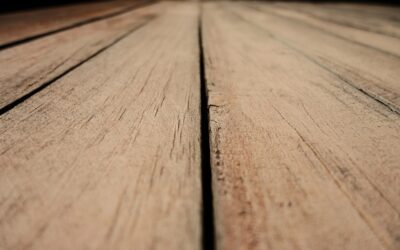
Twenty years ago, choosing a deck meant choosing pressure-treated pine and resigning yourself to annual staining. Today, composite deck flooring dominates new residential decks because it skips the maintenance treadmill entirely. Brands like Trex, TimberTech, and Fiberon have refined the material to the point where premium capped composites convincingly mimic real hardwood while standing up to UV, moisture, and foot traffic better than anything natural.
Part of our Decks & Outdoor guide — explore the full guide →
This guide covers what composite actually costs in 2026, which brands lead the market, and the installation realities that catch first-time buyers off guard. Plan to invest $15 to $35 per square foot installed for a quality composite deck.
- What Composite Decking Is Made Of
- Top Brands and Their Strengths
- Cost Compared to Pressure-Treated Wood
- Heat Performance in Hot Climates
- Installation Realities to Plan For
- Hidden Fasteners vs Face Screwing
- Maintenance That Keeps Decks Looking New
- Warranty Coverage Worth Reading
- Frequently Asked Questions
What Composite Decking Is Made Of
Modern composite boards combine recycled wood fibers, recycled plastic (typically polyethylene), and stabilizers and pigments. The wood content provides stiffness and a natural feel, while the plastic provides moisture resistance and dimensional stability. The ratio varies by brand and product line.
Capped composites add an outer plastic shell during manufacturing that wraps the entire board. This cap is what separates premium products from older uncapped composites that absorbed moisture and grew mold. Always specify capped composite for any new deck installation.
Top Brands and Their Strengths
Three brands hold roughly 80 percent of the US composite decking market. Each has strengths in specific climates and price points.
- Trex: Largest selection, strongest dealer network, $5 to $11 per linear foot board
- TimberTech (AZEK): Premium PVC and capped composite lines, $7 to $14 per board
- Fiberon: Best mid-range value, strong fade warranties, $4 to $10 per board
- Deckorators: Mineral-based composite that does not absorb moisture, $5 to $11
- MoistureShield: Cap-on-all-four-sides for ground contact, $5 to $9
Visit local lumberyards rather than big-box stores for honest dealer feedback on which products warranty claims actually pay out fairly.
Cost Compared to Pressure-Treated Wood
Material cost shocks first-time buyers. Pressure-treated lumber runs $2 to $3.50 per square foot of deck surface, while composite costs $7 to $14 per square foot just for boards. Total installed price tells a different story over the deck’s lifetime.
- Pressure-treated deck installed: $25 to $40 per sqft, replace at 15 years
- Composite deck installed: $30 to $55 per sqft, replace at 30+ years
- Wood maintenance: $300 to $800 every 2-3 years for stain and seal
- Composite maintenance: $50 to $150 per year for cleaning
Across a 30-year ownership window, composite usually costs less per year despite the higher up-front price. Add resale value and most homeowners come out ahead.
Heat Performance in Hot Climates
The biggest legitimate complaint against early composites was that dark colors got too hot to walk on barefoot in summer. The 2020s reformulations cut surface temperatures by 25 to 35 degrees Fahrenheit through reflective pigments and cooler color options.
For Phoenix, Las Vegas, or Florida installations, choose lighter colors like spiced rum, weathered teak, or sandy beach. Trex Transcend Lineage and TimberTech AZEK Vintage both feature CoolFiber and CoolColor technology that keeps surfaces 10 to 15 degrees cooler than standard composites.
Installation Realities to Plan For
Composite deck flooring needs more support than wood. Joist spacing must be reduced from 16 inches on center for wood to 12 inches on center for most composites, which adds 33 percent more framing material to the budget.
Composite boards also expand and contract along their length far more than wood does. End-to-end gaps of 1/8 inch per 20 feet of run are required, and butt joints over a single joist are forbidden. Use double joists or hidden fastener systems specifically designed for composite.
Hidden Fasteners vs Face Screwing
Most composite manufacturers offer hidden fastener systems that clip into a groove on the board edge. The result is a clean, fastener-free surface that looks premium and avoids the cracking problem that face screws cause around composite cores.
Hidden fasteners add about $1.50 per square foot to material cost but eliminate the visible screw heads that age poorly on composite. For railing posts and stair stringers where face fastening is unavoidable, use composite-specific screws like Cortex or Camo that match the board color.
Maintenance That Keeps Decks Looking New
Composite is low-maintenance, not no-maintenance. Mildew, food spills, and pollen will discolor any deck if ignored. A simple twice-a-year cleaning routine keeps composite looking new for decades.
- Spring: Pressure wash on a fan tip at 1,500 psi maximum
- Fall: Sweep leaves before they leave tannin stains
- Spot-clean grease with Dawn dish soap immediately
- Remove rust stains with oxalic acid cleaner like Cabot Problem Solver
- Never use chlorine bleach, it lightens the cap permanently
Avoid abrasive cleaners and metal scrub brushes. Both damage the protective cap and void most warranties.
Warranty Coverage Worth Reading
Premium composite warranties run 25 to 50 years on stain and fade, with limited 25-year structural coverage. The fine print matters more than the headline number. Most warranties prorate after year 10, exclude installation labor, and require professional installation by certified contractors.
Trex Transcend offers a 50-year limited residential structural warranty and a 50-year fade and stain warranty, but the labor reimbursement caps at $25 per square foot. Read the warranty document before purchase, not after a problem develops.
Frequently Asked Questions
How long does composite decking last?
Premium capped composites typically last 25 to 50 years with basic cleaning. Older uncapped products last 10 to 15 years before discoloration.
Can composite decking be installed over an existing deck?
Only if the existing framing is sound and joist spacing meets composite requirements. Most older decks need joist sistering or replacement.
Does composite decking get hot in the sun?
Yes but less than dark wood stains. Choose lighter colors and CoolColor technology lines for hot climates.
Is composite decking slippery when wet?
Premium capped composites have textured surfaces that grip well even wet. Avoid smooth or polished finishes for pool and hot tub areas.
Can I paint or stain composite decking?
Most warranties void if you paint or stain. The cap is designed to look correct out of the box. If color fades, contact the manufacturer for warranty replacement.
Prefer to explore on your own?
See how new flooring looks in your actual room in seconds — free, no signup.
Try the free Floor Studio →