People use “modern” and “contemporary” interchangeably, but designers do not. Contemporary interior design means the style of right now, and it keeps changing as tastes, materials and technology change. Modern design refers to a specific twentieth-century movement with fixed principles. A room can be both, but knowing the difference helps you choose flooring, finishes and furniture that will look current rather than accidentally retro.
Today’s contemporary look leans toward warm minimalism: clean lines softened by natural textures, curved furniture, earthy neutrals and lots of light. It is less stark than the all-white, high-gloss version of a decade ago, and it will likely keep shifting.
- What Is Contemporary Interior Design?
- Contemporary vs Modern: The Real Difference
- Materials and Finishes That Define the Look
- Color Palettes for Contemporary Rooms
- How to Create a Contemporary Look Room by Room
- Furniture, Lighting and Layout Principles
- Steps to Update an Existing Home
- Common Mistakes and Fixes
- Budget Expectations
- When to Call a Pro
- Frequently Asked Questions
What Is Contemporary Interior Design?
Contemporary interior design is the style that reflects present-day trends. Because it is always evolving, the contemporary design style of the 1990s (glass, chrome, beige carpet) looks very different from contemporary decor style today. What stays consistent are a few underlying traits:
- Clean, uncluttered spaces with fewer, more purposeful pieces
- Open layouts and an emphasis on natural light
- Neutral bases with selective contrast or color accents
- Mixed materials: wood, stone, metal, glass and textiles used together
- Integrated technology that stays out of sight
- Freedom to borrow from other styles, from mid-century to Japanese and Scandinavian influences
That last point is the biggest difference from modern design. A contemporary home interior can pair a classic mid-century chair with a curved bouclé sofa and a sculptural stone table, as long as the overall effect feels fresh and edited.
Contemporary vs Modern: The Real Difference
Modern design came from roughly the 1920s through the 1960s, shaped by the modernist and mid-century movements. Its rules are well defined: form follows function, honest materials, low horizontal profiles, organic wood furniture, tapered legs and limited ornament.
| Trait | Modern | Contemporary |
|---|---|---|
| Time frame | Fixed, about 1920s to 1960s | Always the present |
| Palette | Warm woods, earth tones, primary accents | Changes with trends; currently warm neutrals |
| Lines | Strict, geometric, horizontal | Clean but often curved or sculptural |
| Materials | Teak, walnut, molded plastic, steel | Any, including newer composites and recycled materials |
In short, modern is a historical style you can reference, while contemporary is a moving target. If you want a home that will still read as current in ten years, you will likely refresh accessories and colors along the way.
Materials and Finishes That Define the Look
Flooring
Wide-plank engineered wood in natural or light-brushed oak is the most popular choice right now, followed by large-format porcelain tile with minimal grout lines and polished or sealed concrete. Luxury vinyl plank in a matte, realistic oak visual works well on a budget or in basements. Avoid high-gloss, orange-toned finishes that read as dated.
Walls
Smooth drywall in warm whites, soft greige or muted earth tones forms the backdrop. Limewash and plaster finishes add subtle movement. Accent walls are less common than they were; texture tends to come from materials rather than paint color.
Stone and counters
Honed quartz, quartzite and marble-look porcelain with soft veining dominate kitchens and baths. Fluted details on islands and vanities add rhythm without ornament.
Metals and hardware
Matte black, brushed brass and warm bronze have replaced chrome as the default. Mixing two metal finishes in one room is common, as long as each repeats at least twice.
Textiles
Bouclé, linen, wool and textured weaves soften hard surfaces. Large, low-pile rugs anchor seating areas.
Color Palettes for Contemporary Rooms
The current palette is warmer than the cool gray era. Practical combinations include:
- Warm neutral: creamy white, oatmeal, taupe and natural oak with black accents
- Earthy: terracotta, clay, olive and sand with walnut or rattan
- Moody: deep charcoal, forest green or ink blue on one room or a cabinetry run, balanced with light floors
- High contrast: crisp white and black with one natural wood tone
Choose flooring and large surfaces in the most timeless tones you can, and put trend colors on things that are easy to change, such as paint, pillows and art.
How to Create a Contemporary Look Room by Room
Living room
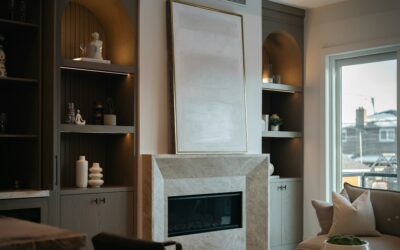
Start with a low-profile sofa in a neutral fabric, ideally with a gentle curve. Add one sculptural coffee table, a large rug and a single statement light. Keep shelves sparse, showing a few objects with varied heights. A clean-lined fireplace surround in plaster, slab stone or large tile suits the style well.
Kitchen
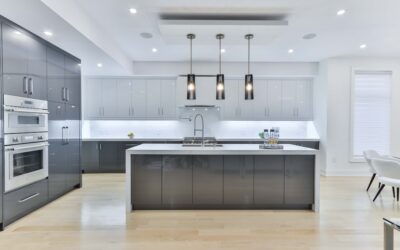
Flat-panel or slim-shaker cabinets, integrated or minimal hardware, and a slab backsplash create the base. Wood cabinetry on the island or lower run adds warmth. Pendant lights become the sculptural moment.
Bedroom
Choose an upholstered or wood platform bed, layered neutral bedding, and wall sconces instead of bulky lamps. Keep surfaces nearly empty and add texture through throws and a rug.
Bathroom
Large-format tile, a floating vanity, frameless glass and warm metal fixtures are the hallmarks. Curbless showers and wall-hung toilets push the look further.
Home office
Hide cords and equipment, pick a simple desk with clean legs, and add one comfortable chair with good lines. Closed storage keeps the room calm.
Furniture, Lighting and Layout Principles
Furniture in a contemporary room tends to sit lower and lighter than in traditional spaces. Raised legs on sofas, consoles and beds let the floor show underneath, which makes rooms feel bigger and shows off flooring. Curved silhouettes are especially popular now: rounded sofas, arched mirrors, oval dining tables and drum-shaped side tables soften the straight lines of walls and cabinetry.
Scale matters more than quantity. One generous sofa and two well-proportioned chairs usually look better than a sectional plus several accent pieces. Leave at least 30 to 36 inches for main walkways and about 16 to 18 inches between a sofa and coffee table so the room stays easy to move through.
Lighting is layered rather than relying on a single ceiling fixture. Plan three levels:
- Ambient: dimmable recessed lights or a large, simple ceiling fixture for general light
- Task: under-cabinet lights in kitchens, reading lamps beside seating and vanity sconces in baths
- Accent: picture lights, wall washers on textured surfaces and a sculptural pendant or floor lamp as the focal point
Window treatments stay simple. Sheer linen panels hung high and wide, or slim roller shades that disappear into a recessed pocket, let in light without adding visual weight. Heavy valances, swags and patterned drapes pull a room back toward traditional style.
Art follows the same edited approach. A single large canvas or a small, carefully spaced grouping reads more contemporary than walls crowded with frames. Abstract work, black and white photography and textile pieces all suit the style, and leaving some walls completely bare is part of the look.
Steps to Update an Existing Home
- Edit first. Remove clutter, heavy drapes and excess accessories. Good contemporary home decor depends on breathing room more than on purchases.
- Repaint. A warm white or soft neutral throughout instantly unifies dated rooms.
- Update lighting. Swap dated fixtures for simple pendants, sconces and dimmable recessed lights. Turn off the breaker and confirm power is off with a non-contact voltage tester before replacing any fixture, and hire a licensed electrician for new circuits.
- Change hardware. New cabinet pulls and faucets shift a kitchen or bath quickly.
- Replace flooring last. Flooring is the biggest investment, so choose it after you have settled the color direction.
- Add texture. Rugs, linen curtains and natural wood pieces keep the room from feeling cold.
Common Mistakes and Fixes
The room feels cold or sterile
Add wood, textured fabrics and warm lighting with a color temperature around 2700K to 3000K. Plants help too.
Everything matches too perfectly
Buying a full furniture set flattens the look. Mix a few vintage or handmade pieces with newer ones.
Trend overload
Choose one or two trend elements per room, such as fluted wood or a curved sofa, rather than every current idea at once.
Too little storage
Minimal surfaces only stay minimal with closed storage. Built-ins and cabinets with flat doors are worth the investment.
Budget Expectations
A refresh using paint, lighting, hardware and accessories can cost from a few hundred dollars for one room to a few thousand for a whole home. New flooring typically runs from a few dollars per square foot installed for vinyl plank to considerably more for engineered wood or large-format tile. Full renovations with new cabinetry and built-ins range into the tens of thousands depending on scope and region.
When to Call a Pro
An interior designer is worth considering for whole-home updates, open-plan layouts or when you struggle to edit. Hire licensed trades for electrical, plumbing and any wall removal, since opening up floor plans can involve structural framing that needs an engineer and a permit. Flooring installers ensure large-format tile and wide-plank wood are installed flat, which matters a great deal in a minimal space where every flaw shows.
Frequently Asked Questions
Is contemporary the same as modern design?
No. Modern design is a fixed historical style from roughly the 1920s through the 1960s. Contemporary design reflects whatever is current and keeps evolving.
What colors are used in contemporary interiors?
Right now, warm neutrals such as creamy white, taupe and greige dominate, with black accents and earthy tones like clay and olive. The palette changes over time.
What flooring suits a contemporary home?
Wide-plank light or natural oak, large-format porcelain tile, polished concrete and matte luxury vinyl plank all fit well.
Can contemporary design feel cozy?
Yes. Layer natural wood, textured fabrics, rugs and warm lighting. Today’s contemporary style leans warmer and softer than older versions.
How do I make my house look contemporary on a budget?
Declutter, repaint in a warm neutral, update lighting and hardware, and add one or two statement pieces. Save flooring and cabinetry upgrades for later.