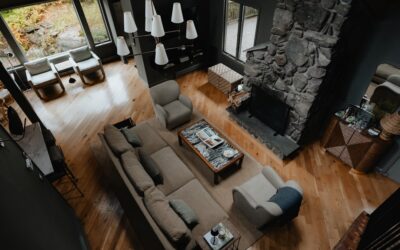
Walk into any newly built home from the past five years and one design choice jumps out before the furniture does: the floor. Contemporary flooring has shifted away from the busy oak strip and small-format tile that dominated the 1990s, leaning instead on wide planks, monolithic surfaces, and a restrained color story. This guide breaks down what actually qualifies as contemporary, what each option costs in 2026, and where each material wins or fails. Read it before you spend $4 to $18 a square foot on something you will live with for 15 years.
What Actually Counts as Contemporary in 2026
The term is loose, but a few visual cues are consistent. Planks are 7 to 12 inches wide and 60 to 86 inches long. Tile arrives in 24×48 or 32×32 sheets with rectified edges and grout lines under 1/16 inch. Color palettes lean toward muted greiges, smoked oaks, true matte blacks, and warm neutrals like clay or oat. Sheen levels stay below 15 degrees, meaning ultra-matte surfaces that absorb light instead of reflecting it.
The category covers more than one material. Engineered hardwood, large-format porcelain, polished concrete, luxury vinyl plank, and select natural stone all fit the brief when sized and finished correctly. The thread tying them together is minimalism, not the substrate underneath.
Top Material Options Compared
Here are the five materials homeowners actually shortlist when they want a contemporary look, ranked by typical install volume.
- Wide-plank engineered oak: 7.5 to 10.25 inches wide, white-oak veneer over Baltic birch, $7 to $14 per sq ft installed
- Large-format porcelain tile: 24×48 or 32×32, rectified edges, $9 to $18 per sq ft installed
- Luxury vinyl plank (LVP): 9-inch wide, 28-mil wear layer, $4 to $8 per sq ft installed
- Polished concrete: ground and sealed existing slab, $6 to $12 per sq ft
- Honed marble or limestone: 24×24 minimum, $15 to $30 per sq ft installed
Each material reads as contemporary only when sized and finished to the standards above. A 3.25-inch oak strip in semi-gloss polyurethane will not, no matter how new the home is.
Pros of Going Contemporary
Resale data from Zillow and the National Association of Realtors keeps showing the same trend: homes with wide-plank wood or large-format tile sell faster and command 2 to 5 percent premiums in major metros. The reasons are practical, not just aesthetic.
Fewer seams mean fewer dirt traps. A 32×32 porcelain tile has 75 percent less grout than a 12×12 of the same square footage. Wide planks make rooms feel larger because the eye reads fewer joints as more open space. Matte finishes hide micro-scratches that gloss surfaces magnify under raking light. Most modern wide-plank products use click-lock or floating systems that tolerate seasonal movement better than nailed strip oak.
The Real Drawbacks Nobody Mentions
Wide planks cup and crown more than narrow strips when humidity swings outside the 35 to 55 percent range. Plan on a whole-home humidifier in dry climates or a dedicated dehumidifier in humid ones, which adds $400 to $1,800 to the project.
Large-format tile demands a perfectly flat substrate. The ANSI A108 standard requires variation under 1/8 inch over 10 feet for tiles 15 inches or larger. Most existing slabs and subfloors miss that target, so budget $1.50 to $3.50 per sq ft for self-leveling underlayment before the tile even arrives.
Matte finishes show footprints, dust, and pet hair more visibly than satin or semi-gloss. Polished concrete is unforgiving on dropped glassware and feels cold underfoot below 65°F without radiant heat. Honed marble etches if you spill orange juice and walk away for an hour.
Installation: DIY or Hire It Out
LVP and floating engineered wood are the only honest DIY options in this category. A confident homeowner with a miter saw, tapping block, and three weekends can finish a 600 sq ft floor and save $1,800 to $3,000 in labor. Plan for 5 to 8 percent cutting waste on rectangular rooms and 10 to 15 percent on diagonal layouts.
Large-format tile, polished concrete, and stone are professional-only jobs. Tile setters with documented experience on slabs over 15 inches charge $7 to $12 per sq ft for labor alone because the cuts, levelness, and back-buttering requirements are unforgiving. Concrete polishing requires a 3-phase grinder and dust extraction that costs $1,200 a day to rent.
Best Rooms for Each Material
Match the material to how you actually use the space. Wide-plank engineered oak excels in living rooms, bedrooms, dining rooms, and hallways but is a poor choice for full bathrooms. Large-format porcelain is the safest bet for kitchens, bathrooms, and mudrooms because it handles standing water and scrubbing chemicals.
LVP earns its keep in basements, laundry rooms, and rental units where waterproof performance matters more than long-term refinishing potential. Polished concrete works for ground-floor great rooms with radiant heat already in the slab. Save honed marble for low-traffic powder rooms where the patina will read as character instead of damage.
Buying Checklist Before You Order
Use this list before you put down a deposit on any modern wide-plank product.
- Confirm wear-layer thickness: 20-mil minimum for LVP in residential use, 28-mil for kitchens with stools
- Verify the AC rating: AC4 or higher for laminate, PEI 4 or 5 for porcelain in living areas
- Request a 12-inch sample and view it in your actual room at three times of day
- Ask for a written moisture test result on slabs: under 4 lbs per 1,000 sq ft per 24 hours for most materials
- Order 10 percent overage for square rooms, 15 percent for rooms with multiple cuts or diagonal patterns
- Check warranty fine print: many wide-plank engineered warranties void below 6.5-foot ceilings or above 70 percent humidity
Frequently Asked Questions
Is contemporary flooring more expensive than traditional?
On a per-square-foot basis, often yes. Wide-plank engineered oak runs 30 to 50 percent more than 3.25-inch strip oak of the same species. Large-format porcelain costs roughly twice what 12×12 ceramic does. The trade-off is fewer seams, longer plank life, and stronger resale appeal.
Can I mix two modern materials in one home?
Yes, but limit it to two and use a clean transition such as a flush metal T-bar in matching color. The most successful combinations pair wide-plank wood in living areas with large-format porcelain in wet zones, with the transition placed at a doorway threshold rather than mid-room.
How long does modern wide-plank flooring last?
Engineered oak with a 4mm wear layer can be sanded twice and lasts 40 to 60 years. Porcelain tile and polished concrete last the life of the building when installed correctly. LVP carries a 15 to 25 year residential warranty but realistically performs 10 to 18 years in active households.
Prefer to explore on your own?
See how new flooring looks in your actual room in seconds — free, no signup.
Try the free Floor Studio →