Walk into a well-designed modern home and the kitchen often steals the show with its sleek surfaces and uncluttered look. A contemporary style kitchen is defined by clean lines, current materials, and a restraint that lets quality finishes speak for themselves. Unlike traditional kitchens with their ornate detailing, or strictly modern kitchens locked into a single era, contemporary design reflects what is current right now, blending the best of present-day materials and trends into a space that feels fresh, functional, and calm. Here is how the look comes together.
Part of our Kitchen Remodeling guide — explore the full guide →
What Defines Contemporary Style
People often use “contemporary” and “modern” interchangeably, but there is a meaningful difference. Modern design refers to a specific historical movement with strict, minimalist roots. Contemporary, by contrast, means of-the-moment. It evolves with current trends and freely borrows from other styles.
In a kitchen, that translates to a focus on simplicity, function, and visual quiet. Surfaces are smooth, lines are straight or gently curved, and clutter is hidden. The result is a space that feels open and intentional rather than busy or decorative.
Clean Lines and Flat-Front Cabinets
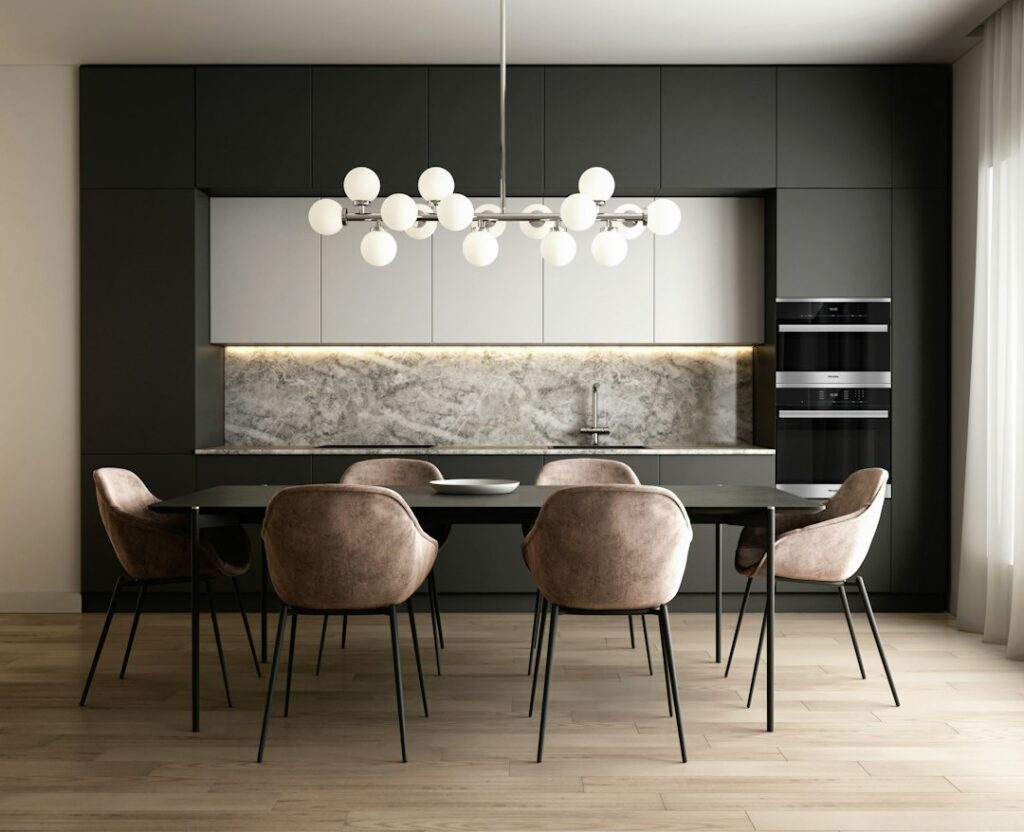
Cabinetry sets the tone, and in a contemporary kitchen the hallmark is the flat-front, or slab, door. These doors are smooth and unadorned, with no raised panels, beadboard, or fussy molding. The simplicity creates the sleek, horizontal flow that defines the style.
Full-height cabinets that run to the ceiling reinforce the clean look while adding storage and eliminating the dust-collecting gap above. Frameless, or full-access, cabinet construction is common because it maximizes interior space and supports that seamless, gap-free appearance contemporary kitchens are known for.
Minimal and Hidden Hardware
Few details say “contemporary” faster than the near-absence of visible hardware. Designers favor minimal pulls, slim edge profiles, or hardware-free cabinetry entirely.
- Integrated channel pulls: A routed groove or lip lets you open doors and drawers with no protruding handle at all.
- Push-to-open mechanisms: Touch-latch hardware keeps fronts completely smooth.
- Slim bar pulls: When hardware is used, it is typically a simple, linear bar in a matte or brushed finish.
This restraint keeps the eye moving across uninterrupted surfaces, which is central to the uncluttered feel.
Current Materials and Finishes
Material choices are where a contemporary kitchen shows its character. The palette tends to combine engineered and natural materials in confident, often contrasting ways.
- Countertops: Quartz is a favorite for its consistent, low-maintenance surface, while large-format porcelain slabs and waterfall edges that flow down the side of an island are increasingly popular.
- Cabinet finishes: Matte laminates, painted slab doors, and natural wood veneers all fit, often paired for warmth and contrast.
- Backsplashes: Large-format tile, glass, or a continuous slab create a smooth, seamless backdrop with minimal grout lines.
Mixing a warm wood-tone cabinet with a cool, sleek countertop is a classic contemporary move that keeps a minimal space from feeling cold.
Color Palette
Contemporary kitchens lean on a foundation of neutrals: white, gray, greige, black, and natural wood tones. This restrained base creates the calm, cohesive backdrop the style depends on.
That does not mean the space has to be bland. Contemporary design embraces bold contrast and accent moments, a black island against white perimeter cabinets, a striking veined countertop, or a single deep-toned cabinet run. Because the palette is otherwise quiet, one strong color or material choice reads as intentional rather than chaotic.
Streamlined Appliances and Smart Storage
Appliances in a contemporary kitchen are sleek and often integrated. Stainless steel remains a staple, but panel-ready refrigerators and dishwashers that wear matching cabinet fronts let appliances disappear into the cabinetry for a seamless look. Built-in ovens and induction cooktops with flat, glass surfaces reinforce the clean aesthetic.
Because clutter is the enemy of this style, smart storage does a lot of work behind the scenes. Deep drawers with dividers, pull-out pantry units, appliance garages that hide small countertop devices, and toe-kick drawers all keep the visible surfaces clear. The goal is a workspace where everything has a place out of sight.
Lighting That Defines the Space
Lighting is both functional and sculptural in a contemporary kitchen. A layered approach works best:
- Recessed ceiling lights provide clean, even ambient light without visual bulk.
- Under-cabinet LED strips illuminate countertops and add a soft, modern glow.
- Statement pendants over an island serve as the room’s jewelry, often the one place a bold shape or finish is allowed.
Linear and geometric fixtures suit the style, and dimmable LEDs let you shift the mood from bright task lighting to a relaxed evening ambiance.
Flooring Choices That Fit the Look
Flooring is the foundation of a contemporary kitchen, literally and visually, and it should support the clean, seamless aesthetic. Large-format tile is a favorite because fewer grout lines mean a smoother, more continuous surface. Luxury vinyl plank (LVP) in wide boards with realistic wood or stone looks delivers warmth and durability while staying low-maintenance and water-resistant, a practical fit for a busy kitchen.
Polished or matte concrete suits the more industrial end of contemporary design, and engineered hardwood in a wide plank brings natural warmth that balances cool countertops and sleek cabinets. Whatever you choose, lean toward larger formats, simple patterns, and a finish that ties into the room’s neutral palette so the floor reads as a calm, continuous plane rather than a busy distraction.
Layout and Flow
A contemporary kitchen is as much about how it functions as how it looks. Open layouts that connect the kitchen to dining and living areas reinforce the airy, current feel and suit the way people actually entertain today. The classic work triangle, the relationship between sink, cooktop, and refrigerator, still guides efficient placement.
An island frequently anchors the plan, serving as prep space, casual seating, and a visual centerpiece all at once. Keep walkways generous, around 36 to 42 inches of clearance, so the space feels open and moves well. Thoughtful flow is what keeps a minimal kitchen from feeling like a showroom and makes it a room you genuinely want to cook and gather in.
Bringing It Together
The art of a successful contemporary kitchen is balance. Too much minimalism can feel sterile, so designers warm the space with natural wood, texture, greenery, and a few carefully chosen accents. An island anchors the room and often serves as the social and visual center, sometimes in a contrasting finish to add depth.
Ultimately, a contemporary style kitchen is about editing: clean lines, current materials, minimal hardware, and hidden storage that keep the space feeling open and current. Start with flat-front cabinets and a neutral base, add one or two confident material or color contrasts, and let smart lighting tie it together. The payoff is a kitchen that looks effortless, functions beautifully, and stays relevant as styles evolve.