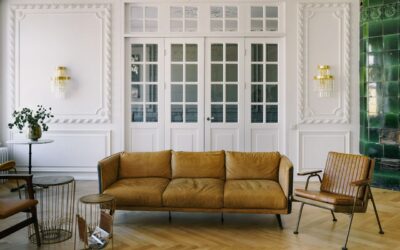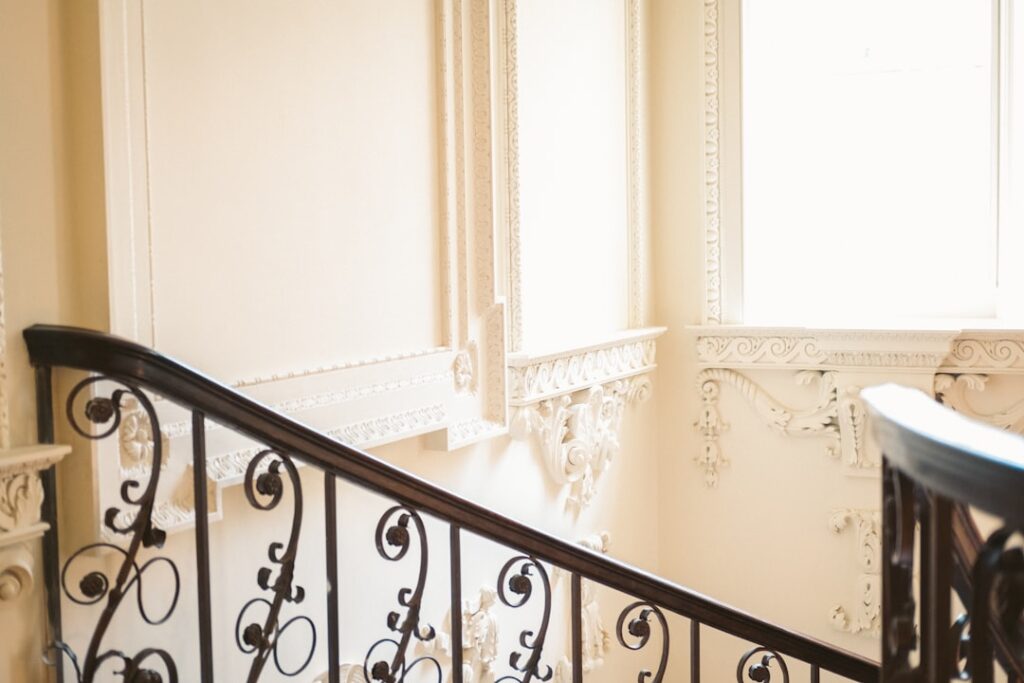
Crown molding has a reputation problem in contemporary homes — people picture ornate Victorian curves and assume the whole category clashes with clean-lined interiors. In reality, modern crown molding is thriving; designers have simply traded the egg-and-dart carvings for flat planes, crisp steps, and shadow lines, and in high-end contemporary builds the ceiling transition is often the most carefully detailed trim in the house. If you like minimalism but your drywall corners look unfinished, this guide covers the profiles, materials, and treatments that make crown work in a modern room. For sizing rules, cost, and installation basics that apply to any style, our main crown molding guide has you covered — this article is strictly about the contemporary look.
What Makes a Profile Read as Modern
Traditional crown is built from classical curves — the S-shaped ogee, the quarter-round ovolo, dentil blocks. Modern profiles strip that vocabulary down to three moves: flat planes, hard steps, and reveals (intentional gaps that cast a shadow line). The eye reads flat and angular as contemporary, curved and layered as traditional. Scale shifts too: where traditional rooms stack big built-up cornices, modern rooms usually run smaller, tighter profiles — 2-1/2 to 3-1/2 inches for 8-foot ceilings, 4 to 5-1/2 inches for 9-to-10-foot ceilings — because restraint is the whole aesthetic. Sheen finishes the job; modern trim almost always wears matte or soft satin paint rather than the semi-gloss that makes traditional trim pop.
The Core Modern Profiles
- Flat or square-edge crown — a plain angled plane, no curves at all, essentially a beveled board bridging wall and ceiling. The purest minimalist option, easy to find in MDF and poly, and forgiving to install.
- Stepped or “Art Deco” crown — two or three crisp rectangular steps. Reads architectural rather than decorative, and pairs beautifully with flat-panel cabinetry and linear lighting.
- Cove-only crown — a single concave curve. Technically a curve, but because it’s one uninterrupted sweep it reads soft-modern, and it’s the standard profile for lighting coves.
- Chamfer/bevel strips — small 1-to-2-inch angled trim that does nothing but crisp up the corner. Popular in Scandinavian-leaning interiors.
- Flat stock used as crown — a plain 1×4 or 1×6 run at the ceiling line, sometimes with a small reveal below. Craftsman-modern crossover that’s dead simple to cut because there are no compound angles.
Stock versions of flat and stepped profiles run $1.50 to $4 per linear foot in primed MDF, $3 to $7 in poly or hardwood — no premium over traditional profiles.
The Reveal: Modern Trim’s Signature Move
The detail that most separates contemporary trim from traditional is the reveal — a deliberate 1/4-to-1/2-inch gap between the molding and the ceiling (or between trim elements) that creates a clean shadow line instead of a caulked joint. Drywall accessory makers sell purpose-built products for this: Trim-Tex and Fry Reglet aluminum or vinyl reveal beads install during drywall finishing and produce a razor-straight recessed line where wall meets ceiling, with or without any wood trim at all. The fully trimless “shadow gap” ceiling is the most modern treatment available — but be honest about the cost: it demands near-perfect drywall work, is best done during construction or a full skim-coat renovation, and typically prices at $8 to $15 per linear foot in finishing labor versus $4 to $8 for installing crown. Retrofit rooms usually get the modern look faster with flat crown painted out to match.
LED Cove Lighting: Crown That Earns Its Keep
Indirect lighting is the most requested modern crown application, and for good reason — a warm LED wash across the ceiling flatters every room it touches. The build is simple: mount the crown 2 to 4 inches below the ceiling (blocking behind it), leave the top open, and run LED strip on top of the molding aimed at the ceiling. Purpose-made lighting crown from Orac Decor and outwater-style foam/poly profiles ($6 to $15 per linear foot) includes a flat ledge and wire chase designed for exactly this. Practical specs from jobs that worked: use 24V COB strip (dotless light, fewer hotspots) at 2700-3000K, add a diffuser channel, and feed it from a dimmable driver in an accessible location — never entomb the power supply behind the trim. A 15-by-15 living room cove runs $250 to $500 in materials plus the crown itself.
Paint Strategies That Modernize Any Profile
Color does half the work. The most contemporary treatment is painting crown the same color as the ceiling — the molding becomes pure geometry, a subtle stepped transition instead of a contrasting frame. Painting it the wall color instead visually raises the ceiling and suits moody, color-drenched rooms; this “color drench” treatment can make even a fairly traditional profile read current. High-contrast schemes work too, but invert the classic formula: instead of white crown on colored walls, try near-black or deep bronze trim on warm white walls for a gallery look. Keep sheens at matte-to-satin, and skip the faux finishes entirely. One field tip: same-color-as-ceiling schemes are also the most forgiving of imperfect ceilings, because they eliminate the crisp contrast line that telegraphs every wave in old plaster.
Materials: MDF, Poly, and Where Wood Still Wins
Flat modern profiles are where MDF shines — no grain to telegraph through paint, dead-straight lengths, and the crisp machined edges the style demands, at $1.50 to $3 per linear foot. Polyurethane and PVC profiles (Orac, Ekena, Azek) cost more ($4 to $10) but are the move for bathrooms, coastal humidity, and lighting coves where heat and dry-wood shrinkage would open joints. Solid wood matters when the trim will be stained — a walnut or white-oak flat crown against white walls is a signature warm-minimalist detail — or when you need custom milling for an exact reveal dimension. Whatever the material, modern profiles are unforgiving of wavy walls because flat planes show gaps that curves hide; scribe or caulk with discipline, and use a skim coat where the wall is truly bad.
Mistakes That Undermine the Modern Look
Modern trim fails in predictable ways, and almost all of them are avoidable at the planning stage. The most common: mixing vocabularies — flat, stepped crown at the ceiling while the room keeps its curvy colonial baseboards and casings. The eye reads the mismatch instantly; if you modernize one trim element, plan to bring the others along, even if the work happens in phases. Second is sheen: semi-gloss on a flat profile turns crisp geometry into shiny plastic. Stay matte to satin. Third is caulk discipline — a fat, rounded caulk bead destroys the sharp shadow line that is the entire point of a reveal or stepped profile. Cut the tube tip small, tool the bead tight, and where you’ve specified an intentional gap, leave it empty.
Scale errors run in both directions. Oversized minimalist crown reads as bulk without the ornament to justify it, while a lone 2-inch chamfer strip in a 10-foot great room simply vanishes. Use the same sizing rules as traditional crown and let the profile, not the size, carry the modern message. Finally, think through terminations before the first cut: open-concept rooms and kitchens with uneven cabinet heights leave crown with nowhere graceful to stop, and a molding that dead-ends mid-wall looks like a change order. Return it into itself, stop it at a doorway plane, or skip that wall entirely.
Room-by-Room Ideas
A few combinations that consistently land: stepped crown painted ceiling-white over a color-drenched dining room; cove-lit flat crown circling a primary bedroom at 3000K on a dimmer; chamfer strips in matte black tying together a home office with black window frames; and flat 1×6 crown in white oak wrapping a living room with matching floating shelves. In kitchens, run flat crown at the ceiling in the same paint as the cabinet uppers to extend them visually. If your baseboards are getting the same modernization pass, coordinate the two — our modern baseboard profiles guide covers the floor-level half of the equation, and rooms read best when both transitions speak the same language.