
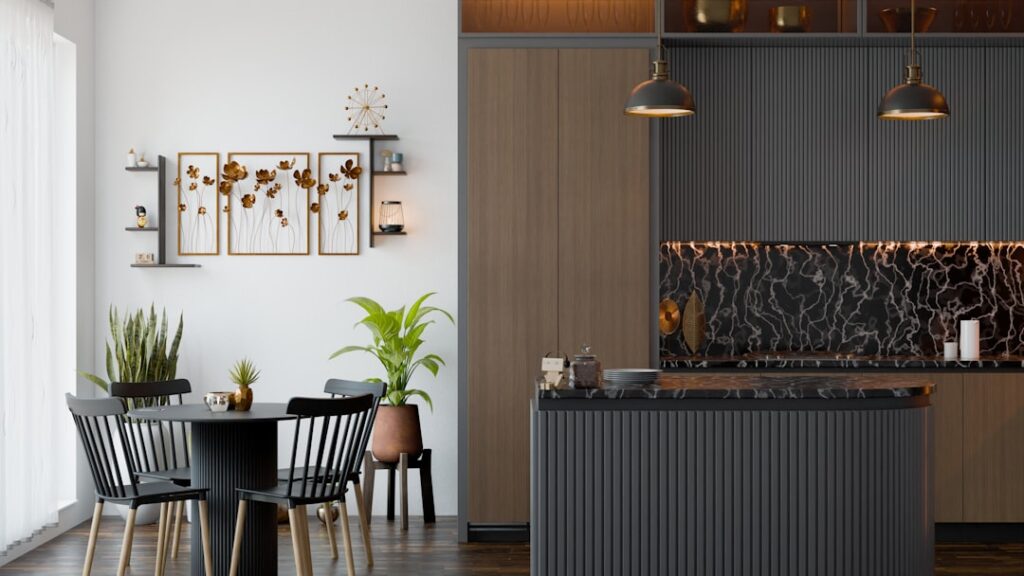
Clean lines, minimal hardware, and smart storage define today’s most sought-after kitchens. Contemporary kitchen cabinets favor flat surfaces, horizontal grain, and understated details that make a space feel calm and current. This guide breaks down the styles, materials, finishes, and realistic pricing so you can plan a modern kitchen with confidence.
- What Makes Cabinets Contemporary
- Door Styles That Read Modern
- Popular Finishes and Colors
- Material Choices
- Hardware and the Handleless Look
- Smart Storage Features
- Realistic Cost Ranges
- Ready-to-Assemble vs. Installed
- Pairing Counters and Backsplashes
- Avoiding a Cold or Dated Look
- Framed vs. Frameless Construction
- Lighting for a Modern Kitchen
- Durability of Modern Finishes
- Sustainability Considerations
- Planning Your Project
- Open Shelving and Glass Fronts
- Handle-Free Mechanisms Explained
- Coordinating Appliances
- Final Thoughts
What Makes Cabinets Contemporary
Contemporary is not the same as ultra-modern or mid-century, though they overlap. The hallmark is simplicity: flat-panel (slab) or shaker-adjacent doors, low-profile or hidden hardware, and finishes that emphasize material over ornament. Frameless (European-style) construction is common because it maximizes interior space and supports the clean, seamless look.
Door Styles That Read Modern
- Slab (flat-panel): A single smooth surface with no raised detail. The most contemporary option, available in wood veneer, laminate, or painted MDF.
- Slim shaker: A narrow rail-and-stile frame that keeps a hint of tradition while staying clean.
- Handleless: Doors with integrated finger channels or push-to-open mechanisms for a completely uninterrupted face.
Popular Finishes and Colors
Color trends have shifted toward warm neutrals and natural wood. Matte finishes dominate because they hide fingerprints and feel soft to the touch. Expect to see:
- Matte white, greige, and soft black for a timeless base.
- Deep tones like forest green and navy on islands or lower cabinets.
- Warm wood veneers such as walnut, white oak, and rift-cut oak for texture.
- Two-tone layouts pairing wood uppers with painted lowers.
Material Choices
Cabinet boxes are usually plywood or furniture-grade particleboard. Plywood is stronger and better against moisture, adding roughly $500 to $1,500 to a kitchen. Doors range from thermofoil and high-pressure laminate (durable and budget-friendly) to real wood veneer and matte-painted MDF. For a glossy, seamless European look, acrylic and lacquer fronts deliver a mirror-like surface but show scratches more readily.
Hardware and the Handleless Look
Contemporary design minimizes visible hardware. If you use pulls, choose long, slim, tubular or edge pulls in matte black, brushed brass, or stainless. For a truly seamless face, consider integrated J-channel pulls routed into the door edge or a push-to-open latch. Push-latch mechanisms cost more and can wear over time, so many designers use recessed finger pulls as a reliable middle ground.
Smart Storage Features
Modern kitchens hide clutter behind clean fronts. Frameless construction pairs well with organized interiors.
- Deep pot-and-pan drawers instead of low cabinets with doors.
- Pull-out pantry towers and corner carousels for dead-space corners.
- Tall appliance garages that keep small appliances off the counter.
- Toe-kick drawers to squeeze storage from every inch.
Realistic Cost Ranges
Cabinet pricing spans widely by construction and material:
- Stock (RTA or big-box): $60 to $200 per linear foot; a small kitchen might run $3,000 to $6,000.
- Semi-custom: $150 to $650 per linear foot, the sweet spot for most contemporary kitchens.
- Custom: $500 to $1,200+ per linear foot for bespoke sizes and premium finishes.
A typical mid-range contemporary kitchen lands around $15,000 to $30,000 installed, with counters and appliances separate.
Ready-to-Assemble vs. Installed
Ready-to-assemble (RTA) cabinets ship flat and cut labor cost, which appeals to DIYers chasing a modern look on a budget. They can deliver clean slab fronts at a fraction of custom pricing, but tolerances and finish quality vary. If your design leans on tight reveals and continuous grain-matched panels, invest in semi-custom instead, where alignment is engineered.
Pairing Counters and Backsplashes
Contemporary cabinets look best against equally restrained surfaces. Large-format porcelain or quartz slabs, waterfall island edges, and minimal-seam backsplashes reinforce the clean aesthetic. Keep the palette tight, usually two or three materials, and let one element, like a wood veneer or a bold quartz, be the focal point.
Avoiding a Cold or Dated Look
The risk with minimalism is a kitchen that feels sterile. Warm it up with natural wood tones, layered lighting under and inside cabinets, and a mix of matte and subtle texture. Avoid trend-chasing on the big-ticket items; keep cabinets neutral and express personality through stools, lighting, and accessories that are cheap to swap.
Framed vs. Frameless Construction
The construction method underneath the doors shapes the whole look. Frameless (European) cabinets have no face frame; doors attach directly to the box sides, creating wider openings and a seamless run of fronts. This suits contemporary design because it maximizes the flat, uninterrupted plane and gives you slightly more interior space. Framed cabinets, the traditional American style, add a face frame that can interrupt the clean look unless paired with full-overlay doors. For a truly modern kitchen, frameless is usually the better foundation.
Lighting for a Modern Kitchen
Lighting is what makes contemporary cabinets feel intentional rather than flat. Layer several sources for depth and function.
- Under-cabinet LED strips: Eliminate shadows on the counter and highlight the backsplash.
- In-cabinet lighting: Illuminates glass-front or open display cabinets.
- Toe-kick lighting: A subtle glow that makes cabinets appear to float.
- Linear pendants: Reinforce horizontal lines over an island.
Warm-white LEDs around 2700K to 3000K keep the space inviting rather than clinical.
Durability of Modern Finishes
Different finishes wear differently, so match the material to how hard you use the kitchen. Matte-painted MDF hides fingerprints and is easy to touch up but can chip on edges. High-gloss acrylic and lacquer look striking but reveal every smudge and fine scratch. Thermofoil and laminate are the most forgiving for busy families, resisting moisture and cleaning easily, though they can delaminate near sustained heat. Real wood veneer ages gracefully and can be refinished, but needs more careful cleaning.
Sustainability Considerations
Many homeowners now weigh environmental impact alongside looks. Look for cabinets certified low in formaldehyde emissions, such as those meeting CARB2 or ULEF standards, and boxes made from FSC-certified wood or recycled content. Bamboo and reclaimed-wood veneers are popular sustainable choices that also read as contemporary. Choosing durable materials that last decades is itself a form of sustainability, since it delays replacement.
Planning Your Project
- Decide framed vs. frameless based on your storage and budget goals.
- Choose a door profile (slab or slim shaker) and commit to it throughout.
- Select a matte finish family and one accent, such as wood or a deep color.
- Prioritize interior organizers over decorative extras.
Open Shelving and Glass Fronts
Contemporary kitchens often break up runs of closed cabinets with a few open shelves or glass-front doors to add lightness and display space. Floating shelves in wood or metal introduce warmth and keep everyday dishes within reach, while frameless glass fronts show curated glassware without clutter. Use these accents sparingly; the modern look depends on most storage staying hidden behind clean fronts, so limit open elements to a wall or two and keep what shows tidy and intentional.
Handle-Free Mechanisms Explained
Achieving a truly handleless look relies on a few mechanisms worth understanding. Push-to-open latches release the door with a light press, eliminating hardware entirely but adding a part that can wear over time. Integrated J-channel or finger pulls are routed into the door edge so you grip the door itself, a durable and popular solution. Servo-driven electric openers exist on high-end cabinets but add cost and complexity. For most kitchens, integrated finger pulls offer the cleanest reliable balance of looks and longevity.
Coordinating Appliances
Appliances play a big role in the contemporary look. Panel-ready refrigerators and dishwashers accept cabinet-matching fronts so they disappear into the run of cabinetry, reinforcing the seamless aesthetic. Where appliances are exposed, stainless steel and matte black finishes both suit modern kitchens. Integrating the appliances, or at least keeping their finishes consistent, prevents the busy, mismatched look that undermines an otherwise clean design.
Final Thoughts
Well-chosen contemporary kitchen cabinets deliver a sleek, uncluttered kitchen that stays stylish for years. Focus on flat clean fronts, matte durable finishes, and smart interior storage, then warm the space with wood and lighting. With frameless construction and a disciplined palette, you can achieve a designer-level modern look at almost any budget.


