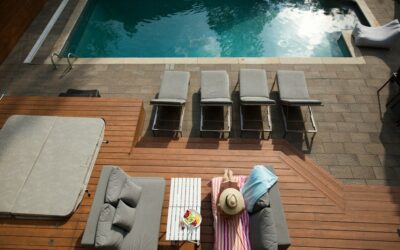
A faded, chalky pool deck rarely needs to be torn out. In most cases, the spray-textured topping is still bonded to the slab, and what has actually failed is the thin color coat on top. Cool decking paint is a water-based acrylic coating designed for that job: it restores color, seals the porous texture, and keeps the surface reflective enough to stay comfortable under bare feet on a 95°F afternoon.
Part of our Decks & Outdoor guide — explore the full guide →
The short answer for most homeowners is this: clean the deck thoroughly, repair cracks and chips with a matching texture patch, let the repairs cure, then roll on two thin coats of an acrylic cool deck coating in a light color. Expect a weekend of work for an average backyard pool deck, plus 24 to 72 hours before the area is back in normal use. Skip the prep and even a premium coating will peel within a season.
- What Cool Decking Paint Is (and Is Not)
- Tools and Materials for Cool Deck Repair
- Safety Before You Start
- How to Repair and Recoat a Cool Deck: Step by Step
- Choosing a Color and Finish That Stays Cool
- Troubleshooting Common Recoat Problems
- What Cool Deck Repair and Recoating Costs
- When to Call a Pro
- Frequently Asked Questions
If the texture itself is crumbling, delaminating in sheets, or sounds hollow when tapped over large areas, paint will not save it. That is a resurfacing job, which is a different project. Everything below assumes the knockdown texture is mostly sound and you want to repair and recoat it.
What Cool Decking Paint Is (and Is Not)
Cool deck surfaces are a cementitious topping sprayed over a concrete slab and troweled into a flattened, stucco-like knockdown pattern. The light color and open texture reflect sunlight and let the surface shed heat quickly. Over time, UV exposure, pool chemicals, and foot traffic wear down the original color coat, leaving a blotchy, dusty finish that stains easily.
A proper cool deck coating is a 100 percent acrylic, breathable, water-based product with high solar reflectance. It is thinner than a standard concrete stain-and-seal and more flexible than a masonry paint. Here is how it compares to products people are tempted to substitute:
- Solid-color concrete stain: Can work, but many are not formulated to stay cool, and darker shades get hot fast.
- Epoxy or oil-based porch paint: Avoid. These form a film that traps moisture, gets slippery when wet, and heats up far more than acrylic.
- Clear sealer only: Protects but will not fix fading or blotchy color.
- Elastomeric wall coatings: Too soft for foot traffic and can turn tacky in heat.
In short, true cool decking paint is a breathable acrylic, not a film-forming floor paint. Stick with a coating labeled for cool deck or spray-textured pool decks, and follow the manufacturer’s label on spread rate, recoat window, and temperature limits.
Tools and Materials for Cool Deck Repair
Gather everything before you start. Once patching begins, you want to keep moving.
- Pressure washer (2,500 to 3,000 psi) with a 25-degree tip or a surface cleaner attachment
- Concrete cleaner or degreaser, plus a mildewcide if you see dark growth
- Stiff nylon deck brush and a push broom
- Angle grinder with a diamond crack-chasing blade (optional, for widening cracks)
- Shop vacuum
- Flexible crack filler rated for exterior concrete, or a polymer-modified cool deck patch mix
- Hopper gun or a stiff brush and trowel for re-texturing patches
- Painter’s tape and plastic sheeting to protect coping, tile, and the pool water line
- Acrylic cool deck coating (typically one gallon per 100 to 200 sq ft per coat, depending on texture depth)
- 3/4-inch to 1-inch nap roller, extension pole, and a 3-inch brush for edges
- Safety glasses, chemical-resistant gloves, N95 or P100 respirator, and knee pads
Safety Before You Start
Two hazards deserve real attention on this project: chemicals and silica dust.
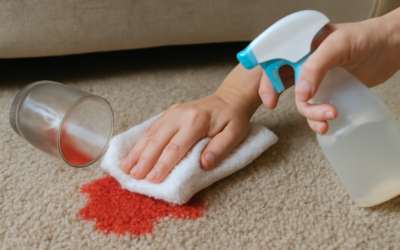
Chemicals: Concrete cleaners, degreasers, and mildew removers can irritate skin and eyes. Wear chemical-resistant gloves and eye protection, work with plenty of airflow, and read every label. Never mix cleaning products. Bleach combined with ammonia or with acidic cleaners releases toxic gases, and even a bucket that held one product can react with the next. If you choose to acid-etch a slick, sealed area, use the dilution on the label, wear full splash protection, and neutralize afterward with a baking soda or commercial neutralizer rinse before a thorough flush with clean water. Keep all runoff out of the pool.
Silica dust: Cool deck topping and the concrete underneath contain crystalline silica. Grinding cracks, sanding patches, or scraping loose texture produces fine dust that is harmful to your lungs. Use wet methods whenever possible (mist the area while cutting, or use a grinder with a water feed or a shroud connected to a HEPA vacuum), and wear at least an N95 respirator, ideally a P100, during any dry cutting or sanding. Keep kids and pets away until cleanup is done.
How to Repair and Recoat a Cool Deck: Step by Step
This sequence works for most residential pool decks. Plan the job for a dry stretch with air and surface temperatures between roughly 50°F and 90°F, and no rain forecast for at least 24 hours after the final coat.
- Inspect and tap-test. Walk the deck with a screwdriver handle or small hammer. Tap across the surface and listen for hollow spots. Mark delaminated areas, cracks, and chips with chalk. Small hollow patches can be cut out and repaired; widespread hollowness means resurfacing.
- Remove loose material. Scrape off any peeling coating and knock out loose texture around chips. Anything that moves under a putty knife has to go.
- Deep clean. Apply a concrete cleaner, scrub with a stiff brush, and pressure wash in overlapping passes. Hold the wand 8 to 12 inches from the surface so you do not blast away sound texture. Treat mildew and algae separately, then rinse again. Let the deck dry at least 24 hours, longer in humid weather.
- Chase and fill cracks. Hairline cracks can be filled directly. Wider or crumbling cracks should be opened slightly with a diamond blade (wet cutting, respirator on) into a clean V-groove, vacuumed, and filled with a flexible exterior crack filler. Tool the filler slightly below the surrounding surface so you can texture over it.
- Patch chips and hollow spots. Cut out hollow areas to sound concrete, dampen the edges, and fill with a polymer-modified patch mix. For larger spots, apply a thin scratch layer first, then build up.
- Match the texture. While the patch material is still workable, spatter a thinned mix over it with a hopper gun or flick it on with a stiff brush. Wait 5 to 15 minutes until the peaks lose their wet sheen, then lightly knock them down with a trowel dipped in water. Practice on a scrap board first.
- Let repairs cure. Follow the patch manufacturer’s cure time, usually 24 to 72 hours, before coating.
- Mask and protect. Tape off coping, tile bands, drains, and adjoining walls. Drape plastic over the pool edge to catch drips.
- Apply the first coat. Stir the coating thoroughly. Cut in edges with a brush, then roll in 4-by-4-foot sections, working the thick nap into every valley of the texture. Keep a wet edge and avoid heavy puddles in low spots.
- Apply the second coat. After the label’s recoat window (often 2 to 4 hours in warm weather), roll a second thin coat perpendicular to the first. Two thin coats outlast one thick coat and hide patches far better.
- Cure before use. Most acrylic cool deck coatings allow light foot traffic after about 24 hours and furniture after 48 to 72 hours. Keep splash-out and heavy chlorinated water off the surface during that period.
Choosing a Color and Finish That Stays Cool
Color matters more than most people expect. Light tans, soft grays, and off-whites reflect the most sunlight. A deck coated in a medium brown can run 20°F or more hotter than the same surface in a pale buff. If you want a slightly darker look, choose a coating with a published solar reflectance value and test a small patch in full sun before committing.
Slip resistance is the other factor. The knockdown texture provides most of the grip, so avoid over-applying coating until the peaks are rounded smooth. Some coatings allow a fine anti-slip additive to be stirred in; that is worth using near steps, the diving board, and spa edges.
Troubleshooting Common Recoat Problems
Peeling within weeks
Almost always a prep issue: the deck was dirty, still damp, or had an old glossy sealer that the new coating could not grip. Scrape the failed areas, clean again, and scuff any sealed surface before recoating.
White haze or blotches
That is often efflorescence, salt carried up by moisture from the slab. Scrub it off with a masonry cleaner, let the deck dry fully, and check that drainage is not sending water under the slab.
Patches still visible after coating
The texture did not match, or the patch material absorbed coating differently. Lightly re-texture the area and apply a spot coat before a full final coat.
Cracks returning
Rigid patch material in a moving crack will re-open. Use a flexible filler, and remember that some slab cracks are structural and will keep moving regardless of what you fill them with.
Surface feels hot
The color is too dark or the coating is not a cool deck formulation. Recoat with a lighter, reflective acrylic.
What Cool Deck Repair and Recoating Costs
Costs vary widely by region, deck size, and the amount of repair needed, so treat these as broad planning ranges rather than quotes.
- DIY recoat: Mostly materials. Cleaner, crack filler, patch mix, rollers, and two coats of acrylic coating for a typical backyard deck usually total a few hundred dollars. Renting a pressure washer or grinder adds a modest amount.
- Professional clean-and-recoat: Often priced per square foot and typically runs a small fraction of what full resurfacing costs, with minor crack repair sometimes included.
- Extensive patching: Adds labor quickly, since each repair has to be textured to match.
- Full resurfacing: Several times the cost of a recoat, because it involves removing or overlaying the topping and re-spraying a new texture.
Of all the options, cool decking paint is the cheapest way to extend the life of the surface. A recoat every 3 to 5 years, depending on sun exposure and pool chemistry, is far cheaper than letting the surface deteriorate to the point where resurfacing is the only option.
When to Call a Pro
Hire a pool deck or decorative concrete contractor if more than about 20 percent of the surface sounds hollow, if cracks are wider than about 1/4 inch or show one side higher than the other, if the slab has settled toward or away from the pool, or if you see gaps opening at the coping joint. Those are signs of slab movement or drainage problems that paint cannot fix. A pro can also re-spray large areas of texture so repairs blend seamlessly, which is difficult to achieve by hand.
For everything else, careful cool deck repair and two thin coats of a reflective acrylic will make a tired pool deck look new and feel noticeably cooler underfoot.
Frequently Asked Questions
Can I use regular concrete paint on a cool deck?
It is not recommended. Standard concrete and porch paints often form a non-breathable film that traps moisture, peels, becomes slick when wet, and absorbs more heat. Use a breathable acrylic coating made for cool deck or textured pool decks.
How often should cool decking paint be reapplied?
Most decks need a fresh coat every 3 to 5 years. Decks in full desert sun, with heavy splash-out from saltwater or high-chlorine pools, may need recoating sooner.
Do I need to prime a cool deck before recoating?
Many acrylic cool deck coatings are self-priming on clean, previously coated surfaces. Bare patches or a very porous topping may need a primer or a thinned first coat, so check the product label.
How long does a recoated cool deck take to dry?
It is usually dry to the touch within an hour or two and ready for light foot traffic in about 24 hours. Wait 48 to 72 hours before returning furniture and avoid heavy splashing during that period.
Can I recoat a cool deck myself?
Yes, if the texture is mostly sound. Cleaning, small crack repair, and rolling on two coats is a manageable weekend project. Large-scale texture repair or slab movement is better left to a contractor.