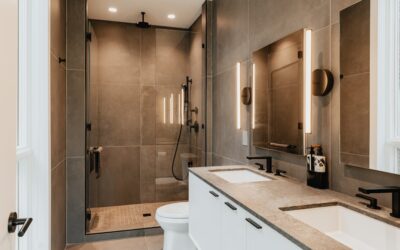
Search “gray paint” on Sherwin-Williams or Benjamin Moore and you’ll get more than 200 options across every undertone imaginable. Narrowing the field to cool gray paint colors — the ones with blue, green, or violet undertones — is the only way to find a shade that actually works in your home. Cool grays feel crisp, modern, and calming, but the wrong cool gray can read icy or sterile in the wrong light. The difference between a magazine-worthy room and a dental-office vibe is often a five-percent shift in undertone.
Part of our Paint & Walls guide — explore the full guide →
What Makes a Gray “Cool”
Cool grays carry blue, green, or violet undertones. Warm grays — sometimes called “greige” — have yellow, beige, or red undertones. Neutral grays sit between, with very subtle undertones that shift based on surrounding colors.
You can identify a cool gray by holding a paint chip against a true white card. If the gray looks like it’s leaning toward blue or green, it’s cool. If it leans toward tan or peach, it’s warm. The closer to neutral, the more flexible the color in different lighting conditions.
Top Cool Gray Paint Colors in 2026
These ten cool grays consistently perform well in real homes across the country. Light reflectance value (LRV) is included — higher numbers mean lighter, more reflective colors.
- Benjamin Moore Stonington Gray HC-170 (LRV 59): The benchmark cool gray. Soft blue undertone, works almost everywhere
- Sherwin-Williams Krypton SW 6247 (LRV 47): Light blue-gray, classic Pottery Barn vibe
- Benjamin Moore Coventry Gray HC-169 (LRV 30): Deeper, with subtle green undertone
- Sherwin-Williams Repose Gray SW 7015 (LRV 58): Borderline neutral, leans cool in most light
- Behr Silver Drop PPU18-08 (LRV 61): Very light, slight blue cast
- Farrow & Ball Cornforth White 228 (LRV 56): British favorite, cool with a hint of green
- Benjamin Moore Wickham Gray HC-171 (LRV 64): Pale, airy, cool
- Sherwin-Williams Mindful Gray SW 7016 (LRV 48): Mid-tone, slight violet undertone
- Benjamin Moore Gray Owl OC-52 (LRV 65): Light, with green-blue undertone
- Sherwin-Williams Sea Salt SW 6204 (LRV 63): Crosses into pale teal but reads as cool gray in low light
Stonington Gray and Repose Gray remain the two most-specified cool gray paint colors by interior designers in 2026 — and for good reason. Both flex well across rooms and lighting conditions.
How Lighting Changes Cool Grays
Cool grays are highly reactive to light. The same paint can look airy and crisp in one room and steely-cold in another, all within the same house.
Four lighting realities to test before committing:
- North-facing rooms: Receive cool, blue-shifted daylight. Cool grays can read very cold here — choose a warmer cool gray like Coventry Gray or skip to a greige
- South-facing rooms: Warm afternoon sun balances cool grays beautifully. Almost any cool gray works
- East-facing rooms: Cool in morning, warmer by afternoon. Mid-tone cool grays like Mindful Gray shine here
- West-facing rooms: Strong evening light, often warm. Even icy cool grays soften by 5 p.m.
Bulb temperature matters too. 2700K bulbs warm cool grays significantly; 4000K bulbs intensify their coolness. Most homes look best with 3000K bulbs for general lighting.
Room-by-Room Recommendations
Different rooms benefit from different cool grays based on use, light, and adjacent materials.
Living Rooms
Stonington Gray or Repose Gray are nearly foolproof. Both have enough warmth to feel comfortable and enough cool undertone to feel modern. Pair with warm wood floors and brass or warm-bronze accents to balance the cool wall color.
Bedrooms
Wickham Gray and Gray Owl create restful, hotel-like bedrooms. Stay in the LRV 60-plus range to keep rooms from feeling oppressive at night.
Kitchens
For kitchens with white cabinets, Sea Salt or Krypton add subtle color without compromising the clean look. For dark cabinet kitchens, Mindful Gray on the walls bridges dark cabinetry to lighter ceilings.
Bathrooms
Coventry Gray and Wickham Gray pair beautifully with white marble or marble-look quartz. Avoid the most blue-leaning cool grays in windowless bathrooms — they read clinical without natural light.
Home Offices
Slightly deeper cool grays like Mindful Gray or Coventry Gray on accent walls create focus without distracting from screens. Skip pure white if you spend hours staring at a monitor — the contrast is fatiguing.
Undertones to Watch For
Every cool gray has a secondary undertone that emerges in certain conditions. Test before painting an entire room.
- Blue undertones: Krypton, Stonington Gray, Silver Drop — read crisp and clean but can feel cold
- Green undertones: Gray Owl, Coventry Gray, Sea Salt — read soft, natural, very flexible
- Violet/purple undertones: Mindful Gray, certain Behr grays — beautiful but can clash with warm woods
Always order a sample pot ($6 to $12) and paint a 2×2 foot square on multiple walls. Look at it at 8 a.m., 2 p.m., and 8 p.m. before committing.
Pairing Cool Grays With Trim and Ceilings
Cool gray walls need the right white to look intentional. The wrong white pulls undertones in unflattering directions.
Best trim and ceiling whites for cool gray paint colors:
- Benjamin Moore Simply White OC-117: Slightly warm but reads clean — most versatile
- Benjamin Moore Chantilly Lace OC-65: True crisp white — modern feel
- Sherwin-Williams Pure White SW 7005: Neutral white that pairs well with both Repose Gray and Mindful Gray
- Benjamin Moore White Dove OC-17: Soft and warm — use carefully with very cool grays
For ceilings, painting the same trim white at 50% strength creates subtle depth without contrast lines. Or pull the wall gray up to the ceiling at 25% strength for a sophisticated tonal effect.
Best Floor Pairings
Flooring choice can make or break cool gray walls.
- Wide-plank white oak: The best universal pairing. The warm wood balances cool walls
- European oak engineered planks in light honey: Subtle pattern, perfect with mid-tone cool grays
- Light gray luxury vinyl plank: Tonal, modern, budget-friendly at $3 to $6 per sq ft
- Marble-look porcelain tile: Veined whites and grays for bathrooms and kitchens
Avoid orange-toned woods (red oak, cherry, Brazilian cherry) under cool gray walls. The two color temperatures fight, and the room ends up looking dated.
Mistakes That Make Cool Grays Fail
Five common errors:
- Not testing in actual room light — paint chips lie under store fluorescents
- Pairing cool gray walls with warm-toned hardwood and warm white trim — creates a muddy color story
- Choosing the lightest cool gray on the chip — too pale and walls read white
- Using flat finish in high-traffic areas — cool grays show scuffs more than warm tones
- Forgetting that cool grays make a room feel cooler in temperature — pair with warm textiles, wood, and brass to balance
Finish Choice and Coverage
For walls in living areas and bedrooms, eggshell or matte finishes hide imperfections best. Satin works for kitchens and bathrooms where you’ll wipe walls regularly. Avoid semi-gloss on full walls — it amplifies any drywall flaws.
Most cool grays need 2 coats over white primer. Darker shades like Coventry Gray or Mindful Gray often need a tinted primer for best coverage. Expect 1 gallon to cover about 350 square feet with two coats.
The right cool gray transforms a room more than almost any other paint choice — adding sophistication, calm, and a modern foundation that works with nearly any decor style. Pick a tested favorite like Stonington Gray or Repose Gray for your first project, and use it as the reference point when you explore the wider world of cool gray paint colors over future rooms.