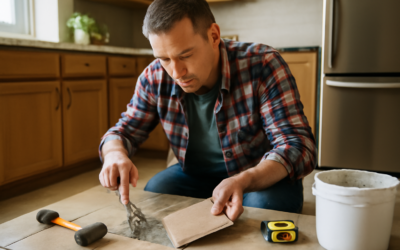
A worn pool deck rarely needs to be torn out. In most cases, cool deck repair comes down to three jobs: sealing hairline cracks before water gets underneath, patching chipped or delaminated spots, and recoating the whole surface so the color and texture match again. The acrylic, cement-based coating that keeps the deck cool underfoot is designed to be renewed, and a careful weekend of prep and patching can add years to its life.
Part of our Decks & Outdoor guide — explore the full guide →
The catch is that repairs only hold when the problem is limited to the coating. If the concrete slab beneath is heaving, sinking or cracking wider every season, patching the top layer just hides a failure that will come back. Start by figuring out which situation you have, then pick the fix that matches.
- Cool Deck Repair: Diagnose the Damage First
- Tools and Materials
- How to Fix Hairline Cracks
- Patching Chips and Delaminated Areas
- Cool Deck Resurfacing: Recoating a Faded Deck
- Chemical and Slip Safety
- Troubleshooting Common Problems
- Cost to Repair vs Resurface
- When to Call a Pro
- Frequently Asked Questions
Cool Deck Repair: Diagnose the Damage First
Walk the deck on a dry morning and look closely at each problem area. Good cool deck repair starts with sorting damage into categories, because each one calls for a different approach.
- Hairline cracks: thin, spiderweb or straight cracks in the coating only, often less than 1/16 inch wide. Common and usually cosmetic.
- Structural cracks: cracks wider than about 1/8 inch, cracks with one side higher than the other, or cracks that reappear after patching. These run through the slab.
- Chips and pop-outs: small areas where the coating has broken away, often at edges, steps or around drains.
- Delamination: the coating sounds hollow when tapped with a screwdriver handle, bubbles up or peels in sheets.
- Fading and chalking: color loss and a powdery residue that rubs off on your hand, caused by sun exposure and pool chemicals.
Tap suspicious areas with a hammer handle or a golf ball dropped from waist height. A dull, hollow sound means the coating has lost its bond, and that section must be removed before any patch will stick.
Tools and Materials
Most cool deck repairs use materials available from pool supply and masonry suppliers. For larger recoats, an acrylic pool deck coating kit sold in a matching or neutral color simplifies the job because the base, texture and topcoat are designed to work together.
- Pressure washer (around 2,500 to 3,000 psi) and a surface cleaner attachment
- Stiff brush, scraper, putty knife and cold chisel
- Angle grinder with a masonry or crack-chasing blade for opening cracks
- Flexible acrylic crack filler or elastomeric caulk rated for exterior concrete
- Bonding primer made for acrylic deck coatings
- Patching compound or texture mix compatible with your existing coating
- Trowel, texture roller or hopper gun, and a knockdown trowel
- Acrylic deck sealer or color coat
- Safety glasses, chemical-resistant gloves, knee pads and a respirator rated for the products you use
How to Fix Hairline Cracks
Hairline cracks are the most frequent reason people search for cool deck repairs, and they are also the easiest to handle. Left alone, they let water seep under the coating, which leads to delamination during freeze-thaw cycles or simply from constant splash-out.
- Clean the crack with a stiff brush and a blast of compressed air or the pressure washer, then let it dry fully, typically 24 hours in warm weather.
- If the crack is too narrow to accept filler, widen it slightly with a grinder or a utility tool into a shallow V.
- Press flexible acrylic crack filler into the groove with a putty knife, tooling it flush with the surface.
- While the filler is still tacky, dab texture mix over it so the patch blends with the surrounding knockdown pattern.
- Allow the filler to cure per the label, then spot-coat with color sealer or plan a full recoat.
Filled cracks will still show slightly until the whole deck receives a fresh color coat. That is normal and one reason most repair projects end with resurfacing the entire area.
Patching Chips and Delaminated Areas
Chips and hollow spots need more aggressive prep. Any coating that has lost its bond must come off, or the new patch will fail with it.
- Chip away loose coating with a scraper or cold chisel until you reach material that is firmly bonded all the way around the edge.
- Feather the edges so the patch blends instead of creating a raised ridge.
- Pressure wash and let the area dry. Remove any efflorescence, algae or sunscreen residue with a masonry cleaner.
- Apply bonding primer to the exposed concrete and the feathered edges.
- Trowel in patching compound in thin layers, building up to the level of the surrounding deck.
- Add the texture layer and knock it down to match the existing pattern.
For patches larger than a couple of square feet, work in cool conditions, ideally between 50°F and 85°F with no rain in the forecast for at least 24 hours. Hot sun makes acrylic cement mixes set too fast, leaving visible trowel lines.
Cool Deck Resurfacing: Recoating a Faded Deck
When the color has faded unevenly and patches are visible, a full recoat restores a uniform look. Cool deck resurfacing is also the fix for widespread chalking, since a new acrylic layer locks in the powdery surface.
Prep the whole surface
Pressure wash the entire deck, paying attention to areas near the pool edge where chlorine and salt residue build up. Scrape off any flaking sealer. If the old coating is chalky, scrub it with a cleaner recommended by the coating maker, rinse thoroughly and let the deck dry for a full day.
Apply the new coating
Mask the pool coping, drains and skimmer lids. Apply primer if the manufacturer calls for it, then roll or spray the color coat in thin, even passes. Two thin coats outperform one heavy coat, which can peel or stay soft. Keep a wet edge and work from the far side toward an exit so you are not walking over fresh coating.
Cure time
Most acrylic deck coatings are dry to light foot traffic in 4 to 8 hours but need 24 to 72 hours before furniture goes back and before heavy splash from the pool. Keep pets and kids off the deck until it has fully cured.
Chemical and Slip Safety
Deck coatings, cleaners and strippers contain chemicals that deserve respect. Work with good outdoor ventilation, wear chemical-resistant gloves and eye protection, and use a respirator whenever the product label calls for one, especially when spraying. Never mix cleaners, and keep acid-based masonry cleaners away from chlorine products, since combining them can release toxic gas. Store solvent-based sealers away from pool heaters, grills and any pilot light because the vapors are flammable.
Slip resistance is the other priority. A glossy topcoat on a pool deck can become dangerously slick when wet, so choose a sealer with a non-slip additive or broadcast fine grit into the final coat. Make sure patches finish flush with the surrounding surface; raised edges and lumpy repairs become trip hazards for barefoot swimmers, and any lifted coating near steps should be repaired promptly.
Troubleshooting Common Problems
- Patch keeps cracking: the crack is moving. Use a flexible elastomeric filler, and if it keeps widening, have the slab evaluated.
- New coating peeling: usually poor adhesion from residue, moisture or skipped primer. Strip the failed area, clean thoroughly and prime.
- Color does not match: old coatings fade in the sun. Plan a full recoat rather than chasing patch colors.
- White haze after drying: often moisture trapped under the sealer. Let the deck dry longer before the next coat, and avoid coating late in the day when dew forms.
- Deck feels hot: dark colors absorb heat. Lighter tones keep the surface noticeably cooler.
Cost to Repair vs Resurface
Small DIY repairs cost little: crack filler, patch mix and a gallon of color coat may run from under $100 to a few hundred dollars. A full DIY recoat of a typical pool deck often costs a few hundred to around a thousand dollars in materials, depending on size and product quality.
Professional pricing varies widely by region. Patch-and-recoat work by a pool deck contractor commonly runs roughly $2 to $5 per square foot, while a complete resurfacing with a new textured overlay tends to fall around $4 to $8 per square foot. Tear-out and replacement costs considerably more, which is why repair is usually worth trying first.
When to Call a Pro
Call a pool deck or concrete contractor if cracks are wider than 1/8 inch, if one side of a crack sits higher than the other, or if large sections of coating are hollow. Those signs point to slab movement, poor drainage or an old coating failure that DIY patches will not solve. A pro can also check that the expansion joint between the coping and deck is intact, because a failed joint lets deck movement crack the pool beam. For decks over 800 square feet or with complex steps and borders, professional application usually produces a more consistent texture and finish.
Frequently Asked Questions
Can you put new cool decking over old cool decking?
Yes, as long as the old coating is firmly bonded. Remove any loose or hollow areas, clean thoroughly, prime and apply the new layer. Coating over a failing layer will cause the new one to peel.
How often should a cool deck be resealed?
Most pool decks benefit from a fresh sealer or color coat every 2 to 3 years. Decks in intense sun or with heavy chemical splash may need attention sooner.
Why does my cool deck keep cracking?
Recurring cracks usually follow movement in the concrete slab underneath, often from soil settling, poor drainage or missing control joints. Flexible fillers help, but ongoing movement needs a professional evaluation.
Can I pressure wash a cool deck?
Yes, with care. Use a fan tip and moderate pressure, and keep the wand moving. Too much pressure in one spot can gouge the texture or strip weak coating.
Is cool deck slippery when wet?
A properly textured deck offers good traction, but some glossy sealers reduce grip. Adding a non-slip additive to the final coat keeps the surface safer for barefoot traffic.