
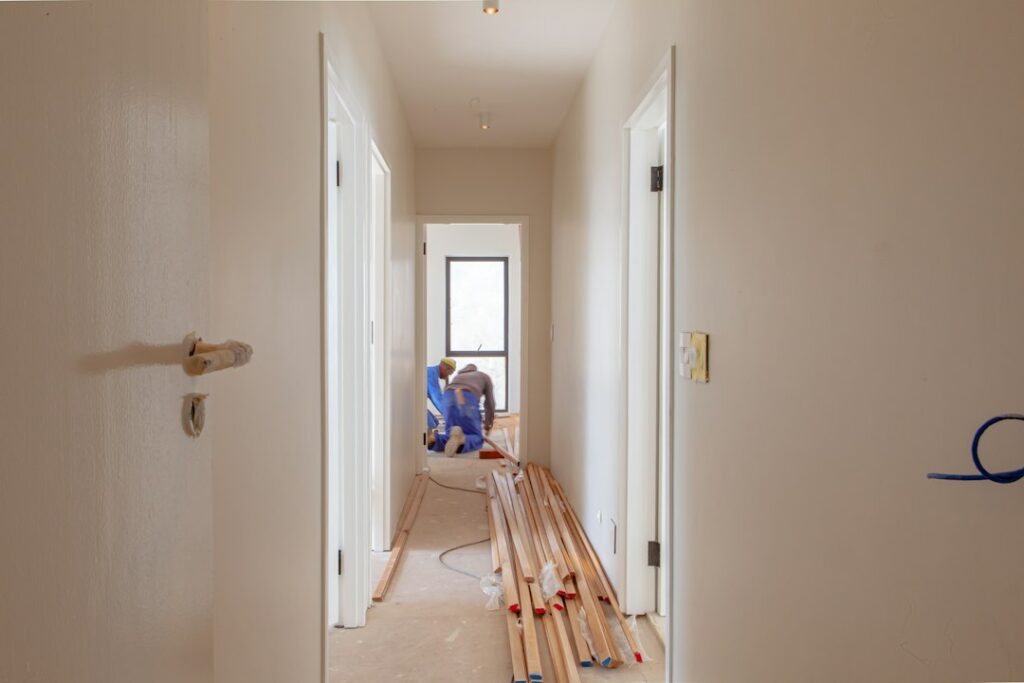
Adding a bathroom downstairs sounds simple until someone mentions breaking up the concrete floor. The cost to add bathroom to basement spaces swings widely, from about $10,000 for a basic half bath over existing rough-ins to $35,000 or more for a full bath that needs a sewage ejector pump and trenching. What decides where you land is not the vanity or the tile; it is how the waste water leaves the room. Here is how the budget breaks down, and where you can realistically save.
Part of our Bathroom Remodeling & Flooring guide — explore the full guide →
- Average Cost to Add Bathroom to Basement
- The Biggest Cost Factor: Drainage and Plumbing
- Framing, Electrical, and Ventilation Costs
- Fixtures and Finishes
- Permits, Inspections, and Hidden Costs
- DIY Versus Hiring a Contractor
- Ways to Save on a Basement Bathroom
- Sample Budget for a Mid-Range Full Basement Bath
- Is It Worth It? Return on Investment
- Frequently Asked Questions
Average Cost to Add Bathroom to Basement
Nationally, most homeowners pay between $15,000 and $25,000 for a full three-fixture basement bathroom of about 40 to 60 sq ft. That works out to roughly $300 to $500 per sq ft, far higher than general basement finishing, because a bathroom packs plumbing, electrical, ventilation, and waterproof surfaces into a small footprint.
| Project Type | Typical Range | Notes |
|---|---|---|
| Half bath with existing rough-in | $6,000 to $12,000 | Toilet and sink only |
| Full bath with existing rough-in | $12,000 to $20,000 | Shower, toilet, vanity |
| Full bath, gravity drain, no rough-in | $18,000 to $28,000 | Concrete trenching required |
| Full bath with sewage ejector | $22,000 to $35,000+ | Drain below sewer line |
| Upflush macerating toilet setup | $8,000 to $15,000 | Minimal concrete work |
Regional labor rates move these numbers by 20 to 30 percent. Expect the high end in Boston, the Bay Area, Seattle, and the New York suburbs, and the low end in much of the Midwest and South.
The Biggest Cost Factor: Drainage and Plumbing
Plumbing usually eats 30 to 45 percent of the budget. The key question is whether your main sewer line leaves the house above or below the basement floor.
Existing Rough-In Plumbing
Many homes built since the 1990s have capped drain stubs in the basement slab, often three pipes grouped together near the main stack. If you have them, you save $3,000 to $6,000 in trenching and drain work. A plumber will still camera-inspect the lines, typically $150 to $400, to confirm they are not cracked or clogged with construction debris.
Breaking Concrete for New Drains
Without rough-ins, a crew saws and jackhammers a trench, usually 12 to 18 inches wide, from the new fixtures to the main line. Budget $50 to $150 per linear foot for cutting, excavating, laying pipe at the required 1/4-inch-per-foot slope, backfilling, and re-pouring. A 20-foot run commonly costs $2,000 to $4,500.
Sewage Ejector Pumps
If your sewer exits the foundation above the basement floor, gravity will not carry waste out. You need a sealed ejector basin set into the slab with a pump that lifts waste up to the main line. The pump and basin cost $400 to $1,200 for equipment, and $2,500 to $5,000 installed with venting and a check valve. Pumps last roughly 7 to 10 years. An alternative is an upflush or macerating toilet system, $800 to $2,000 for the unit, which grinds waste and pumps it through a small pipe without breaking concrete. They are practical for half baths but are louder and need more maintenance.
Framing, Electrical, and Ventilation Costs
Beyond the plumbing, a basement bathroom needs the same building blocks as any finished room, plus a few extras:
- Framing and insulation: $1,000 to $3,000. Use pressure-treated bottom plates on concrete and rigid foam against exterior walls.
- Electrical: $1,000 to $3,000 for a dedicated 20-amp GFCI circuit, lighting, and switches. Code typically requires GFCI protection on all bathroom receptacles.
- Exhaust fan: $300 to $900 installed. Basements need a fan rated at least 50 CFM, or 1 CFM per sq ft, ducted to the exterior, never into a joist cavity.
- Drywall: $800 to $2,000 using moisture-resistant board, with cement board behind any tile shower.
- Heating: $300 to $1,500 for a heat-duct extension, a small baseboard heater, or electric radiant mats under the floor.
Fixtures and Finishes
This is where your choices have the most direct effect. A realistic mid-range package looks like this:
- Toilet: $200 to $600, plus $150 to $300 to set
- Vanity with top and faucet: $400 to $2,000
- Shower: $800 to $2,000 for a fiberglass or acrylic kit; $3,500 to $8,000 for a custom tiled shower with glass door
- Flooring: $3 to $12 per sq ft installed; waterproof luxury vinyl plank or porcelain tile both handle basement moisture well
- Mirror, lighting, accessories: $300 to $1,200
Stay away from solid hardwood and standard laminate on a basement slab. Concrete wicks moisture, and a bathroom adds splashes; both floors swell and cup. Rigid-core vinyl over a vapor barrier or porcelain tile with an uncoupling membrane are the reliable choices.
Permits, Inspections, and Hidden Costs
A basement bathroom requires plumbing, electrical, and usually building permits, together costing $300 to $2,000 depending on your municipality. Inspections happen at rough-in and final, and skipping them can hurt resale and insurance claims later. Unpermitted basement bathrooms are a common reason home sales stall after inspection.
Plan a 10 to 20 percent contingency for surprises such as:
- Cast-iron drains that crack when exposed and need replacement, $1,000 to $4,000
- Radon mitigation adjustments if the slab is cut, $150 to $500 to reseal, or $800 to $2,500 for a new system
- Moisture problems uncovered during demo, requiring interior drain tile or a sump pump, $3,000 to $10,000
- Relocating ductwork, gas lines, or support posts to fit the room
If you see efflorescence, active leaks, or cracks wider than 1/4 inch in the foundation walls, fix those before building anything. A structural engineer or licensed foundation contractor should evaluate cracks that are growing, stair-stepping, or leaning inward.
DIY Versus Hiring a Contractor
Homeowners can save 20 to 40 percent by handling demolition, framing, drywall, painting, and fixture installation themselves. Plumbing and electrical are different. Most jurisdictions require a licensed plumber for drain, waste, and vent work and for any connection to the sewer, and they require either a licensed electrician or a homeowner permit with inspection for new circuits. Mistakes in slope, venting, or ejector sealing can lead to sewer gas in the house or backups that ruin the finished basement. Call a licensed plumber for everything below the finished floor, and a licensed electrician for the new circuit.
A sensible split: hire the plumber and electrician for rough-in, pass inspection, then do the finish carpentry, tile, and painting yourself. A general contractor typically adds 10 to 20 percent to manage the whole job.
Ways to Save on a Basement Bathroom
- Place it near the main stack. Every foot of trench you avoid saves $50 to $150.
- Stack it under an upstairs bathroom. Shared vent and supply lines shorten runs.
- Choose a half bath first. Two fixtures cost far less than three, and you can rough-in the shower drain now for a later upgrade.
- Use a prefab shower. An acrylic unit saves $2,000 to $5,000 over custom tile.
- Buy fixtures yourself during holiday sales, but confirm with your plumber that they accept owner-supplied items.
Sample Budget for a Mid-Range Full Basement Bath
To make the numbers concrete, here is how a typical 50 sq ft full bath with a gravity drain and a short 12-foot trench might break down in a mid-cost market:
- Design, permits, and inspections: $900
- Concrete cutting, trenching, and patching: $2,200
- Plumbing rough-in and finish: $5,500
- Electrical, lighting, and exhaust fan: $2,300
- Framing, insulation, and moisture-resistant drywall: $2,400
- Acrylic shower, toilet, vanity, and faucets: $3,200
- Porcelain tile floor with uncoupling membrane: $900
- Paint, trim, door, mirror, and accessories: $1,100
- Contingency at 10 percent: $1,850
That lands near $20,350, squarely in the national middle. Swap the acrylic shower for a tiled walk-in with a frameless glass door and the total climbs past $25,000; add an ejector pump and you are near $28,000. Get at least three itemized bids so you can compare line by line rather than by the bottom number alone.
Is It Worth It? Return on Investment
A basement bathroom typically recovers 50 to 70 percent of its cost at resale, and it can do much more than that for livability. It turns a finished basement into a genuine guest suite, rec room, or rental unit, and it relieves morning traffic upstairs. In markets where a legal basement apartment is allowed, a bathroom is often the missing piece that makes rental income possible. If you are finishing the basement anyway, adding the bathroom at the same time is cheaper than coming back later, because the framing, drywall, and flooring crews are already on site.
Frequently Asked Questions
How long does it take to add a basement bathroom?
Most projects take 3 to 6 weeks, including permit inspections. Jobs needing trenching or an ejector pump sit at the longer end.
Can I add a bathroom without breaking concrete?
Yes, with an upflush macerating system that pumps waste through a small line overhead. It is well suited to half baths and tight budgets.
Does a basement bathroom need a window?
Not if it has a properly ducted exhaust fan. Code generally accepts mechanical ventilation in place of an operable window.
Do I need a sewage ejector pump?
Only if your main sewer line exits above the basement floor level. A plumber can confirm by locating where the line leaves the foundation.


