
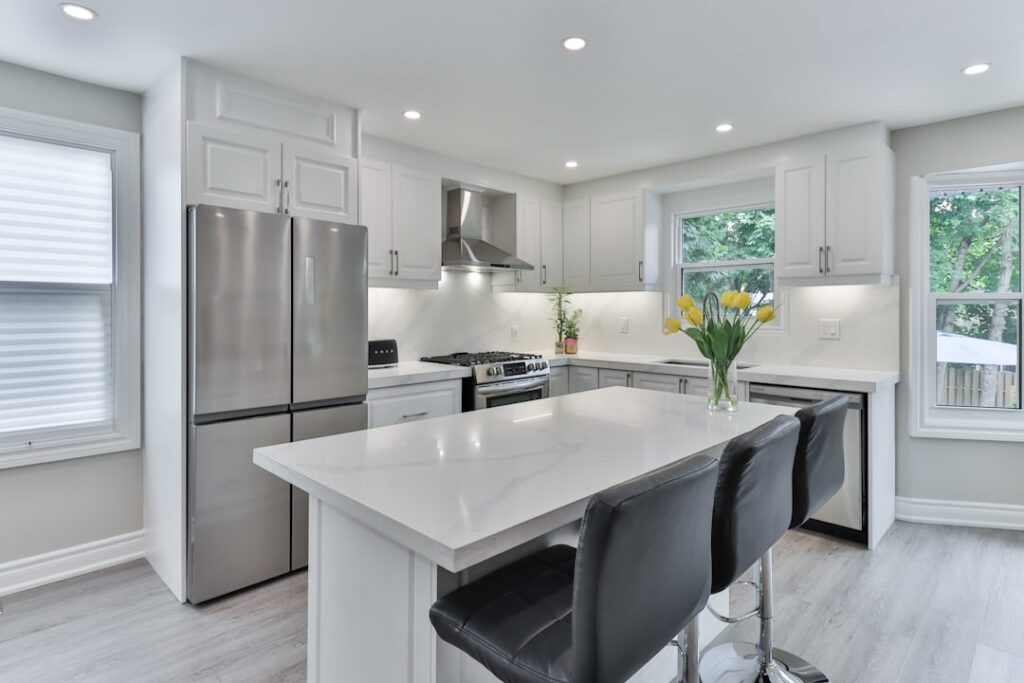
There is something about a cottage kitchen that makes people linger — the warmth of natural wood, the charm of open shelves lined with ceramic dishes, the feeling that this room was built for slow mornings and real cooking. A cottage kitchen blends vintage character with modern function, and you do not need a farmhouse in the countryside to pull it off. This style adapts beautifully to suburban homes, city apartments, and everything in between.
Part of our Kitchen Remodeling guide — explore the full guide →
Defining Features of the Cottage Style
Cottage kitchens share a set of design elements that give them their unmistakable character. Not every kitchen needs all of these, but layering several together creates the look.
- White or soft-colored cabinetry — cream, sage green, pale blue, or butter yellow
- Open shelving alongside or replacing upper cabinets
- Beadboard paneling on cabinet doors, backsplashes, or walls
- Farmhouse or apron-front sink
- Natural wood accents — butcher block counters, exposed ceiling beams, reclaimed flooring
- Vintage hardware — cup pulls, bin pulls, porcelain knobs
- Mismatched or collected feel — different materials, open display of cookware and dishware
Cabinet Styles and Colors
Shaker-style cabinets are the backbone of most cottage kitchens. Their simple recessed panel design reads as traditional without being ornate, and they pair well with any hardware style. Inset cabinet doors — where the door sits flush inside the frame — add an extra layer of craftsmanship that screams cottage, though they cost 15-25% more than overlay doors.
For color, start with a creamy white like Benjamin Moore White Dove (OC-17) or Sherwin-Williams Alabaster (SW 7008). If you want more personality, paint the island or lower cabinets in a contrasting color: muted green (Sherwin-Williams Evergreen Fog), dusty blue (Benjamin Moore Santorini Blue), or soft yellow. Two-tone kitchens feel collected rather than matchy, which is central to cottage style.
Countertop Choices
Butcher block countertops are the signature cottage choice. Maple and walnut are the most popular species, priced at $40-$70 per sq ft installed. They require oiling every few months and are susceptible to water damage around sinks, so many homeowners use butcher block on the island and a more durable surface near the sink.
Honed marble gives cottage kitchens an elevated, Old World feel. Carrara marble countertops run $50-$100 per sq ft installed. They do stain and etch more easily than polished surfaces, but many cottage kitchen owners embrace the patina as part of the character. Quartz with a marble-look pattern (Cambria or Silestone) offers similar aesthetics at $55-$90 per sq ft with virtually no maintenance.
The Farmhouse Sink
An apron-front sink is arguably the single most recognizable element of a cottage kitchen. Fireclay models from Rohl and Shaws (priced $800-$1,500) are the gold standard — they resist staining, chipping, and heat. Cast iron options from Kohler start around $400 and come in dozens of colors. White is classic, but a deep navy or black apron sink can serve as a striking focal point.
Plan for the sink early because it affects cabinetry. Apron-front sinks require a modified base cabinet with an open front, and the countertop cutout is different from a standard drop-in or undermount installation.
Backsplash Ideas
Subway tile in a 3×6-inch format with a white or cream glaze is the default cottage backsplash, and it works beautifully. Set the tiles in a classic brick pattern with contrasting grout (light gray or charcoal) for added dimension. Material cost runs $2-$5 per sq ft.
For more texture, consider beadboard paneling painted to match the walls — it costs almost nothing and installs in an afternoon. Handmade zellige tiles from Morocco add an artisan quality with their irregular surfaces and slightly varied glazes, though they run $15-$30 per sq ft.
Flooring That Fits
- Wide-plank hardwood: Oak or pine in a natural or whitewashed finish, $5-$10 per sq ft installed
- Patterned tile: Encaustic cement tiles or porcelain look-alikes in black and white patterns, $6-$15 per sq ft
- Brick pavers: Thin brick veneer creates an authentic cottage floor, $8-$14 per sq ft installed
- Luxury vinyl plank: Wood-look LVP in a whitewash or distressed oak pattern, $3-$7 per sq ft — budget-friendly and waterproof
Lighting and Hardware
Cottage kitchens favor warm, diffused lighting over harsh overhead fixtures. Pendant lights over the island or sink — schoolhouse shades, glass bell jars, or industrial-style enamel pendants — add character and task lighting. Budget $50-$200 per pendant for quality options from brands like Rejuvenation and Schoolhouse.
For hardware, unlacquered brass, antique copper, and matte black are the most popular finishes. Cup pulls on drawers and round knobs on doors is the classic combination. A set of 25-30 pulls and knobs costs $75-$250 depending on the brand and material.
Budget-Friendly Cottage Kitchen Updates
You do not need a full renovation to capture the cottage feel. Small, targeted changes add up quickly.
- Paint existing cabinets white or cream ($100-$300 in supplies)
- Replace hardware with vintage-style pulls and knobs ($75-$150)
- Swap one section of upper cabinets for open shelving ($50-$200)
- Install a beadboard backsplash ($30-$80 in materials)
- Add a butcher block island top or cutting board station ($100-$400)
- Hang two pendant lights over the sink or island ($100-$400)
A cottage kitchen is less about perfection and more about warmth, character, and the feeling that the space has been lovingly assembled over time. Start with the elements that matter most to you and let the room evolve — that collected, layered quality is exactly what makes the style work.


