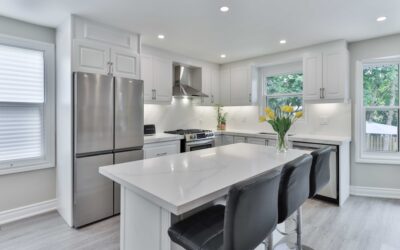
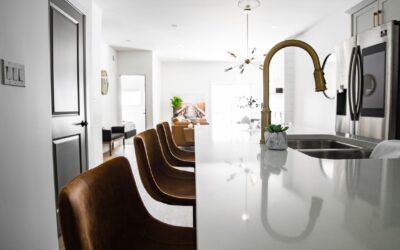
Premium stone counters get all the attention, but they are far from your only option. Plenty of countertop alternatives deliver style, durability, and personality for a fraction of the price of high-end quartz or granite. Whether you are remodeling on a budget, refreshing a rental, or simply want a different look, there is a surface that fits your needs. This guide breaks down the most practical alternatives, what they cost, and where each one shines.
Part of our Countertops guide — explore the full guide →
Laminate: The Budget Champion
Laminate has come a long way from the dated patterns of decades past. Today’s products convincingly mimic marble, stone, and wood, and they install over a particleboard core for a smooth, seamless look. Laminate is by far the most affordable option, often running $10 to $40 per square foot installed.
It is easy to clean, resists stains, and comes in hundreds of patterns. The tradeoffs are that it can scorch under hot pans, the seams are visible, and damaged sections cannot be repaired, only replaced. For a low-cost refresh with strong looks, it is hard to beat.
Butcher Block and Wood
Wood counters bring warmth that stone cannot match. Butcher block, made from glued strips of hardwood like maple or walnut, adds a natural, inviting surface that doubles as a workspace. Expect roughly $40 to $100 per square foot installed depending on the species.
Wood needs regular oiling to stay sealed and resist water, and it will show knife marks and dents over time, which many owners consider part of its charm. It can be sanded and refinished, so scratches and stains are fixable. Keep it away from constant water exposure around sinks unless it is well sealed.
Concrete: Custom and Industrial
Concrete counters offer a modern, custom look that can be tinted, polished, or embedded with glass and stone. Because they are cast to fit, you can shape integrated sinks and unusual edges. Installed cost typically lands around $50 to $100 per square foot.
Concrete is heat-resistant and extremely durable, but it is porous and must be sealed to prevent staining. Hairline cracks can develop as it cures, which suits the industrial aesthetic but bothers some homeowners. It is heavy, so cabinets must be sturdy enough to support it.
Tile Countertops
Ceramic and porcelain tile is an affordable, heat-resistant surface that any tile-comfortable DIYer can install. You can mix colors and patterns for a custom look at a low material cost, often $5 to $30 per square foot for the tile.
The downside is grout. Grout lines stain, harbor grime, and need sealing and scrubbing to stay clean. Large-format tiles reduce the number of lines, and epoxy grout resists staining better than standard grout. Tile works well as a budget-friendly, durable choice when you do not mind a little extra maintenance.
Solid Surface and Recycled Options
Solid surface counters are a man-made blend of acrylic and minerals. They are nonporous, seamless, and repairable, since scratches can be sanded out. Pricing usually falls between $40 and $80 per square foot installed, sitting nicely between laminate and stone.
- Solid surface: Seamless, low-maintenance, and repairable, but can scorch and scratch.
- Recycled glass: Striking, eco-friendly chips set in resin or concrete, mid-to-high price.
- Stainless steel: Pro-kitchen durability and heat resistance, though it scratches and dents.
- Paper composite: Surprisingly tough, warm to the touch, and made from compressed fibers.
How to Choose the Right Alternative
Match the surface to how you actually cook and live. If you bake constantly and set down hot pans, prioritize heat resistance with concrete, tile, or stainless. If you want warmth and do not mind maintenance, butcher block delivers. For the lowest cost with the widest range of looks, laminate is the practical winner.
Also weigh maintenance honestly. Wood and concrete need periodic sealing, tile needs grout care, and laminate and solid surface are mostly wipe-and-go. Pick a surface whose upkeep fits your patience and routine.
Comparing Durability and Lifespan
Cost is only part of the value equation; how long a surface lasts matters just as much. A cheap counter that needs replacing in five years can cost more over time than a mid-priced one that lasts twenty. Weigh upfront price against expected lifespan and maintenance to find the true value.
- Laminate: Around 10 to 20 years, but cannot be repaired once damaged.
- Butcher block: Decades if oiled and refinished as needed.
- Concrete: Very long-lasting when sealed, though prone to hairline cracks.
- Tile: Long-lasting surface, but grout needs ongoing care.
- Solid surface: Many years, with scratches sandable out.
Mixing Materials for Function and Savings
You do not have to use a single surface throughout the kitchen. A smart, increasingly popular strategy is to mix materials based on how each zone is used. Splurging on a beautiful surface for a small island while using budget-friendly laminate or tile on the perimeter counters can deliver high style at a controlled cost.
For example, you might install butcher block on a baking station for warmth and workability, a heat-resistant surface near the stove, and an easy-clean material around the sink. This zoned approach lets you put performance and money exactly where they matter most, often producing a more functional and interesting kitchen than a single uniform countertop ever could.
Final Thoughts
You do not need a stone-slab budget to get a kitchen surface you love. The best countertop alternatives, from wallet-friendly laminate to warm butcher block and custom concrete, each offer a distinct mix of cost, durability, and style. Decide what matters most for your kitchen, factor in long-term maintenance, and you can land a beautiful countertop that fits both your taste and your budget. Bring home samples whenever possible and view them against your cabinets and flooring under your own lighting before deciding. The right surface should feel good to work on, suit how you cook, and bring the whole kitchen together, all without forcing you to overspend on a premium stone slab you do not truly need. With so many capable options available today, there is genuinely no need to settle for less than a counter you love.