Choosing a countertop means balancing looks, durability, maintenance, and budget, and getting it wrong means living with regret for the next 15 to 20 years. The best countertop material for your kitchen depends on how you actually use the space, not just how it photographs. After comparing scratch resistance, heat tolerance, stain risk, maintenance demands, and real-world pricing across seven major materials, here is every option ranked so you can make a confident decision.
Part of our Countertops guide — explore the full guide →
Quartz: The All-Around Winner
Engineered quartz tops nearly every ranking for good reason. It is non-porous, never needs sealing, resists stains from wine and coffee, and comes in hundreds of colors and patterns, including convincing marble and concrete looks. Brands like Caesarstone, Cambria, and Silestone dominate the market with consistent quality and strong warranties.
- Cost: $50-$150 per sq ft installed
- Durability: 9/10 — scratch-resistant, stain-proof, but not heat-proof above 300F
- Maintenance: Wipe with soap and water. No sealing, no special products needed
- Lifespan: 25-30+ years
The only real drawback is heat sensitivity. Always use trivets for hot pans. Quartz resin can discolor or crack from direct contact with cookware straight off the burner. Dark-colored quartz shows this damage more visibly than lighter shades. Despite this single limitation, quartz delivers the best overall combination of beauty and performance for the money.
Quartz also holds its value well at resale. Real estate agents consistently report that quartz countertops rank among the top kitchen features buyers look for during home tours, often alongside stainless steel appliances and hardwood floors.
Granite: Classic Natural Stone
Granite has been the kitchen standard for decades, and it still holds up impressively against newer options. Each slab is unique, offering depth, mineral flecks, and natural character that engineered materials cannot fully replicate. Granite handles heat better than quartz and rates a 6-7 on the Mohs hardness scale, making it resistant to scratches from everyday kitchen use.
- Cost: $40-$200 per sq ft installed (varies widely by color and rarity)
- Durability: 8/10 — hard and heat-resistant, but porous if not sealed
- Maintenance: Seal annually with a penetrating stone sealer like StoneTech BulletProof
- Lifespan: 20-30+ years with proper care
Granite pricing swings dramatically depending on the slab. Common colors like Uba Tuba, Santa Cecilia, and Giallo Ornamental sit at the lower end around $40-$70 per sq ft installed. Exotic varieties like Blue Bahia or Patagonia can exceed $200 per sq ft. Visit the stone yard in person to hand-select your slab, since photos rarely capture the true color and veining.
Butcher Block: Warmth and Character
Solid wood countertops, typically maple, walnut, or white oak, bring warmth that no stone or engineered surface can match. They are forgiving of dropped dishes, easy to sand and refinish at home, and develop a beautiful patina over time that many homeowners find appealing rather than damaged.
- Cost: $40-$100 per sq ft installed
- Durability: 5/10 — scratches and dents easily, susceptible to water damage near sinks
- Maintenance: Oil monthly with food-safe mineral oil; sand out scratches as needed
- Lifespan: 15-25 years with attentive care
Butcher block works best as an island or prep station rather than a perimeter countertop that surrounds the sink. Water exposure is its biggest enemy. Standing water left around the faucet base will darken the wood and eventually cause warping or black mold growth in the grain. End-grain butcher block (the type where you see the circular wood rings) is more resistant to knife marks than edge-grain, but it costs roughly 30% more.
For budget-conscious homeowners, IKEA offers pre-made butcher block counters in birch and walnut starting around $30-$50 per linear foot, making this one of the most affordable solid-surface options when you install it yourself.
Marble: Luxury With a Catch
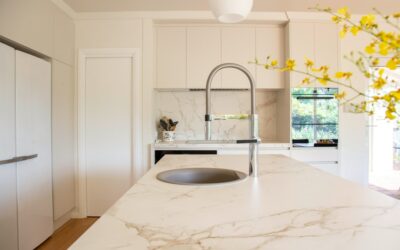
Carrara, Calacatta, and Statuario marble deliver unmatched elegance in a kitchen. The veining, the cool touch, and the visual depth make marble the aspirational choice for homeowners who want their kitchen to feel like a high-end showpiece. But marble is soft, rating just 3-5 on the Mohs scale. It is porous and etches from acidic foods like lemon juice and tomato sauce within seconds of contact.
- Cost: $75-$250 per sq ft installed
- Durability: 4/10 — etches, scratches, and stains without constant vigilance
- Maintenance: Seal every 6-12 months; blot spills immediately
- Lifespan: 20+ years, though it will show visible wear
Marble is a high-maintenance choice that demands a homeowner who accepts patina as part of the charm. Professional bakers love marble for pastry work because it stays naturally cool, but a busy family kitchen with kids and frequent cooking will show etch marks within months. If you love the marble look without the hassle, honed-finish quartz in a Calacatta pattern delivers 90% of the visual impact with none of the maintenance.
Laminate: Budget King
Modern laminate has come a long way from the cheap-looking counters of the 1990s. Brands like Formica and Wilsonart now offer realistic stone and wood patterns with improved edge profiles, including waterfall and ogee options that mimic high-end fabrication. At $10-$40 per sq ft installed, laminate is the most affordable option by a wide margin.
- Cost: $10-$40 per sq ft installed
- Durability: 5/10 — resists stains well, but scratches and heat damage are permanent
- Maintenance: Wipe clean; avoid abrasive scrubbers and cutting directly on the surface
- Lifespan: 10-20 years
Laminate is the smart pick for rental properties, starter homes, or kitchens on a tight budget. A full kitchen can be done for under $1,000 in material costs. The seam where laminate meets the backsplash or sink cutout remains its weakest point, since water infiltration there causes swelling in the particleboard substrate. Keep those seams caulked and wipe up standing water promptly.
Solid Surface (Corian): The Seamless Option
Corian and similar solid-surface brands like LG Hi-Macs and Staron offer fully integrated sinks, invisible seams, and easy repairability. Minor scratches sand out with fine-grit sandpaper and a Scotch-Brite pad in minutes. The look is clean and modern, though it lacks the depth of natural stone.
- Cost: $40-$100 per sq ft installed
- Durability: 6/10 — scratches more easily than quartz, but damage is repairable
- Maintenance: Low; occasional buffing with a Scotch-Brite pad restores the finish
- Lifespan: 20-25 years
Solid surface excels in bathrooms where the integrated sink and coved backsplash eliminate every caulk joint where mold typically grows. In kitchens, the heat limitation (scorching above 212F) is a real inconvenience for heavy cooks. The certified-fabricator requirement also limits your contractor options and can extend lead times.
Concrete: Industrial and Customizable
Poured concrete countertops can be shaped to any dimension, colored to match your design, and finished with a variety of textures from silky smooth to rough industrial. They weigh about 25 lbs per sq ft, so your base cabinets need to support the load. Concrete is porous and requires sealing, and hairline cracks are common as the material cures and shifts seasonally.
- Cost: $65-$135 per sq ft installed
- Durability: 7/10 — hard and heat-resistant, but prone to hairline cracks and staining
- Maintenance: Seal every 1-3 years; wax periodically to maintain the finish
- Lifespan: 20+ years
Concrete countertops are best fabricated by experienced artisans. DIY concrete countertop kits exist in the $300-$600 range, but achieving a professional finish requires practice and patience. Embedded objects like glass aggregate, shells, or fiber optic lights can create truly one-of-a-kind surfaces, though they push costs toward the premium end.
Final Ranking: Which Should You Choose?
For most homeowners, quartz delivers the best combination of durability, low maintenance, and visual appeal. Granite remains a strong second choice if you want natural stone character and do not mind annual sealing. Laminate is the smart pick for tight budgets or rental properties where long-term durability is less critical. Marble belongs in homes where the owner loves the material enough to accept its imperfections gracefully.
Your choice ultimately depends on how you use your kitchen daily. Heavy cooks who prioritize durability should lean toward quartz or granite. Design-focused homeowners willing to trade maintenance effort for beauty may find marble or butcher block worth the commitment. And if budget drives the decision above everything else, laminate delivers surprising value when paired with a modern edge profile and realistic pattern.
Consider mixing materials as well. Quartz on the perimeter where durability matters most, and butcher block on the island for warmth and character, is a combination that professional kitchen designers use frequently. It keeps costs manageable while giving the kitchen visual depth that a single material cannot achieve.