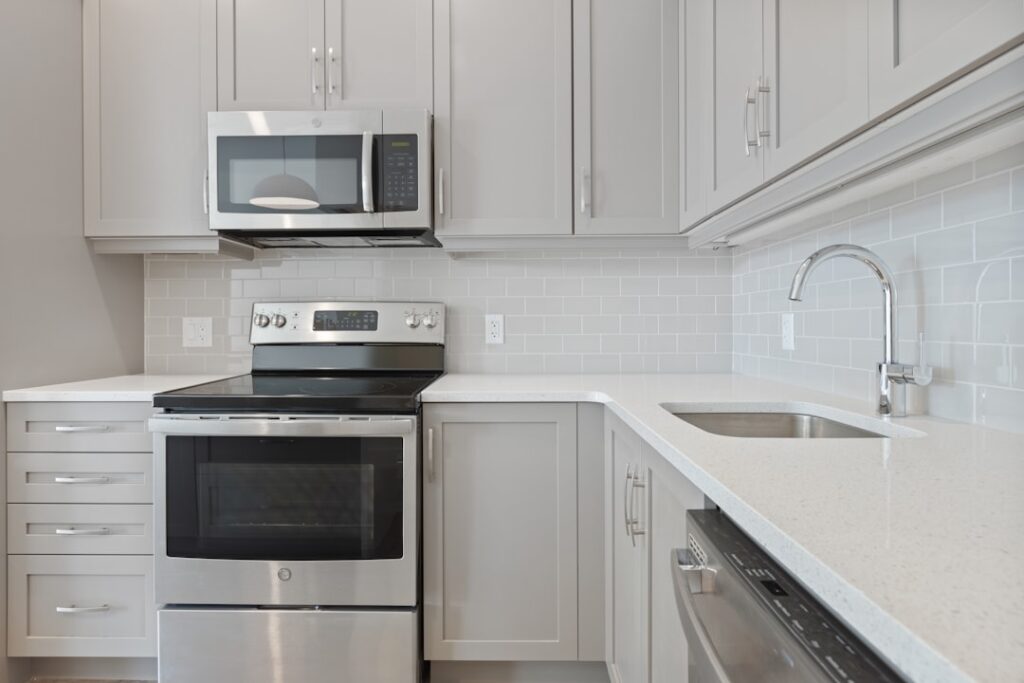
A countertop convection microwave combines two cooking technologies in one box: standard microwave energy for fast reheating and a convection system, a heating element plus a fan, that circulates hot air to bake, roast, and crisp food the way a small oven would. For apartments, small kitchens, RVs, and anyone who wants to skip preheating a full-size oven for a single dish, it is one of the most versatile appliances you can put on a counter.
Part of our Countertops guide — explore the full guide →
This guide explains how the convection function works, how to size and place the unit safely, which features actually matter, and what you can realistically expect to spend.
How a Convection Microwave Differs From a Standard One
A regular microwave heats food by exciting water molecules, which warms things quickly but leaves surfaces soft and pale. It cannot brown a chicken or crisp a crust. Convection adds a separate heating element and a fan that moves hot air evenly around the cavity, so the appliance can bake cookies, roast vegetables, and brown the top of a casserole.
The real advantage shows up in combination mode, where the unit uses microwave energy and convection heat at the same time. A roast that would take well over an hour in a conventional oven can finish noticeably faster while still developing a browned exterior. You get speed from the microwave and texture from the convection, which is something neither method delivers alone.
Cooking Modes You Can Expect
Most convection microwaves offer several distinct modes, and understanding them helps you buy the right model.
- Microwave only: Fast reheating and defrosting, just like a standard unit.
- Convection only: Functions as a compact oven for baking and roasting, usually adjustable from around 100°F to 450°F.
- Combination: Blends both for fast cooking with browning, the signature feature.
- Grill or broil: Many models add a top element for melting cheese or crisping surfaces.
- Air fry: Newer units market an air-fry mode, which is essentially high-speed convection with a perforated tray.
If your goal is to replace a toaster oven and reduce how often you fire up the range, prioritize a model with a strong convection mode and a usable temperature range rather than a long list of preset buttons you will rarely touch.
Sizing and Capacity
Capacity is measured in cubic feet, and convection models tend to run a little larger than basic microwaves because they need room for air to circulate. Common sizes fall between 1.0 and 2.0 cubic feet. A 1.5 cubic foot cavity comfortably fits a dinner plate or a small baking dish, while 1.5 cubic feet and up can handle a modest roast or a 12-inch pizza.
Pay close attention to the turntable diameter and the interior height, not just the headline cubic-foot number. Manufacturers sometimes achieve a large capacity with a wide but shallow cavity that will not accept a tall casserole. Measure the dishes you actually use and compare them against the published interior dimensions before buying.
Features Worth Paying For
Beyond the core modes, a few features genuinely improve daily use:
- Stainless interior: Withstands convection heat better than painted enamel and wipes clean more easily.
- Included rack: A metal rack lets you cook on two levels in convection mode, but it must only be used in convection or combination modes, never microwave only.
- Sensor cooking: Humidity sensors adjust time automatically so food does not overcook.
- Auto convert or weight-based programs: Helpful for adapting conventional recipes to combination cooking.
- Mute option and child lock: Small but appreciated in open-plan and family kitchens.
Skip paying a premium for dozens of niche presets. The functions you will use most are reheat, defrost, a clean convection bake, and one solid combination setting.
Cost Expectations
Pricing depends on capacity, brand, and finish, so use these as general ranges rather than firm figures. Entry-level countertop convection microwaves typically start around $150 to $250. Mid-range models with stainless interiors and sensor cooking generally land between $250 and $450. Premium units from established appliance brands, often with air-fry modes and inverter technology, can run $450 to $700 or more.
Because a convection microwave can take the place of both a microwave and a toaster oven, the higher price is easier to justify when you account for freeing up counter space and reducing the number of separate appliances you maintain.
Safe Setup and Clearances
A convection microwave generates real heat and vents it from the back, sides, or top, so installation matters for both safety and performance. Always follow the manufacturer’s clearance specifications, which commonly call for at least 3 inches on the sides and back and several inches above the unit so the vents are not blocked.
Never build a countertop convection microwave into a tight cabinet cubby unless it is explicitly rated for that and the required venting is provided, because trapped heat can damage surrounding cabinetry and the appliance itself. Plug it directly into a grounded outlet rather than an extension cord or a power strip, and avoid sharing a circuit with other high-draw appliances, since the combined load can trip the breaker. If the unit and other kitchen equipment repeatedly trip a circuit, have a licensed electrician evaluate it.
Cleaning and Everyday Care
The convection element bakes on spatters more stubbornly than microwave-only cooking does, so wipe the interior after messy meals while it is still slightly warm but not hot. Use a damp cloth with mild dish soap and avoid abrasive pads on the cavity walls. Let the unit cool fully before cleaning around the heating element.
Run the convection mode empty for a few minutes when the appliance is new to burn off manufacturing residue and any odor, with good ventilation in the room. With sensible placement, a clear circuit, and routine wiping, a countertop convection microwave delivers oven-quality results in a fraction of the space and is one of the more practical upgrades a compact kitchen can make.
If you are weighing whether one is worth buying, think about how you actually cook. Households that frequently bake small batches, roast vegetables for two, or reheat leftovers without wanting soggy results get the most from the convection feature, while someone who only ever reheats coffee and popcorn may not need the extra capability or cost. The appliance shines in apartments, small homes, dorms, RVs, and as a backup oven during holiday cooking when the main oven is full. For many kitchens, the ability to replace both a microwave and a toaster oven with a single unit, freeing counter space and simplifying cleanup, makes the convection model the more sensible long-term choice despite the higher upfront price.