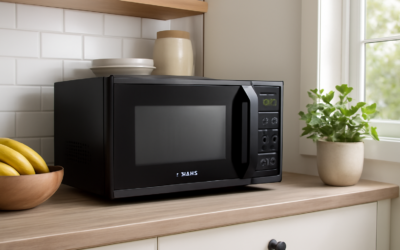
A standard countertop microwave reheats. A convection microwave bakes a 4 pound chicken in 38 minutes with browned skin and no second oven needed. The Sharp Carousel convection microwave line has been the best-selling combination unit in the US for most of the last decade, and the reasons are practical rather than marketing-driven. Sharp invented the turntable in 1979, the carousel cooking system in their countertop models is genuinely better at even heating than competitors, and the convection feature uses real heating coils and a fan rather than the half-baked microwave-only “convection” found in cheaper combos. This guide covers what you actually get, the model differences worth knowing, and the trade-offs that catch new owners off guard.
- How a Convection Microwave Actually Works
- Current Sharp Carousel Models Worth Knowing
- Real Cooking Performance
- Installation: Counter, Over-the-Range, or Built-In
- Power Requirements and Common Surprises
- Control Interface and Useful Features
- Cleaning and Maintenance
- Lifespan and Repair Realities
- Is It the Right Choice?
How a Convection Microwave Actually Works
The unit combines two heat sources in one cavity. A standard microwave magnetron generates 2.45 GHz waves that heat water molecules inside the food. A separate heating element at the top of the cavity, paired with a small fan, generates dry convection heat that browns, crisps, and bakes. Sharp’s better models let you use both at the same time, which is where the speed advantage comes from.
The carousel rotates the food through both energy fields evenly, which is what eliminates the cold spots you get in flat-bed competitors. On a chicken or a casserole, that means consistent browning across the top and a center that hits 165°F without overcooking the edges.
Current Sharp Carousel Models Worth Knowing
Sharp simplified their lineup in 2023. Four current models cover most kitchens: the SMC1585BS, SMC1585BB, SMC1842CS, and SMC2266DS. They differ mostly in size, wattage, and exterior finish.
- SMC1585BS (stainless, 1.5 cu ft, 900W microwave, 1500W convection) — best value, around 380 dollars
- SMC1585BB (black, same internals) — for kitchens with darker appliance suites, around 360 dollars
- SMC1842CS (1.8 cu ft, 1100W microwave, 1700W convection) — larger family option, around 480 dollars
- SMC2266DS (2.2 cu ft, drawer-style microwave, no convection) — sized for cabinet integration, not convection-capable
- Older R-1880LS (1.1 cu ft, 850W) — still available, smaller spaces, around 280 dollars
Real Cooking Performance
The microwave-only mode produces results similar to any 900 to 1100 watt unit. Where the Sharp Carousel convection microwave earns its premium is in combination cooking and pure convection. A 9 inch pizza from frozen reaches a properly crisped crust in 8 minutes at 425°F. A 3 pound chicken comes out with browned skin in 38 to 45 minutes, faster than a wall oven preheat.
Baked goods are the trickier territory. Cookies and biscuits work fine. Tall cakes can dome and crack from the more aggressive top-element heat compared to a full-size oven. Reduce the recipe temperature by 25°F and check 5 minutes earlier than the recipe calls for. The cavity volume is smaller, so heat reflects more aggressively.
Installation: Counter, Over-the-Range, or Built-In
All current Sharp Carousel convection units are countertop or trim-kit installations. None of the current line is rated as an over-the-range vent replacement. The convection element generates enough top-and-back heat that the manufacturer requires 3 inches of clearance above, behind, and to both sides.
If you want a built-in look, Sharp sells matching trim kits in the 80 to 150 dollar range for the 1.5 and 1.8 cubic foot models. Cut the cabinet opening exactly to the spec sheet; trim kit forgiveness is about a quarter inch in each direction. The full unit weighs 50 to 65 pounds, so plan on two people for installation and reinforced cabinet shelving rated for at least 100 pounds dynamic load.
Power Requirements and Common Surprises
The 1.5 and 1.8 cubic foot units pull 1500 to 1800 watts on combination cooking. On a 15 amp circuit shared with other appliances, you will trip breakers if a coffee maker or toaster runs at the same time. Convection mode alone draws less, around 1500 watts, but it still belongs on a dedicated 20 amp circuit for trouble-free operation.
The exterior gets hot during convection cooking. Side panels reach 130 to 160°F, top vents push out 200°F+ air. Anything stored within 6 inches of the unit, even off the actual cabinet, can warp or melt. Plastic spice containers and cutting boards are the most common casualties.
Control Interface and Useful Features
The flat membrane control panel uses a touch interface with about 15 preset functions per model. The “Sensor Cook” presets read humidity from a sensor at the back of the cavity and adjust time automatically. They are surprisingly accurate for popcorn, baked potatoes, and frozen vegetables.
The “Convection Roast” preset is the standout. Choose a meat type, enter the weight, and the unit calculates the time using both microwave and convection cycles. For a 3 to 4 pound chicken or pork loin, the result is genuinely comparable to a conventional oven and finishes in roughly half the time.
Cleaning and Maintenance
The carousel glass tray and roller ring are dishwasher safe. The interior cavity is a stainless coating in the newer models and a porcelain enamel in the older ones. Both wipe clean with warm water and dish soap. Avoid scouring pads, citrus cleaners, and oven cleaners. They etch the surface or eat the high-temperature gaskets.
Steam-clean the interior monthly by microwaving a bowl with 1 cup of water and 2 tablespoons of vinegar for 4 minutes, then wiping down. The grease buildup that ruins many older units comes from skipping this 5 minute habit.
Lifespan and Repair Realities
The magnetron is the most common failure point and is good for roughly 1,500 to 2,500 hours of cooking time. For most households that is 8 to 12 years. The convection heating element lasts as long as the unit itself in normal use. The control board is the second weak point; a power surge can take it out.
Sharp parts are reasonably available through authorized service centers, but the labor cost of a magnetron replacement (200 to 350 dollars including the part) often approaches the price of a new unit. Plan on a 10-year service life and replace, not repair, after that.
Is It the Right Choice?
If you cook for a family, want a real second oven for holidays, or live in an apartment without a full range, the Sharp Carousel convection microwave is one of the smartest appliance buys under 500 dollars. If you only reheat coffee and pop popcorn, a basic countertop microwave at 90 dollars does the same job at 20 percent of the cost.
The convection feature only pays for itself if you actually use it. Owners who use combination mode three or four times a week love the unit. Owners who buy it for the feature and never touch it would be happier with a simpler model and a toaster oven. Match the tool to how you actually cook.