
Most homeowners underestimate a countertop project by 30 to 40 percent because they price only the slab and forget fabrication, edges, sinks, and tear-out. A good countertop cost calculator fixes that by forcing every line item into the open before a single measurement is taken. In this guide I will walk you through exactly how to build one, what numbers to plug in, and where installers quietly add cost. By the end you will be able to estimate a new kitchen counter within a few hundred dollars.
Part of our Countertops guide — explore the full guide →
- How a Countertop Cost Calculator Actually Works
- Measuring Your Square Footage Correctly
- Average Price Per Square Foot by Material
- The Extra Line Items That Blow Budgets
- Worked Example: A Real Kitchen Estimate
- How to Use the Estimate to Negotiate
- When to Spend More and When to Save
- Online Calculators Versus a Simple Spreadsheet
- Regional Price Swings and Timing
- Final Thoughts on Budgeting Your Counters
How a Countertop Cost Calculator Actually Works
At its core the math is simple: square footage times material price, plus fabrication, plus extras. The trap is that most online tools stop at the first term. A trustworthy countertop cost calculator multiplies your total surface area by an installed price per square foot, then layers in fixed charges that do not scale with size, such as sink cutouts and delivery. Get those fixed charges wrong and a small 30-square-foot kitchen can look deceptively cheap on paper.
Start with installed price, not slab price. Installed pricing already bundles fabrication and standard labor, which keeps your estimate honest. For a typical kitchen you are working with 30 to 55 square feet of counter, and that single input drives roughly two-thirds of the final bill.
Measuring Your Square Footage Correctly
Grab a tape measure and record each counter run in inches. Multiply length by depth, divide by 144, and you have square feet for that run. Standard counters are 25.5 inches deep, but an island can run 36 to 42 inches, so measure it separately rather than assuming.
Add every section together, then tack on 10 percent for waste, seams, and the backsplash lip if you plan one. A 12-foot L-shaped kitchen with a 3-by-6-foot island typically lands around 45 to 50 square feet once you include that cushion. Round up. Fabricators buy full slabs, and you pay for the remnant either way.
Average Price Per Square Foot by Material
Material is the biggest lever in any estimate, and the spread is enormous. Here are realistic installed ranges I see across most US markets:
- Laminate: $20 to $50 per square foot
- Butcher block: $40 to $100 per square foot
- Granite: $50 to $120 per square foot
- Quartz: $55 to $150 per square foot
- Marble: $75 to $250 per square foot
- Quartzite: $80 to $220 per square foot
- Solid surface (Corian): $45 to $95 per square foot
Plug the midpoint of your chosen material into the calculator first, then adjust. A 45-square-foot quartz kitchen at $85 installed runs about $3,825 in material and fabrication alone, before any extras hit the sheet.
The Extra Line Items That Blow Budgets
This is where estimates go sideways. Standard extras that belong in every honest calculator include the following:
- Sink cutout and polishing: $100 to $250 each
- Cooktop cutout: $100 to $200
- Upgraded edge profile (ogee, bullnose, mitered): $10 to $40 per linear foot
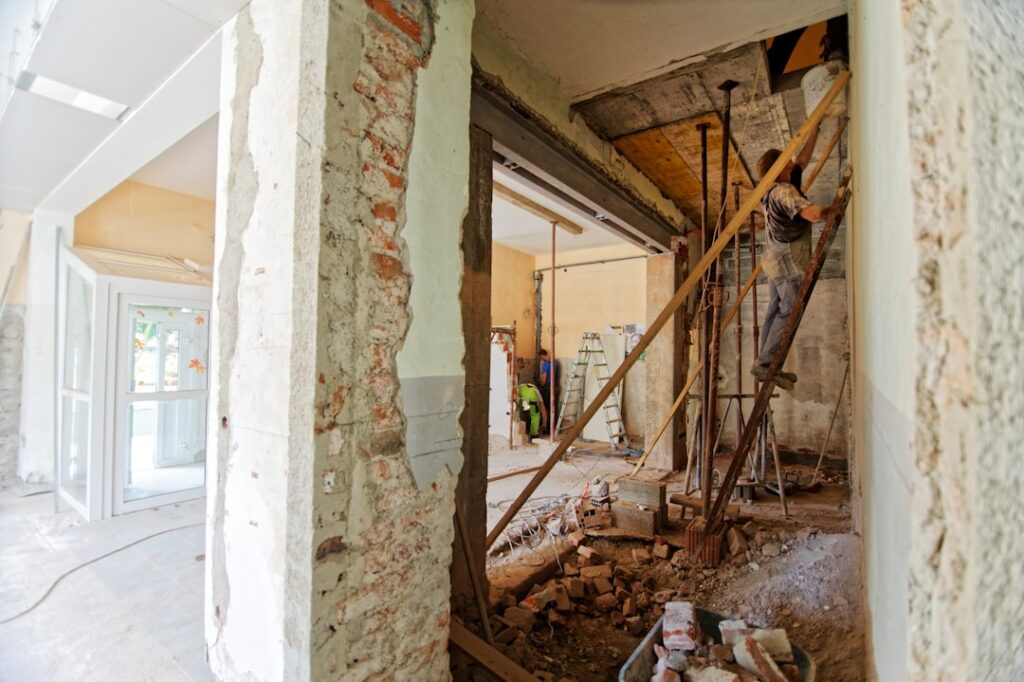
- Old countertop tear-out and disposal: $100 to $500
- Plumbing disconnect and reconnect: $150 to $400
- Delivery: $100 to $300
Edge upgrades surprise people most. A basic eased edge is usually free, but a mitered waterfall edge on an island can add $500 to $1,500 by itself because it doubles the material and demands precise seaming.
Worked Example: A Real Kitchen Estimate
Let me run a full example so the numbers feel concrete. Say you have 45 square feet of counter and you choose mid-grade quartz at $80 installed. Material and fabrication come to $3,600. Add one sink cutout at $200, a cooktop cutout at $150, an upgraded ogee edge on 22 linear feet at $15 for $330, tear-out at $300, and delivery at $150.
Your subtotal is $4,730. Add a 7 percent sales tax where applicable and you are near $5,060. That figure is far more useful than the $3,600 slab-only number, and it is close to what a fabricator will actually quote. Keep a 10 percent contingency in your head for surprises like an out-of-level cabinet base that needs shimming.
How to Use the Estimate to Negotiate
Walk into a showroom with your calculated number and you change the conversation. Instead of asking “how much for quartz,” you can say “I have 45 square feet, one sink, an ogee edge, and I need tear-out.” Fabricators quote tighter and faster when you speak their language, and you can immediately spot padding.
Ask each shop to itemize the same categories your calculator uses. If one bid buries the sink cutout inside a vague “labor” line while another breaks it out, normalize them before comparing. Two quotes that both say $5,000 can hide a $400 difference in what is actually included.
When to Spend More and When to Save
Spend on the material that touches water and heat daily. Quartz earns its premium in a busy family kitchen because it never needs sealing and shrugs off wine, coffee, and citrus. Save on secondary surfaces like a laundry room or a basement bar, where laminate at $30 installed performs fine and frees up budget for the kitchen.
Edge profiles are another smart place to economize. A clean eased or beveled edge looks contemporary and costs nothing extra, so you can pour that saved $300 into a better slab instead. A reliable countertop cost calculator lets you test these trade-offs in seconds rather than guessing.
Online Calculators Versus a Simple Spreadsheet
Free online calculators are a fine starting point, but most give a single blended number with no breakdown, which is nearly useless for planning. Build your own spreadsheet instead and you gain control. One column for each cost category, one cell for square footage, and a few formulas turn a vague guess into a living document you can adjust as your material choice changes.
Keep three versions side by side: a budget build in laminate, a mid-range quartz build, and a premium natural-stone build. Seeing all three totals at once, often a $3,000 to $8,000 spread on the same kitchen, clarifies where your money delivers real value and where it merely buys prestige. Update the sheet after each showroom visit so your estimate sharpens with every quote.
Regional Price Swings and Timing
Where you live moves the number more than people expect. Labor and slab prices in major metros like San Francisco or New York run 20 to 40 percent above rural markets, and delivery from distant slab yards adds freight. Get at least three local quotes rather than trusting a national average, because your zip code sets the baseline.
Timing helps too. Fabricators are slowest in mid-winter and often shave labor to keep crews busy, while spring and early summer command peak pricing during remodeling season. If your project is flexible, booking a January install can trim several hundred dollars off the labor line without changing a thing about the material.
Final Thoughts on Budgeting Your Counters
Treat the calculator as a planning tool, not a final quote. It gets you within striking distance so you are never blindsided at the showroom, and it reveals which choices actually move your total. Measure carefully, use installed prices, and never forget the fixed extras. Do that, and your finished kitchen will land right where you expected instead of hundreds of dollars over.
One last habit will keep your estimate honest over time: revisit it after your final field measure. The fabricator’s laser measure often finds a few square feet you missed, and an out-of-square wall can force an extra seam. Adjust your spreadsheet with the real numbers before you sign, and keep that 10 percent contingency untouched until the counters are installed and the sink is dropped in. A project that respects the math from the first tape pull to the final caulk bead almost never surprises you at the register.


