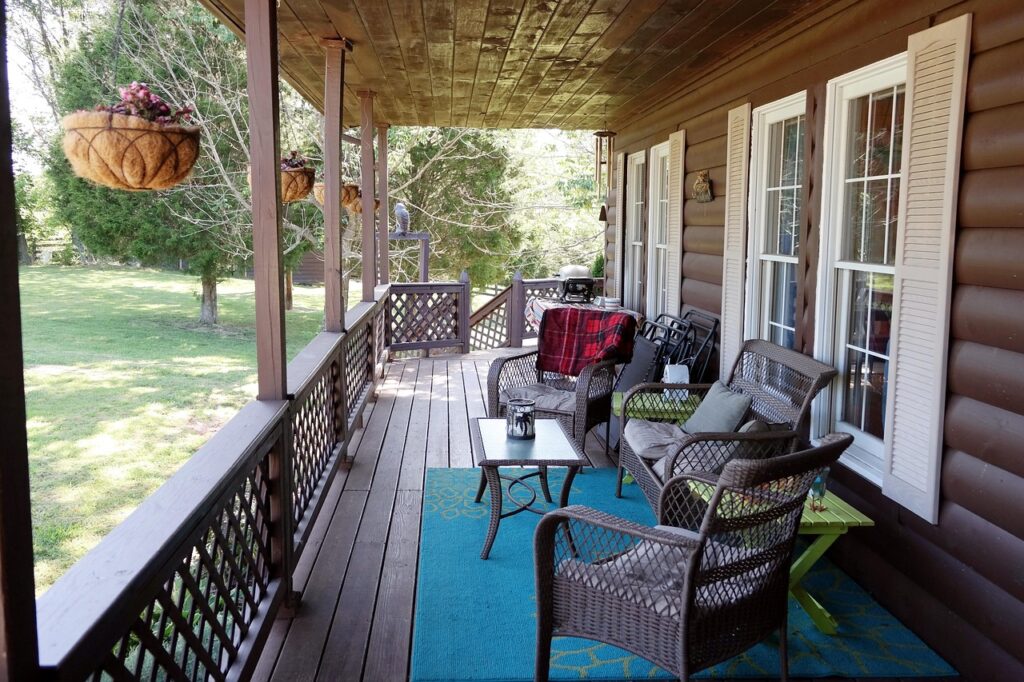
A covered porch turns dead outdoor space into a room you will actually use year-round. If you have been searching for covered porch ideas that go beyond a basic roof extension, you are in the right place. From farmhouse wraparounds to sleek modern designs, this guide breaks down layouts, materials, and costs so you can plan a porch that fits your home and your budget.
Front Porch Designs That Boost Curb Appeal
Your front porch is the first thing visitors and potential buyers notice. A gabled porch roof with exposed rafter tails suits Craftsman and traditional homes, while a flat-roof or shed-style extension looks clean on contemporary and mid-century builds. For colonial-style houses, a symmetrical portico supported by round columns creates instant elegance without a massive footprint. Even a modest 6-by-10-foot covered entry with a standing-seam metal roof can dramatically improve your home’s street presence.
Budget reality check: a basic covered front porch addition runs $5,000-$15,000 for a simple structure with concrete or composite decking. Larger porches with custom railings, tongue-and-groove ceilings, and stone columns can climb to $20,000-$50,000 or more depending on your region and materials.
Wraparound Porch Layouts
Wraparound porches are the gold standard for farmhouse and Southern-style homes. They typically extend across the front and down one side of the house, creating distinct zones for seating, dining, and a porch swing. The ideal depth is at least 8 feet, which gives enough room for furniture without crowding the walkway. At 10-12 feet deep, you gain space for a proper outdoor dining table.
Structural considerations matter here. A wraparound porch needs continuous footings or piers and a roof system that ties cleanly into the existing roofline at the corner. This is not a weekend DIY project. Expect $25,000-$70,000 for a professionally built wraparound with composite decking, painted wood railings, and an asphalt shingle roof to match the house.
Screened-In Porch Ideas
Screens transform a covered porch into a bug-free retreat, which is practically mandatory in humid Southern and Midwestern climates. Fiberglass screen mesh is the most affordable option at around $0.15-$0.30 per square foot, but it sags over time. Aluminum mesh holds its shape better and costs roughly $0.25-$0.50 per square foot. For a premium look, consider a screen system with narrow-profile frames that almost disappear visually, like a Screeneze or similar tensioned track system.
A screened porch also opens up ceiling fan placement without worrying about debris. Damp-rated ceiling fans in the 52-to-60-inch range keep air moving on still summer evenings. Adding a set of retractable screen panels instead of permanent screens gives you the flexibility to open the space up completely on pleasant days.
Covered Patio and Back Porch Concepts
Back porches tend to be more relaxed and entertainment-focused than their front counterparts. Popular layouts include an L-shaped covered area that wraps a corner of the house, creating separate zones for grilling and lounging. A pergola-style roof with retractable shade canopies offers adjustable sun control without the closed-in feeling of a solid roof. For full weather protection, a solid roof with integrated gutters keeps rain from pooling near your foundation.
Outdoor kitchens pair naturally with covered back porches. Even a simple setup with a built-in gas grill, a small countertop, and an undercounter refrigerator makes hosting dramatically easier. Plan on $3,000-$10,000 for a basic outdoor kitchen station, plus the cost of running gas and electrical lines.
Ceiling and Lighting Options
The ceiling of a covered porch deserves as much attention as the floor. Tongue-and-groove beadboard painted in haint blue, a pale blue-green, is a classic Southern tradition that makes the ceiling feel taller and brighter. Natural stained wood, like cedar or pine with a clear exterior-grade sealant, adds warmth. Vinyl beadboard panels offer a lower-maintenance alternative at $3-$6 per square foot versus $5-$10 for real wood.
For lighting, recessed can lights keep the ceiling clean, while hanging lanterns or pendant fixtures add character. String lights draped in a zigzag pattern create a casual, inviting glow for evening gatherings. If your porch is wired for electricity, consider adding at least one weatherproof outlet for charging phones, plugging in speakers, or running a fan heater in cooler months.
Flooring Materials for Covered Porches
Pressure-treated lumber is the most budget-friendly decking at $2-$4 per square foot for materials, but it requires staining or painting every two to three years. Composite decking from brands like Trex, TimberTech, or Fiberon costs $5-$12 per square foot but holds up to moisture and UV without annual maintenance. For a porch that sits directly on a concrete slab, stamped concrete with a stone or tile pattern runs $8-$18 per square foot and wears extremely well under a roof where it is sheltered from freeze-thaw cycles.
Tile is another strong option for covered porches. Porcelain tile rated for outdoor use resists moisture and temperature swings, and the options for patterns, from classic checkerboard to modern large-format slabs, are nearly endless. Budget $6-$15 per square foot installed.
Furniture and Decor Tips
Choose furniture rated for outdoor use, even under a roof. Covered porches still get exposed to humidity, wind-blown rain, and temperature swings. Powder-coated aluminum frames with Sunbrella-fabric cushions are the most durable mainstream choice. Wicker or rattan-look resin furniture offers a traditional porch aesthetic without the rot risk of natural materials.
Scale your furniture to the porch depth. On a 6-foot-deep porch, stick to a pair of rocking chairs and a small side table. At 8 feet deep, you can add a loveseat or swing. Only porches 10 feet or deeper comfortably fit a full seating group plus a walkway. Outdoor rugs in polypropylene define seating areas and add pattern without worry about mold or mildew.
Permits and Building Considerations
Most municipalities require a building permit for a covered porch addition because it changes your home’s footprint and roofline. Check your local zoning setback requirements before designing, as porches that extend too close to a property line will be denied. HOA approval may also be needed if you live in a planned community. Permit costs vary widely, from $200 in rural counties to $2,000 or more in major metro areas. Factor in an additional 2-6 weeks for plan review before construction can begin.
Hiring a licensed contractor is strongly recommended for any covered porch with a roof tied into the existing structure. A poorly attached porch roof can cause water intrusion, structural damage, and code violations that complicate future resale. Get at least three bids and verify each contractor’s license and insurance before signing a contract.