The Craftsman and Mission style is defined by honest materials, clean geometry, and warm, glowing glass, and nothing signals it faster than the right lantern beside the front door. Craftsman outdoor lighting draws on the early-1900s Arts and Crafts movement, with straight-lined metal frames, seedy or amber glass panels, and finishes that look hand-forged rather than mass-produced. If you own a bungalow, a Prairie-style home, or a newer build with Craftsman details, matching your exterior fixtures to that architecture pulls the whole facade together. Here is how to choose, size, and place fixtures that look authentic instead of generic.
Part of our Windows & Doors guide — explore the full guide →
- What Makes a Fixture "Craftsman"
- Fixture Types for Every Spot
- Finishes That Fit the Style
- Sizing Wall Lanterns Correctly
- Bulbs and Light Quality
- Wet Versus Damp Ratings
- Building a Layered Lighting Plan
- Installation Basics
- What It Costs
- A Brief History Behind the Style
- Smart and Energy-Efficient Options
- Common Placement Mistakes
What Makes a Fixture “Craftsman”
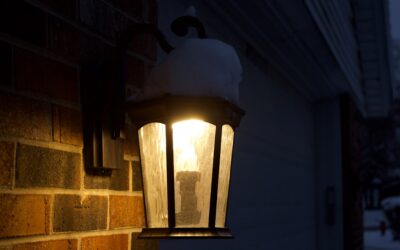
The style has a recognizable vocabulary once you know what to look for. Craftsman fixtures favor straight vertical lines and square or tapered lantern shapes rather than curves and scrollwork. Frames are typically dark metal with visible, simple construction. The glass is the giveaway: amber, honey, or seedy (bubbled) glass, sometimes in a caramel slag pattern, that glows warm when lit. Some fixtures include subtle geometric or nature-inspired cutouts. The overall feel is solid, grounded, and handcrafted, the opposite of ornate Victorian or sleek modern lighting.
Fixture Types for Every Spot
A complete exterior lighting plan uses several fixture types working together. Match all of them to the same Craftsman family so the house reads as one design.
- Wall lanterns: the workhorses, flanking the front door, garage, and back entry
- Hanging pendants: for covered porches with enough ceiling height, hung from a chain or stem
- Flush and semi-flush ceiling mounts: for low porch ceilings where a pendant would hang too low
- Post lanterns: mounted atop a post or pier at the driveway or walkway entrance
- Pier mounts: sit flat on a masonry column or porch railing pier, common on Craftsman porches with stout square columns
Finishes That Fit the Style
Finish is where you tie the lighting to your door hardware, house numbers, and railings. Craftsman leans toward warm, weathered metals rather than bright chrome.
- Oil-rubbed bronze: the classic choice, dark brown-black with subtle highlights
- Aged or antique bronze: warmer with copper undertones
- Black: crisp and versatile, especially textured or matte black
- Antique copper and brass: authentic to the era, developing a patina over time
Coordinate the lighting finish with your other exterior metals, the door handleset, kick plate, and house numbers, so the whole entry looks intentional. Mixing a shiny nickel fixture with oil-rubbed bronze hardware is the tell that breaks the look.
Sizing Wall Lanterns Correctly
Undersized fixtures are the single most common mistake on a front entry; from the street a lantern that looks big in the store often looks tiny on the wall. Use these proportions as a guide.
- Single fixture beside a door: roughly one-third the height of the door, so about 22 to 26 inches tall for a standard door
- Two fixtures flanking a door: each about one-quarter the door height, around 16 to 20 inches
- Mounting height: center the fixture about 66 to 72 inches off the porch floor, at eye level
- Garage lanterns: size up, since they read against a large door; often 16 to 24 inches
When in doubt, go slightly larger. A fixture that feels a touch big up close usually looks perfectly proportioned from the curb.
Bulbs and Light Quality
The warm glow is central to the Craftsman look, so choose bulbs that enhance it. Use LED bulbs in the 2700K warm-white range to complement amber and seedy glass; cool white bulbs make the honey glass look sickly. A vintage-style Edison LED filament bulb suits exposed-bulb Craftsman fixtures beautifully, giving that warm, old-fashioned glow with modern efficiency and 15,000-plus hours of life. Keep brightness moderate at entries, around 600 to 800 lumens, since exterior accent lighting is about ambiance and safety, not floodlight intensity. Add a photocell or smart bulb so the lights come on automatically at dusk.
Wet Versus Damp Ratings
As with any exterior fixture, match the UL rating to the exposure. A lantern on an open wall that catches rain must be wet-rated; one tucked under a deep covered porch can be damp-rated. Check the label before buying, especially for hanging pendants on porches, which sometimes come only damp-rated and should not go in an exposed location.
Building a Layered Lighting Plan
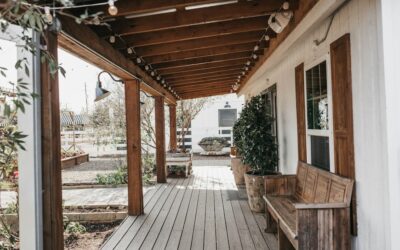
The best Craftsman exteriors layer light rather than relying on one bright fixture. Combine entry lanterns with lower-level path lighting along the walkway, and consider uplighting a stone pier or a tree to add depth after dark. Keep the path and accent fixtures in the same finish and warm color temperature so everything harmonizes. On a Craftsman porch with those signature tapered columns, a pier-mount lantern on each column plus a central ceiling pendant creates a welcoming, well-lit entry that still feels historically right.
Installation Basics
Swapping an existing wall fixture is a straightforward DIY job.
- Shut off the circuit at the breaker and confirm it is dead with a voltage tester
- Remove the old fixture and check the box is securely mounted
- Connect the wiring: black to black, white to white, ground to ground or the green screw
- Seal the fixture base to the wall with the included gasket and a bead of exterior silicone across the top and sides, leaving the bottom open so any condensation can drain
- Mount the fixture level, install the bulb, and restore power
Leaving the bottom of the fixture base un-caulked is a pro trick: it lets moisture escape instead of trapping it against the wall and rotting the siding.
What It Costs
- Wall lanterns: $40 to $200 each depending on size and quality
- Post and pier lanterns: $80 to $300
- Hanging porch pendants: $60 to $250
- Path lights (set): $60 to $200
- Electrician install per fixture: $100 to $250
A Brief History Behind the Style
Understanding where the look comes from helps you buy fixtures that feel authentic. The Craftsman style grew out of the American Arts and Crafts movement of roughly 1900 to 1930, a reaction against the mass-produced ornamentation of the Victorian era. Designers like Gustav Stickley championed honest materials, visible joinery, and handcraft, and architects Greene and Greene brought those ideals to the bungalow. Lighting followed suit: fixtures were built from hammered copper and iron with amber art glass, meant to glow warmly rather than dazzle. When you choose a lantern with straight lines, exposed rivets, and honey-toned glass today, you are echoing that century-old philosophy. Knowing this helps you spot reproductions that get the details right versus generic “transitional” fixtures dressed up in bronze that miss the mark.
Smart and Energy-Efficient Options
Period looks and modern technology coexist nicely in this category. Many Craftsman-style fixtures now ship ready for smart bulbs or come with an integrated dusk-to-dawn photocell so the lights handle themselves. Pairing a warm 2700K smart LED bulb with your porch lantern lets you schedule the lights, dim them for the evening, or control them by phone while keeping the vintage glass and frame. Motion-sensor versions add security at side and back doors without ruining the aesthetic. Because LED bulbs run cool and last 15,000 to 25,000 hours, you rarely climb a ladder to change them, which matters for a fixture mounted high on a two-story facade. If you want the Edison-filament look, choose an LED filament bulb rather than a true incandescent; you get the warm glow with a fraction of the energy use and far longer life.
Common Placement Mistakes
Even good fixtures fail when placed poorly. The most frequent error is mounting entry lanterns too high; center them around eye level, 66 to 72 inches off the porch floor, not up near the ceiling where they light the top of the door and leave faces in shadow. Another is using a single fixture on a wide double-door entry that really calls for a pair flanking it. People also forget to light the house numbers and the path, leaving guests and delivery drivers squinting in the dark. Finally, mixing color temperatures across fixtures, one warm and one cool, makes the exterior look mismatched at night. Keep every exterior bulb in the same warm 2700K range so the whole facade glows consistently.
Craftsman outdoor lighting is one of the most cost-effective ways to reinforce the character of an Arts and Crafts home. Choose fixtures with straight lines and warm amber glass, coordinate finishes with your door hardware, size wall lanterns generously, and use warm 2700K bulbs to bring out that signature glow. Layer entry, path, and accent lighting in one consistent family, and your home’s exterior will look authentically, unmistakably Craftsman from the street to the front door.