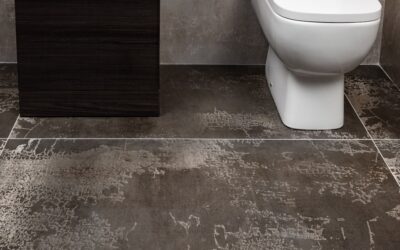
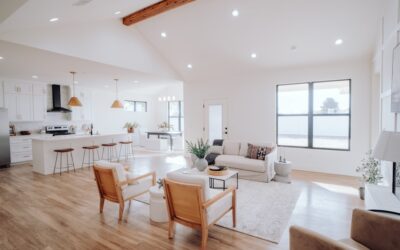
Standard wide-plank oak is beautiful, but it is also on a few million other floors. If you want a room that stops people mid-step, you have to think past the showroom. Creative unique flooring ideas range from copper penny floors and end-grain wood block to poured terrazzo and bold patterned tile, and each delivers a look you simply cannot buy off a roll. I have installed and repaired most of these, and the truth is that the wow factor always comes with a catch. Here is an honest tour of the most striking options, what they cost, and what you are signing up for when you choose one.
Penny Floors: Real Coins Under Epoxy
A penny floor is exactly what it sounds like: thousands of one-cent coins laid face up and sealed under clear epoxy. The effect is mesmerizing, a shimmering copper sea that reads as art. It is a favorite for bar floors, powder rooms, and accent areas where you want a conversation piece.
The cost of the pennies themselves is trivial, roughly $2.88 per square foot in face value at about 288 coins to cover one square foot. The labor is the brutal part. Laying coins individually is slow, and a small bathroom can swallow a full weekend. The epoxy topcoat is where most beginners fail; you need a deep-pour epoxy applied in thin layers to avoid bubbles, and the surface must be perfectly level or the resin pools. Budget for several gallons of quality epoxy and patience. Done well, a penny floor lasts decades. Done fast, it traps air bubbles and yellows.
End-Grain Wood Block
End-grain flooring turns wood on its side so you walk on the cut ends of the boards rather than their faces, the same way a butcher block is built. The result is a rich, almost cobblestone-like surface with extraordinary durability. Because you are standing on the fiber ends, the wood resists denting far better than standard plank flooring, which is why old factories and breweries used it.
End-grain blocks soak up finish unevenly and the gaps between blocks need careful filling, so installation is specialized. Expect $10 to $20 per square foot installed, sometimes more for reclaimed or exotic species. The payoff is a floor that ages gracefully, hides wear, and can be sanded and refinished many times. The downside is sensitivity to moisture swings, since end grain expands and contracts more than face grain, so it is best kept away from damp basements and out of rooms with wild humidity changes.
Terrazzo: From Mid-Century to Modern
Terrazzo embeds chips of marble, granite, glass, or quartz in a cement or epoxy binder, then grinds the surface smooth and polished. It has swung back into fashion hard, showing up everywhere from boutique hotels to modern kitchens. The look is endlessly customizable; you choose the chip size, color, and density, so no two terrazzo floors are alike.
- Epoxy terrazzo: Thinner, lighter, brighter colors, ideal for residential and commercial interiors. Roughly $25 to $40 per square foot poured.
- Cement terrazzo: Traditional, thicker, more durable for high-traffic and outdoor-adjacent areas, but heavier and pricier.
- Terrazzo tile: Precast tiles give the look at a fraction of the cost and labor, often $8 to $15 per square foot.
Poured terrazzo is a true craftsman’s job, not a DIY project, and it is one of the most expensive floors you can install. But it is also one of the longest-lived. Properly sealed terrazzo lasts 40 years or more and is seamless, hygienic, and easy to clean.
Patterned and Encaustic Tile
Tile is the easiest path to a unique floor because the pattern does the work. Encaustic cement tiles, with their bold geometric and Moroccan-inspired designs, turn an entryway or kitchen into a focal point. Patterned porcelain mimics those looks at lower cost and with far easier maintenance, since porcelain does not need the sealing that true cement tile demands.
The key with patterned tile is restraint and layout. A busy pattern overwhelms a large open floor, so it shines in defined spaces: a mudroom, a powder room, a kitchen island zone, or as a “rug” inset framed by plain tile. Expect $5 to $15 per square foot for the tile, plus installation. True encaustic cement tile runs higher and needs periodic resealing, so weigh the authentic material against a convincing porcelain look-alike.
Other Standout Options Worth Considering
Beyond the headliners, several other creative floors deliver a custom look without always wrecking the budget. Each suits a particular space and personality.
- Polished concrete with dyes or aggregates: Industrial-chic, extremely durable, $3 to $12 per square foot. Great over an existing slab.
- Cork: Warm, quiet, soft underfoot, and renewable, with a distinctive mottled texture. Around $3 to $8 per square foot.
- Herringbone and chevron wood: The same wood you know, laid in a directional pattern that reads as luxury. Add 20 to 30 percent to standard install labor.
- Reclaimed barn wood: Genuine patina and history, but inspect for pests and unevenness, and budget extra waste.
- Pebble and river-stone: A spa-like texture for bathrooms and showers, set in mortar and grouted, then sealed.
How to Choose and Budget for a Unique Floor
Before you fall in love with a Pinterest image, run it through three filters. First, traffic and moisture: penny floors and terrazzo love a busy entry, while end-grain and reclaimed wood resent damp rooms. Second, labor reality: many of these looks are slow, specialized installs, so the labor often dwarfs the material cost. Get a firm bid, not a guess. Third, resale: a wildly personal floor can date a room or narrow your buyer pool, so reserve the boldest ideas for spaces you can easily change later.
My advice for testing the waters is to start with one room or even a defined inset. A patterned-tile entry, a penny-floor powder room, or a herringbone foyer gives you the custom statement without committing the whole house to a hard-to-reverse choice. Among these creative unique flooring ideas, the smartest projects pair real visual impact with a surface that fits how the room actually gets used, and a budget that accounts for the labor as honestly as the materials.
Prefer to explore on your own?
See how new flooring looks in your actual room in seconds — free, no signup.
Try the free Floor Studio →