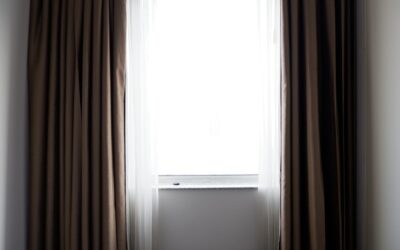
Most people buy curtains for a patio door the same way they buy them for a window, and the result is panels that stretch flat across the glass and never quite close. Getting the curtain size for sliding glass door openings right comes down to three numbers: the width of the door, how far the rod extends past the frame, and how much fabric fullness you want. For a standard 72 inch door, plan on a rod of roughly 96 to 108 inches, four panels about 50 to 54 inches wide each, and a length of 84, 90 or 96 inches depending on how high you mount the rod.
Part of our Windows & Doors guide — explore the full guide →
Sliding doors get used dozens of times a day, so the curtains also need to stack completely clear of the glass when open. That is why the rod for a door should run farther past the frame than it would for a window. A curtain that covers part of the slider gets pulled, snagged and dirty within a month.
- Curtain Size for Sliding Glass Door Openings: Quick Chart
- Tools and Materials You Need
- How to Measure a Sliding Door for Curtains
- Curtain Width for Sliding Glass Door: How Fullness Works
- Curtain Length for Sliding Door Openings
- Rod Placement and Stack-Back Clearance
- Common Mistakes and Troubleshooting
- General Cost Ranges
- When to Call a Pro
- Frequently Asked Questions
- What size curtains do I need for a 72 inch sliding door?
- How wide should curtains be for a sliding glass door?
- Should curtains for a sliding door touch the floor?
- How far past the door frame should the rod go?
- Are 84 or 96 inch curtains better for a patio door?
- Can I use one curtain panel for a sliding door?
Picking the right curtain size for sliding glass door openings also means knowing how to measure, how fullness works, how to pick a length, and which mistakes cause most returns. Each of those gets its own section here, starting with a quick chart for the three common door widths.
Curtain Size for Sliding Glass Door Openings: Quick Chart
The figures assume standard ready-made panels that are about 50 to 54 inches wide, a rod that extends 12 to 18 inches past each side of the frame, and a fullness target of 2 to 2.5 times the rod length. Lengths assume a door that is about 80 inches tall, which covers the majority of residential sliders.
| Door width | Rod length | Total fabric width (2 to 2.5x) | Panels (50 to 54 in each) | Common length |
|---|---|---|---|---|
| 60 in (5 ft) | 84 to 96 in | 168 to 240 in | 4 panels | 84 or 90 in |
| 72 in (6 ft) | 96 to 108 in | 192 to 270 in | 4 to 5 panels | 84, 90 or 96 in |
| 96 in (8 ft) | 120 to 132 in | 240 to 330 in | 5 to 6 panels | 90 or 96 in |
| 72 in door, 96 in tall | 96 to 108 in | 192 to 270 in | 4 to 5 panels | 108 in |
| Any width, one-way stack | Door width plus 18 to 24 in on the stack side | 2 to 2.5x rod length | Same count, all on one side | 84, 90 or 96 in |
If you only remember one rule, make it this one: total fabric width should be at least twice the rod length. Four 52 inch panels give you 208 inches of fabric, which is about 2.2 times a 96 inch rod. That reads as full, gathered drapery rather than a flat sheet.
Tools and Materials You Need
Measuring for door curtains takes about ten minutes, and the right tools keep you from rounding in the wrong direction.
- A metal tape measure, at least 25 feet long
- A pencil and painter’s tape to mark rod bracket locations
- A 2 or 4 foot level
- A stud finder
- A drill with bits sized for your anchors or screws
- Heavy-duty wall anchors rated for the rod and fabric weight if you cannot hit framing
- An extra wide curtain rod with a center support bracket for spans over about 84 inches
A rod longer than about 7 feet sags without a middle bracket, especially with lined panels. Telescoping rods also lose stiffness where the two tubes overlap, so put the center support close to that joint.
How to Measure a Sliding Door for Curtains
Measure the opening, not the glass. You want the outside of the trim on each side and the top of the trim casing, because those are the points the curtains have to clear.
- Measure the width. Run the tape from the outside edge of the left trim to the outside edge of the right trim. A door sold as 6 feet usually measures close to 72 inches across the frame, but trim adds several inches, so record what you actually see.
- Add stack-back on each side. Add 12 to 18 inches to each side for a two-way draw. Lightweight sheers can get by with 10 to 12 inches. Heavy lined or blackout drapery needs closer to 18 inches because it stacks thicker.
- Decide on rod height. Mount the rod 4 to 6 inches above the top of the trim as a starting point. For a taller look, split the distance between the trim and the ceiling.
- Measure the drop. Measure from the rod (or the bottom of the curtain ring, if you use rings) straight down to the floor. This number decides your panel length.
- Check obstructions. Note the door handle, any wall switch, a nearby corner or HVAC vent. A corner closer than about 12 inches limits how far the rod can extend and may push you to a one-way stack.
Write down the drop at both ends. Floors and headers in older homes are rarely perfectly level, and a difference of half an inch matters if you want curtains that just kiss the floor.
Curtain Width for Sliding Glass Door: How Fullness Works
Fullness is the ratio of flat fabric width to rod length. It decides whether drapery looks rich or skimpy, and it is the number shoppers most often get wrong when they work out the curtain width for sliding glass door openings.
- 1.5x fullness: Flat, modern look. Works for grommet panels and very heavy fabric, but light shows at the edges.
- 2x fullness: The standard target for ready-made panels. Gentle, even folds.
- 2.5x fullness: Noticeably lush. Good for sheers, linen blends and rooms where the curtains are a focal point.
- 3x fullness: Mostly for very light sheers and custom pinch-pleat drapery.
To find your panel count, multiply the rod length by your fullness target and divide by the width of one panel. A 108 inch rod at 2x needs 216 inches of fabric. Divided by 52 inch panels, that is a little over four panels, so buy four for a standard look or five for extra fullness. When the math lands between two numbers, round up. Too much fabric just stacks a bit deeper, while too little leaves gaps.
Heading style changes the math slightly. Grommet and tab-top panels eat up more width in their folds, so 2x fullness is the practical minimum. Pinch-pleat and ripple-fold drapery is already pleated to a set fullness, so you order by finished width instead of flat width.
Curtain Length for Sliding Door Openings
Most sliding patio doors are about 80 inches tall, and the trim around them adds a few more inches. That is why 84 inch panels are the most common pick: a rod a few inches above the trim puts the hem right at, or just above, the floor.
- 84 inch panels: Rod mounted just above the trim on a standard 80 inch door. Expect the hem to float slightly above the floor, which is practical in busy rooms with pets.
- 90 inch panels: Rod mounted roughly halfway between the trim and an 8 foot ceiling. A good balance between height and fit.
- 96 inch panels: Rod mounted close to an 8 foot ceiling. This makes the door look taller and the room feel larger.
- 108 inch panels: Tall 8 foot doors or rooms with 9 foot ceilings.
For the hem itself, pick one of three styles. A float sits about half an inch above the floor and is the easiest to live with on a door that gets heavy traffic. A kiss just touches the floor and needs precise measuring. A break or puddle adds 1 to 3 inches of extra length so the fabric rests on the floor, which looks formal but collects dust and catches on the slider track. For a working patio door, a float or a kiss is the better choice.
Rod Placement and Stack-Back Clearance
Stack-back is the wall space the curtains occupy when fully open. With a sliding door, you want every inch of the fabric to sit beside the glass, not over it, because the moving panel and the handle both need clearance.
As a general guide, a gathered curtain compresses to roughly a quarter to a third of its flat width when open, depending on fabric weight and heading. Two 52 inch grommet panels on one side typically stack into 12 to 18 inches. If your rod extends 12 to 18 inches past the frame on that side, the stack clears the glass completely.
A one-way stack is often the smarter layout for sliders. All the fabric draws toward the fixed glass panel side, away from the moving door, so you only need extended wall space on one side. Extend the rod 18 to 24 inches on the stack side and 2 to 4 inches on the other. This layout also keeps fabric away from the handle, which is the most common snag point.
Use the full span and do not skimp on brackets. An extra wide curtain rod spanning 120 inches or more should have at least three brackets, with the end brackets set into studs or rated anchors. A rod pulling out of drywall is one of the more common callbacks on patio door installs.
Common Mistakes and Troubleshooting
Curtains will not close in the middle
The fullness is too low. Add a panel to each side, or swap to wider panels. A single 52 inch panel per side on a 96 inch rod is barely 1.1x fullness and will never look finished.
Fabric drags on the slider track
The panels are too long or the rod is too low. Raise the rod an inch or two, or have the panels hemmed to a float. Puddled curtains are a poor match for a working door.
The stack covers part of the glass
The rod is too short. Replace it with a longer one or switch to a one-way stack toward the fixed panel. Swapping thick blackout panels for lighter fabric also shrinks the stack.
The rod bows in the middle
Add a center support bracket. Telescoping rods sag most at the overlap, and weight from lined panels makes it worse over time.
Light leaks at the sides
Extend the rod farther or add wraparound return brackets that bring the end panel back to the wall. Return rods are a simple fix for bedrooms and media rooms where a patio door faces morning sun.
General Cost Ranges
Costs vary widely by fabric and region, so treat these as broad ranges. Ready-made polyester panels are the budget option, typically priced per panel at the low end of the market, while lined linen blends and thermal blackout panels cost noticeably more per panel. A sturdy extra wide curtain rod with a center bracket usually falls in the low to moderate range, and decorative iron or wood rods cost more. Custom drapery for a 96 inch door, measured and installed by a workroom, can run several times the price of ready-made panels, especially with lining and pleated headings.
Doing the math carefully is the cheapest upgrade. Buying the right number of panels and a rod long enough to clear the glass costs far less than replacing a set that never fit.
When to Call a Pro
Most homeowners can hang a curtain rod over a sliding door in under an hour, and once you know the right curtain size for sliding glass door openings, ordering panels is straightforward. Consider a pro when the wall above the door is plaster, brick or tile, when there is a large steel or engineered header where screws will not hold, or when you want motorized tracks or ceiling-mounted drapery hardware. A window treatment installer can also handle tall openings that need a scaffold or a long extension ladder, and custom workrooms will measure and guarantee the fit for pleated drapery.
Frequently Asked Questions
What size curtains do I need for a 72 inch sliding door?
Use a rod of about 96 to 108 inches and four panels that are 50 to 54 inches wide. That gives roughly 2x fullness. Choose 84 inch length if the rod sits just above the trim, or 90 to 96 inches if you mount it higher.
How wide should curtains be for a sliding glass door?
The combined flat width of all panels should be about 2 to 2.5 times the rod length. For a 60 inch door with an 84 to 96 inch rod, that means 168 to 240 inches of fabric, which works out to four standard panels.
Should curtains for a sliding door touch the floor?
A float about half an inch above the floor or a hem that just touches it works best. Puddled curtains look formal but drag on the track and collect dirt on a door you use every day.
How far past the door frame should the rod go?
Extend the rod 12 to 18 inches past each side of the trim for a two-way draw. For a one-way stack, go 18 to 24 inches on the stack side so the open curtains clear the glass completely.
Are 84 or 96 inch curtains better for a patio door?
84 inch panels suit a rod mounted just above the trim on a standard 80 inch door. 96 inch panels suit a rod mounted near an 8 foot ceiling and make the door look taller. Measure from the rod to the floor before choosing.
Can I use one curtain panel for a sliding door?
Only if it is a very wide panel, or you use a one-way draw with enough fabric to reach 2x fullness. A single standard panel looks flat and will not cover a 60 inch or wider door.