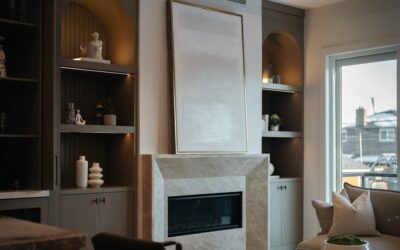
Hanging curtains on walls instead of paint is one of the most underrated design moves in residential interiors, and it solves several problems at once. Renters who cannot paint reclaim style control. Homeowners with rough plaster walls hide imperfections instantly. Cold bedrooms gain a layer of insulation and acoustic damping that no paint job can match. The challenge is choosing the right fabric, hanging it correctly so it looks intentional rather than dorm-room temporary, and budgeting realistically for fabric yardage and hardware. This guide walks through the design principles, materials, installation methods, and costs that make a fabric wall feel like a deliberate architectural choice.
Why Fabric Walls Make Sense
Paint changes color. Fabric changes color, texture, sound, and temperature. A 200 square foot wall covered in linen drapery panels absorbs roughly 30 percent more ambient noise than the same wall painted with eggshell finish. The room feels quieter, warmer, and physically softer the moment you walk in.
For renters, the entire installation removes in 20 minutes when the lease ends. For homeowners, the look refreshes with a new fabric swap at a fraction of the cost of painting and repainting over 10 years. The single design decision pays off in flexibility and livability for as long as the wall exists.
Fabric Choices That Hang Well
Not every fabric belongs on a wall. The weight, drape, and weave determine whether the finished look reads as intentional or sloppy. Four fabrics dominate successful wall installations.
- Linen and linen blends: medium weight, soft drape, casual texture, $15 to $40 per yard
- Velvet: heavy weight, dramatic drape, rich color saturation, $30 to $80 per yard
- Cotton canvas: medium-heavy, structured, washable, $12 to $25 per yard
- Heavy weight cotton sateen: smooth surface, formal drape, $20 to $45 per yard
Avoid sheer fabrics, polyester slubs, and anything thinner than mid-weight upholstery cloth. Lightweight fabrics show every seam, sag between hanging points, and read as cheap from across the room. Save them for window applications where backlighting tells a different story.
Calculating How Much Fabric You Need
For a wall 10 feet wide by 9 feet tall, plan on 2 to 2.5 times the wall width in fabric for proper fullness. A 10 foot wall needs 20 to 25 linear feet of fabric panels at 54 inch standard upholstery width.
Each panel ideally runs floor to ceiling minus 1/2 inch to prevent dragging on the floor or carpet. For a 9 foot ceiling, cut panels at 108 inches plus 6 inches for hem and rod pocket allowances. Buy 10 percent extra to account for pattern matching and mistakes. Total fabric for a typical bedroom accent wall runs 12 to 20 yards.
Hanging Methods That Look Polished
The hanging system makes or breaks the project. Three methods produce professional-looking results, ranked by effort and finish quality.
Ceiling-mounted track is the gold standard. Brands like Silent Gliss and Forest Group sell aluminum tracks that screw into the ceiling drywall through studs or with toggle anchors. Tracks run $8 to $30 per linear foot and disappear once the fabric is hung. Curtains glide silently along glides or carriers.
Wall-mounted rods at ceiling height look almost as clean if you hide them with a fabric valance or ceiling crown. Use heavy-duty 1 inch or larger diameter rods to prevent sag. Center support brackets every 4 feet for spans over 8 feet wide. Tension rods inside doorways work for renters but cannot support full wall coverage.
Color and Pattern Strategy
Solid neutrals work best for wall-sized fabric installations because patterns can overwhelm a room at that scale. Off-white, sand, warm gray, and deep navy all photograph beautifully and pair with existing furniture without commitment.
If you want pattern, go subtle. A linen with vertical slubs reads as texture from 6 feet away. A small geometric like 1 inch grid or pinstripe adds interest without dominating. Save bold florals and large repeats for single-panel statement walls where the fabric is the room’s only major visual.
Acoustic and Insulation Benefits
Beyond looks, fabric walls deliver real performance gains. A heavy velvet or canvas panel reduces sound transmission by 5 to 8 decibels and absorbs reflective noise that creates echo. Home recording setups, bedrooms next to busy streets, and home theaters all benefit measurably.
For thermal insulation, add a layer of acoustic blanket or 1/4 inch acoustic foam behind the fabric for serious noise control. The combined assembly performs better than a $1,200 acoustic panel system at half the material cost, and you keep the soft look on the visible side.
Lighting Considerations
Fabric walls absorb light differently than painted walls. A room that felt bright with white paint will feel softer and slightly dimmer once large fabric panels go up. Plan for one or two additional light sources to compensate.
Wall sconces mounted in front of the fabric work beautifully. The fabric becomes a soft backdrop that diffuses the sconce light across the wall. Avoid recessed cans in the ceiling near a fabric wall because they cast harsh angled shadows down the fabric. Use up-lighting from floor lamps or wall-washing track lights instead.
Real Cost Breakdown
Total project cost depends on fabric quality, wall size, and hanging system. For a typical accent wall of 10 feet wide by 9 feet tall.
- Budget DIY with cotton canvas and tension rods: $200 to $400
- Mid-range with linen panels and ceiling track: $500 to $1,200
- Premium with velvet and professional installation: $1,800 to $3,500
- Full room with multiple walls covered: $3,000 to $8,000
Compared to wallpaper at $5 to $15 per square foot installed, fabric installations sit in the same range with the bonus of removability. Compared to professional painting at $400 to $800 for one wall, fabric costs more but delivers much greater visual and functional impact. For the right room and the right person, hanging curtains on walls instead of paint is one of the best dollar-per-impact moves in interior design.