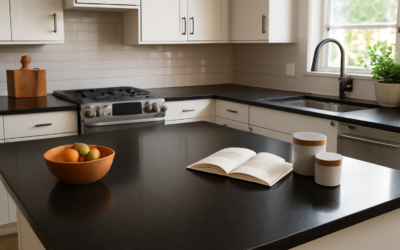
Dark quartz has become one of the most requested countertop choices in modern kitchens, and for good reason. It delivers the dramatic, high-contrast look of black granite or soapstone without the maintenance headaches of natural stone. Because engineered quartz is manufactured from roughly 90 percent ground quartz mixed with resins and pigments, the color runs consistent across the slab and the surface is non-porous. After installing dark quartz in dozens of kitchens, I have watched it hold up to spills, heat marks, and daily abuse better than almost any dark natural stone.
Part of our Countertops guide — explore the full guide →
This guide covers the full picture: the popular colors, real-world costs, the genuine pros and cons, how it compares to granite and marble, and exactly how to keep a dark surface looking clean day to day.
Why Homeowners Choose Dark Quartz
The appeal starts with drama. A deep charcoal, near-black, or espresso surface anchors a kitchen and makes cabinetry and hardware pop. Dark quartz pairs beautifully with white or light gray cabinets for a classic two-tone contrast, and it grounds an all-white kitchen so the space does not feel sterile. In a room with plenty of natural light, a dark countertop adds warmth and richness that pale surfaces cannot match.
Beyond looks, the practical case is strong. Engineered quartz is non-porous, so it never needs sealing, resists staining from wine and coffee, and does not harbor bacteria the way a poorly sealed stone can. For busy families, that combination of bold style and low upkeep is the whole reason dark quartz keeps winning out over the alternatives.
Popular Dark Quartz Colors and Patterns
Dark quartz is far from a single flat black. Manufacturers offer a wide spectrum of tones and veining styles.
- Solid black: A clean, uniform jet-black that reads sleek and contemporary. Ideal for minimalist and modern kitchens.
- Charcoal and gray-black: Softer than true black, with a slightly warmer, more forgiving look that hides dust better.
- Black with white veining: Marble-look dark quartz that mimics the drama of Nero Marquina marble without the etching risk.
- Speckled and flecked: Dark bases with metallic or mineral flecks that echo the sparkle of granite like Black Galaxy.
- Espresso and deep brown: Warmer dark tones that complement wood cabinetry and rustic or transitional designs.
When you shop, always view a full-size slab or at least a large sample rather than a two-inch chip. Veining and fleck patterns look very different across a full countertop, and lighting in your own kitchen changes the tone considerably.
What Dark Quartz Costs
Quartz is priced per square foot installed, and dark colors generally fall within the same range as other quartz. Expect to pay between $50 and $120 per sq ft installed for most residential grades, with premium designer lines and marble-look patterns reaching $150 per sq ft or more.
For a typical kitchen with 40 to 50 sq ft of countertop, that puts a realistic budget between $2,500 and $6,000 installed. Factors that push the price up include thicker slab profiles, waterfall edges, complex cutouts for sinks and cooktops, and premium brand names. Getting three quotes from certified fabricators is the best way to understand pricing in your area, since labor rates vary widely by region.
Pros and Cons of Dark Quartz
No surface is perfect, and being honest about the trade-offs helps you decide with your eyes open.
The Advantages
- Non-porous and stain-resistant: No sealing ever, and spills wipe up without soaking in.
- Consistent color: Unlike natural stone, what you see in the sample is what you get across the whole slab.
- Durable: Highly scratch- and chip-resistant thanks to the resin binder and hardness of quartz.
- Hygienic: The sealed surface does not harbor bacteria or mold.
The Drawbacks
- Shows everything: Fingerprints, water spots, dust, and crumbs are far more visible on dark surfaces than on light ones.
- Heat sensitivity: The resin can scorch or discolor from very hot pans, so trivets are a must.
- Not ideal outdoors: Direct sun can fade quartz over time, so it is best kept indoors.
- Higher cost than laminate: Though comparable to granite and cheaper than many natural stones.
Dark Quartz vs. Granite and Marble
The most common question I hear is how dark quartz stacks up against natural stone. Against dark granite, quartz wins on consistency and maintenance; granite requires periodic sealing and has natural variation that some people love and others find unpredictable. Granite does tolerate heat better, so if you routinely set hot cookware directly on the counter, that is a point in its favor.
Against marble, dark quartz is the clear practical winner. Marble is soft, porous, and etches when it contacts anything acidic like lemon or vinegar. A dark quartz with white veining gives you the marble aesthetic without the constant worry. For most homeowners who want a bold dark counter that just works, engineered quartz is the lower-stress option.
Caring for a Dark Quartz Countertop
The one real challenge with dark quartz is keeping it looking clean, because the surface reveals smudges and streaks that a busy light-colored counter would hide. The good news is that cleaning is simple; it just needs to be regular.
- Wipe daily with warm water and a few drops of mild dish soap, then dry with a microfiber cloth to prevent streaks and water spots.
- Buff after cleaning with a dry microfiber towel to eliminate the film that makes dark surfaces look hazy.
- Avoid abrasive pads and harsh chemicals like bleach, oven cleaner, or high-pH degreasers, which can dull the finish.
- Always use trivets and hot pads; never place a pan straight off the burner onto the surface.
- Scrape off dried food gently with a plastic scraper rather than a metal blade.
For stubborn residue, a non-abrasive surface cleaner or a dedicated quartz cleaner removes buildup without harming the finish. Keep a microfiber cloth in a nearby drawer and a quick wipe becomes second nature.
Design Tips for Working With Dark Quartz
Getting the most out of a dark counter comes down to balancing the room so the surface reads as luxurious rather than heavy. Because dark quartz absorbs light, the surrounding elements need to give some of it back.
- Layer your lighting. Add under-cabinet LEDs and pendant fixtures over an island. Good task lighting keeps a dark counter from swallowing the workspace and makes the surface easier to keep clean.
- Add reflective accents. Polished finishes, glass backsplashes, and metallic hardware bounce light around and keep the palette from feeling flat.
- Choose the edge profile carefully. A honed or matte-finish dark quartz hides fingerprints far better than a high-gloss polish, while a polished edge looks more formal and dramatic.
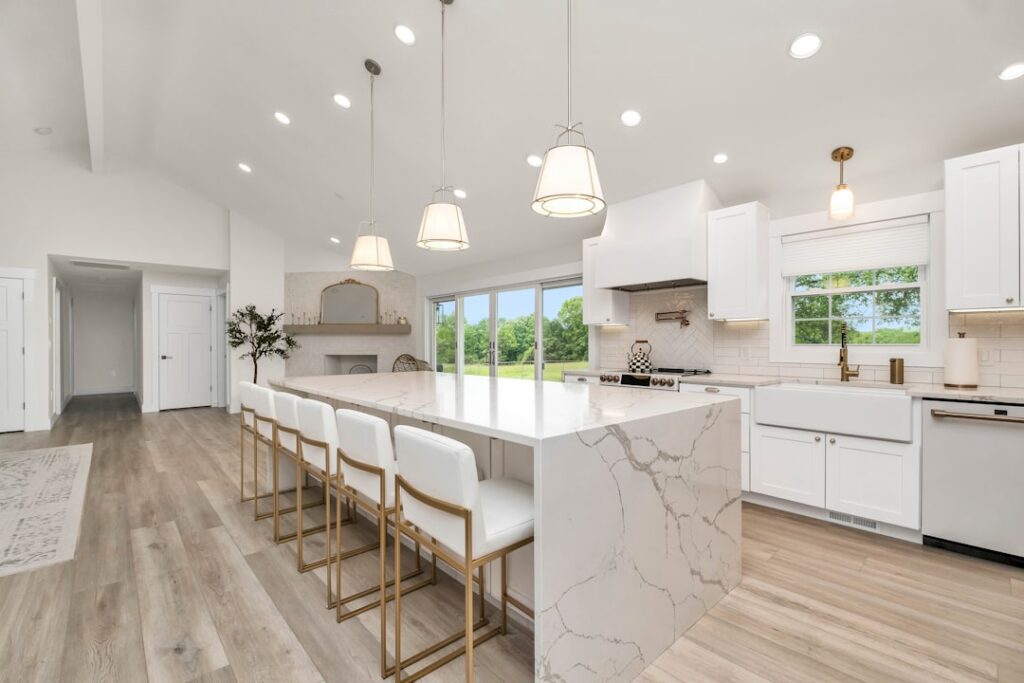
- Consider a waterfall island. Running the dark quartz down the sides of an island turns the counter into a statement piece and shows off the material’s consistency.
Think about the backsplash as part of the same decision. A light backsplash sharpens the contrast and brightens the room, while a matching dark backsplash creates a seamless, enveloping look best reserved for well-lit kitchens. When in doubt, bring home large samples and live with them against your cabinets and wall color for a few days before committing.
Is Dark Quartz Right for You?
Dark quartz suits homeowners who want a striking, contemporary kitchen and are willing to wipe the counter down regularly to keep it pristine. If you have a bright kitchen, pairing dark counters with light cabinets creates timeless contrast that resists going out of style. If your kitchen is short on natural light, consider a charcoal or veined dark quartz rather than solid black to keep the space from feeling closed in.
For the vast majority of kitchens, dark quartz delivers the best combination of bold looks, durability, and low maintenance available today. Choose a color you love, budget for professional fabrication, and commit to a quick daily wipe, and you will have a countertop that looks sharp for decades.