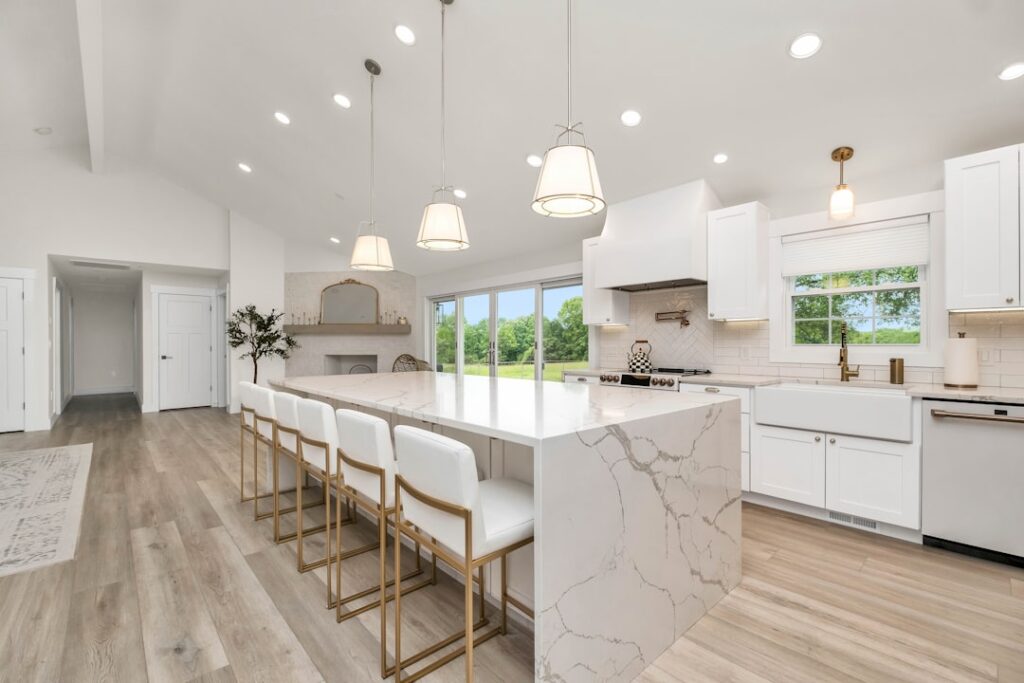
If you have shopped for countertops recently, you have almost certainly encountered quartz stone, the engineered surface that has become one of the most popular choices in American kitchens. Despite the name, a quartz countertop is not a single slab cut from the ground. It is an engineered material made by binding ground natural quartz with resins and pigments, which gives it the look of stone with a consistency and toughness natural stone cannot match. Understanding how it is made explains both its strengths and its limits.
Part of our Countertops guide — explore the full guide →
- What Quartz Stone Actually Is
- Why It Is So Popular
- The Limitations to Know
- Quartz Stone vs Granite
- Understanding the Cost
- Caring for Quartz Stone
- Choosing the Right Slab
- Where Quartz Works Best
- Quartz vs Marble for the Kitchen
- Understanding Quartz Brands and Quality Tiers
- Installation and What to Expect
- The Bottom Line
What Quartz Stone Actually Is
Engineered quartz typically contains roughly 90 percent ground quartz combined with around 10 percent resins, polymers, and color pigments. This blend is pressed and cured into hard, dense slabs. Because it is manufactured, the color and pattern stay uniform across slabs, unlike natural granite or marble where every piece differs. Manufacturers can mimic the look of marble veining, granite speckle, or solid colors with impressive accuracy.
Why It Is So Popular
Quartz stone wins homeowners over for a few clear reasons:
- Nonporous: It does not absorb liquids, so it resists stains from wine, coffee, and oil without sealing
- No sealing required: Unlike granite and marble, quartz never needs periodic sealing
- Scratch-resistant: It stands up well to everyday kitchen use
- Consistent appearance: What you see in the showroom is what arrives in your kitchen
- Low maintenance: Cleanup is simple soap and water
For busy households that want a worry-free surface, these traits are hard to beat.
The Limitations to Know
No material is perfect. Quartz stone is sensitive to heat because the resins that bind it can scorch or discolor under very hot pans, so always use trivets and hot pads. Direct, prolonged sunlight can fade some quartz over many years, which makes it less ideal for outdoor kitchens. It is also heavy, so professional installation is essential. Knowing these limits lets you protect the surface and avoid the few situations where it underperforms.
Quartz Stone vs Granite
The two are constant rivals. Granite is 100 percent natural, offers unique patterning, and tolerates heat better, but it is porous and needs sealing. Quartz is engineered, nonporous, and maintenance-free, but more heat-sensitive and uniform in look. If you prize natural character and heat resistance, granite leads; if you want consistency and no upkeep, quartz wins. Both are durable enough for decades of service, so the choice often comes down to aesthetics and maintenance preference.
Understanding the Cost
Quartz is priced by the square foot installed, and pricing reflects brand, color, thickness, and edge profile. As a general range, installed quartz countertops commonly run from roughly $50 to $120 or more per square foot, with premium designer patterns reaching higher. Costs also depend on your region and the complexity of the install, such as cutouts for sinks and cooktops. Always gather several local quotes for an accurate figure.
Caring for Quartz Stone
Maintenance could hardly be simpler:
- Wipe daily with warm water and mild dish soap or a quartz-safe cleaner
- Blot spills, though there is no rush since the surface will not absorb them
- Avoid abrasive pads and harsh chemicals like bleach or oven cleaner
- Never set hot cookware directly on the surface; always use a trivet
- Use a cutting board to keep knives sharp and the finish pristine
Choosing the Right Slab
When selecting quartz, view large samples or full slabs rather than tiny chips, since patterns read differently at scale. Consider the finish: polished is glossy and reflective, while honed and matte finishes hide fingerprints but may show smudges. Match the color to your cabinetry and lighting, and think about edge profiles, from simple eased edges to dramatic mitered ones, which affect both the look and the price.
Where Quartz Works Best
Quartz shines in kitchens, bathroom vanities, and high-traffic surfaces where stain resistance and low maintenance matter most. Its nonporous nature makes it especially hygienic for food prep areas. The one place to think twice is an outdoor kitchen or a counter in constant direct sun, where heat and UV exposure favor natural stone instead.
Quartz vs Marble for the Kitchen
Many homeowners chasing a marble look actually end up choosing quartz, and for good reason. Natural marble is stunning but soft and porous, etching from acids like lemon and wine and staining easily without diligent sealing. Quartz can now replicate marble’s veining convincingly while staying nonporous, etch-resistant, and maintenance-free. For a busy cooking kitchen, a marble-look quartz delivers the aesthetic without the daily anxiety of protecting real marble. Purists may still prefer the depth and patina of genuine marble, and it remains a beautiful choice for a low-use baking station or a powder room, but for everyday counters most people are happier with the quartz version of the look.
Understanding Quartz Brands and Quality Tiers
Not all quartz is equal, and the brand name on the slab signals a real difference in pattern quality, color range, and warranty. Premium manufacturers invest heavily in realistic veining and offer long warranties, which is part of what you pay for at the top of the range. Mid-tier and value lines can be excellent for the money, especially in solid colors and simpler patterns where the design is easier to execute well.
When comparing quotes, confirm you are pricing the same thickness and quality tier, since a cheaper number sometimes reflects a thinner slab or a lower-grade line rather than a better deal. Ask about the warranty terms too, as coverage length and what it includes vary widely between brands.
Installation and What to Expect
Quartz is heavy and unforgiving of field mistakes, so it is a professional install in nearly every case. The process starts with a precise template of your cabinets, often made with a digital measuring tool after the base cabinets are set and level. Fabrication then cuts the slab, polishes the edges, and creates cutouts for the sink and cooktop off-site. On installation day, the crew sets the slab, joins any seams with color-matched adhesive, and secures and levels the counter. A typical kitchen goes from template to installed in one to three weeks depending on the fabricator’s schedule. Seams are unavoidable on larger layouts, so ask to see where they will fall before fabrication begins.
The Bottom Line
For homeowners who want the look of stone with virtually no upkeep, quartz stone is one of the smartest countertop investments available. It is nonporous, durable, and consistent, asking only that you protect it from high heat. Match the slab to your style, follow simple cleaning habits, and you will enjoy a beautiful, low-maintenance surface for years to come.