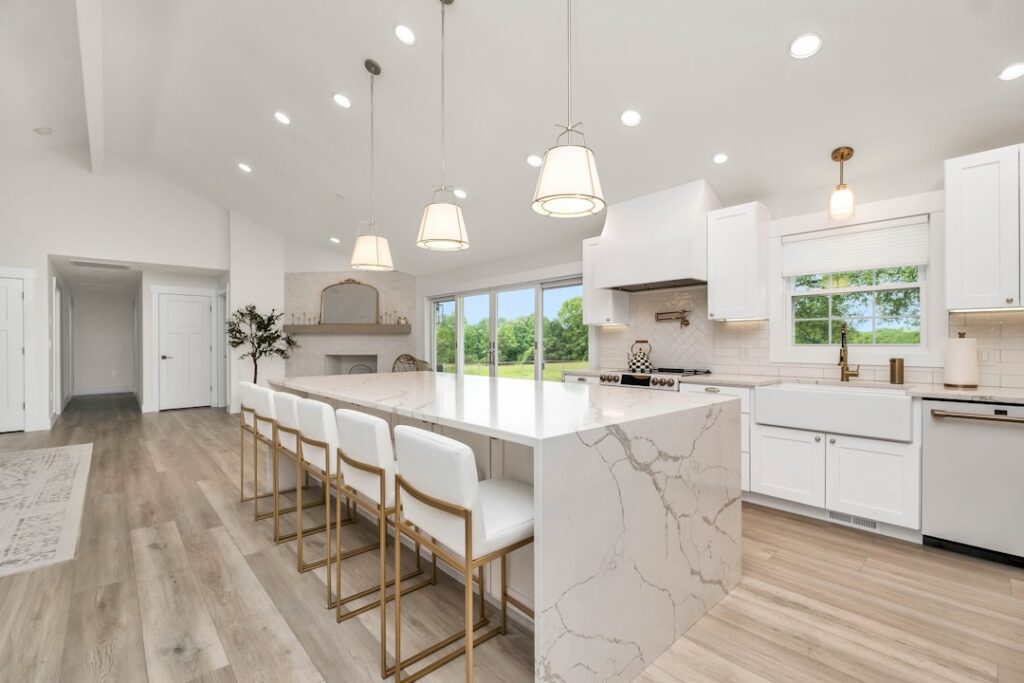
Two of the most durable surfaces in a modern kitchen are made from the same engineered material, and most homeowners do not realize it. Quartz composite is a manufactured blend of roughly 90 percent ground natural quartz bound with about 10 percent polymer resin and pigment, and it shows up both as countertops and as the tough, matte sinks dropped into them. The quartz gives it hardness and stone-like looks; the resin makes it nonporous and consistent. Understanding how it is built explains why it resists stains, scratches, and heat the way it does, and where its limits are.
Part of our Countertops guide — explore the full guide →
This guide covers both applications, the countertop and the composite sink, along with real costs, durability trade-offs, and the care routine that keeps either looking new.
How Quartz Composite Is Made
Quartz composite is an engineered stone, not a slab quarried from the ground. Manufacturers crush natural quartz into a fine aggregate, mix it with polymer resins, pigments, and sometimes bits of recycled glass or mirror, then compact the blend under intense vibration and pressure in a process often called Bretonstone. The result is a dense, uniform slab or molded shape with no natural fissures.
Because the quartz content sits around 90 percent, the surface inherits much of natural quartz’s hardness, which ranks 7 on the Mohs scale, harder than a steel knife blade. The resin, meanwhile, fills every void, so the finished product has virtually no porosity. That single trait, the near-total lack of pores, is responsible for most of the material’s practical advantages.
Quartz Composite Countertops
As a countertop, quartz composite competes directly with granite and marble, and it wins on consistency and maintenance. Because the color and pattern are engineered, you get a predictable look across the whole run with no surprise veining or soft spots. The nonporous surface never needs sealing, unlike granite and marble, which must be resealed periodically to resist stains.
The main weakness is heat. The resin binder can scorch or discolor if you set a hot pan directly on the surface, so trivets are non-negotiable. It also handles direct sunlight poorly over years, since UV can fade the resin, which is why most manufacturers recommend it for indoor use only. Within those limits, it is one of the most forgiving countertop surfaces you can buy.
Quartz Composite Sinks
The same material molded into a basin makes an exceptionally tough sink. Quartz composite sinks, sometimes called granite composite sinks, are formed from crushed quartz or granite and resin under heat and pressure, producing a thick, solid, matte-finish basin in colors like black, gray, and white. They are far more resistant to chips and scratches than porcelain or enameled cast iron, and the color runs all the way through, so a chip does not expose a different material underneath.
These sinks shrug off dropped pots and daily abuse, resist staining, and tolerate heat better than the countertop version because the mass of the basin dissipates it. The trade-offs are weight and hardness: composite sinks are heavy and may need extra cabinet support, and dishes dropped into them break more easily than in a softer stainless steel basin. Lighter colors can also show mineral deposits and require a bit more wiping to stay looking clean.
What Quartz Composite Costs
Pricing spans a wide range depending on brand and application.
- Countertops: typically $50 to $120 per square foot installed, with premium designer patterns pushing higher. That places it alongside mid-to-upper granite.
- Composite sinks: generally $200 to $600 for the sink itself, more than a basic stainless drop-in but competitive with a quality enameled cast iron.
- Installation: countertops require professional templating and fabrication; sinks add a modest install cost, especially for heavy undermount models that need reinforced support.
When you compare the cost to granite or marble, factor in that you will never spend money or a weekend resealing the surface, which narrows the gap over the life of the material.
Durability and Real-World Limits
Quartz composite is among the toughest surfaces available for a home, but it is not indestructible, and knowing its boundaries prevents damage. Its strengths are clear: it resists scratches from knives and cookware, shrugs off stains from wine, coffee, and oil thanks to the nonporous surface, and stands up to daily impact far better than natural stone edges.
Its two real vulnerabilities are heat and, in the countertop form, prolonged UV exposure. A scorching pan can leave a permanent mark, and years of direct sun can subtly fade darker colors. Harsh chemicals are the third risk: strong solvents, oven cleaners, drain openers, and abrasive scouring pads can dull or etch the resin. Treat it well within those limits and the material easily lasts decades.
Quartz Composite vs. Granite, Solid Surface, and Stainless
Placing quartz composite next to its rivals clarifies where it belongs. Against granite and marble, it wins on maintenance because it never needs sealing and offers a consistent, predictable pattern, while natural stone wins on heat tolerance and the one-of-a-kind character of real veining. Against solid-surface materials like acrylic countertops, quartz composite is far harder and more scratch-resistant, though solid surface has the edge in seamless, repairable fabrication.
For sinks, the comparison is usually against stainless steel and enameled cast iron. Composite beats stainless on quiet operation, scratch concealment, and a warmer matte look, and it beats enameled cast iron because it cannot chip down to a contrasting base layer. Stainless still wins if your priority is a basin that will never crack a dropped wine glass and that weighs little enough to install without extra bracing. Knowing which trait matters most in your kitchen points you to the right pick.
Color, Finish, and Design Choices
Both countertops and sinks come in a broad palette, and the color you choose affects daily upkeep as much as looks. Darker composite finishes, deep charcoal, espresso, and black, hide crumbs and water spots between cleanings but reveal dried mineral film and hard-water streaks more readily. Lighter finishes, white, cream, and pale gray, mask limescale and dried spots better but show coffee, tea, and food staining sooner if spills sit. For a coordinated kitchen, many homeowners match a composite sink to or against the countertop, either blending the two in the same tone or setting a black sink against a light counter for contrast. Matte finishes dominate the category and do an excellent job disguising fine surface wear that would show on a high-gloss slab.
Caring for Quartz Composite
Maintenance is refreshingly simple, which is a large part of the appeal. For everyday cleaning, warm water, mild dish soap, and a soft cloth handle nearly everything. Because the surface is nonporous, spills wipe up without soaking in, so you have time to deal with them.
Keep a few rules to protect the finish. Always use trivets or hot pads under hot cookware to shield the resin from heat. Avoid abrasive pads and harsh chemical cleaners that can dull the surface, and reach instead for a nonabrasive stone-safe cleaner when soap alone will not cut grease. On composite sinks in lighter colors, an occasional wipe with a bit of white vinegar or a dedicated composite-sink cleaner removes mineral film and water spots; rinse thoroughly afterward. There is no sealing to schedule and no polishing to keep up, which is exactly why so many kitchens standardize on the material.
Is Quartz Composite Worth It?
For most kitchens, yes. Quartz composite delivers stone-like durability and looks with almost none of the upkeep natural stone demands, and it does it in both the countertop and the sink, letting you match the two for a cohesive result. You trade away the heat tolerance of granite and the softness that keeps stainless from cracking dishes, but you gain a nonporous, stain-resistant, sealing-free surface that holds up for decades. If you cook often, want a low-maintenance kitchen, and are willing to keep a trivet within reach, quartz composite is one of the smartest surface investments you can make. Match the countertop and sink in coordinating tones, and the whole workspace looks engineered to last, because it is.