The average bathroom hits 80 to 100 percent humidity multiple times a day. That’s a hostile environment for artwork, photographs, fabric, and untreated wood. Yet bathrooms also represent some of the highest-traffic visual real estate in the house — guests use them, you spend a half-hour a day in yours, and a thoughtful wall treatment can transform an otherwise utilitarian room. Successful decorating bathroom wall projects work with the moisture, not against it, and lean on materials engineered for the conditions.
Part of our Bathroom Remodeling & Flooring guide — explore the full guide →
Here are nine approaches that hold up over years, organized roughly from cheapest to most ambitious.
- 1. Steam-Safe Paint With Proper Ventilation
- 2. Peel-and-Stick Wallpaper
- 3. Shiplap, Beadboard, and Wainscoting
- 4. Large-Format Tile or Slab
- 5. Mirror Layouts
- 6. Floating Shelves That Hold Up
- 7. Moisture-Safe Art and Frames
- 8. Plants That Love Humidity
- 9. Statement Lighting as Wall Decor
- Small Bathroom Strategies
- What to Avoid
1. Steam-Safe Paint With Proper Ventilation
The cheapest dramatic upgrade. Modern bathroom paints like Sherwin-Williams Emerald Urethane Trim Enamel, Benjamin Moore Aura Bath and Spa, or Behr Premium Plus with Anti-Mildew Additive resist mildew, clean easily, and survive years of humidity. Pricing runs $55 to $90 per gallon, and one gallon covers the average bathroom.
Pair with adequate ventilation. The IRC calls for 50 CFM continuous or 80 CFM intermittent extraction. A Panasonic WhisperCeiling FV-0511VQ1 ($200 installed) outperforms builder-grade fans and dramatically improves paint longevity. Color trends for 2026 favor warm whites, sage greens (Sherwin-Williams Evergreen Fog), and deep matte navy.
2. Peel-and-Stick Wallpaper
Modern peel-and-stick from brands like Chasing Paper, Tempaper, and Spoonflower handles bathroom humidity surprisingly well when applied to a fully cured, semi-gloss painted wall. Best for accent walls behind toilets or vanities — the spots that don’t get direct shower spray. $35 to $75 per 9-foot panel. Easy to install in a weekend.
Skip traditional pasted wallpaper in bathrooms. The adhesive fails in humidity within 2 to 3 years.
3. Shiplap, Beadboard, and Wainscoting
Vertical or horizontal plank cladding adds texture without competing with mirrors and fixtures. The right materials are PVC (Azek, Versatex), composite (Trex Trim), or primed MDF designed for bathrooms (Mastic Vinyl Beadboard). Skip raw pine — bathroom moisture warps it within a year.
- PVC shiplap: $4 to $7 per square foot installed. Completely waterproof.
- Primed MDF beadboard: $3 to $5 per square foot installed. Affordable but needs careful caulking at the floor and ceiling.
- Composite wainscoting: $5 to $8 per square foot installed. Best for half-wall applications.
Wainscoting typically tops out at 36 to 48 inches with a chair rail. Full-wall shiplap looks best in larger primary bathrooms.
4. Large-Format Tile or Slab
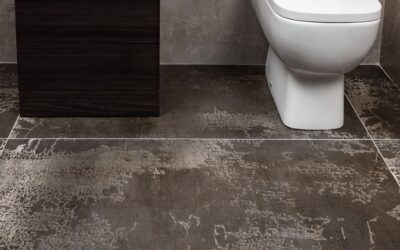
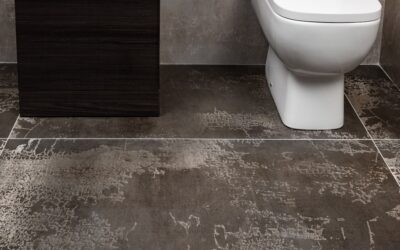
For full-on luxury, large-format porcelain tile (24-by-48 inches or 48-by-96-inch panels) wraps a wall in a seamless surface that handles steam, splashes, and direct shower contact. Daltile, MSI, and Florim all stock options at $4 to $15 per square foot, plus $8 to $14 per square foot for installation. Total: $12 to $29 per square foot installed.
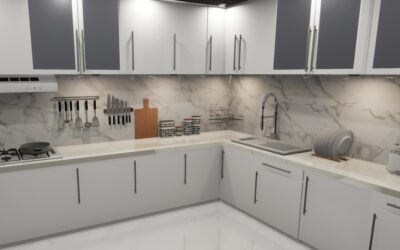
For a high-end look, consider a full marble-look porcelain slab feature wall behind the vanity or tub. The visual impact rivals a $40,000 remodel for a fraction of the cost.
5. Mirror Layouts
Mirrors expand small bathrooms and add light. Beyond the single rectangular mirror over the vanity, consider:
- Gallery wall of 3 to 5 thrifted vintage mirrors in mixed frames.
- Floor-to-ceiling mirrored wall behind the vanity for a dramatic effect.
- Round mirror with integrated LED lighting (Pottery Barn, West Elm, Studio McGee for Target).
- Two-mirror layout above a double vanity, each lit by sconces between them.
Always use mirror-mastic adhesive plus mechanical mounts for large mirrors. Adhesive-only installations have fallen and caused injuries.
6. Floating Shelves That Hold Up
Floating shelves create vertical storage and display space. For bathrooms, choose materials that survive humidity:
- Solid teak or sealed white oak (with multiple coats of marine spar urethane)
- Powder-coated metal (Industrial pipe shelves from Etsy makers)
- Concrete or stone (Lostine, KAST, or DIY with Quikrete)
- Sealed walnut or cherry with Bona Naturale finish
Anchor into studs. Drywall anchors fail within months when supporting wet towels and ceramic.
7. Moisture-Safe Art and Frames
Original watercolors, photographs, and posters die in bathrooms. Replace them with prints behind acrylic glazing in waterproof frames. Aluminum frames (Magnaframe, Frame It Easy aluminum) hold up well. For real impact, framed canvas prints with UV-cured inks resist humidity and color shift. Position art away from direct shower spray; the wall opposite the shower is the safest zone.
8. Plants That Love Humidity
Bathrooms with at least a north-facing window can host humidity-loving plants that thrive where most houseplants struggle.
- Pothos (Epipremnum aureum): Tolerates low light, trails beautifully from a shelf.
- Boston fern: Loves bathroom humidity; needs medium light.
- Snake plant (Sansevieria): Tolerant of low light and irregular watering.
- Spider plant: Easy and forgiving.
- Bromeliads: Bright color and natural humidity preference.
Use ceramic planters with drainage saucers. Hanging baskets work well in primary bathrooms with skylights.
9. Statement Lighting as Wall Decor
Bathroom lighting often defaults to recessed cans and a basic vanity bar, but wall-mounted sconces double as both lighting and decorative elements. Cedar and Moss, Visual Comfort, and Cedar and Sail all offer damp-rated sconces under $300. Position 36 inches above the floor and 30 to 36 inches apart on either side of the mirror for the best face-lighting effect.
Small Bathroom Strategies
For powder rooms under 30 square feet, go bold. Dark paint (Farrow and Ball Hague Blue, Sherwin-Williams Cyberspace), bold wallpaper, or a single statement mirror eats less visual space than gallery walls. A single oversized piece feels intentional; multiple small pieces feel cluttered.
What to Avoid
Untreated wood. Paper artwork without protective glazing. Decorative items that block ventilation fans. Plants without drainage saucers (water damage to drywall is the most common renovation surprise). Heavy items hung from drywall anchors instead of studs.
Decorating bathroom wall surfaces is one of the highest-impact, lowest-cost design projects in the home. Choose moisture-tolerant materials, account for ventilation, and the result will look intentional for years — not waterlogged within months.