Standard patio chairs are built for eating dinner and leaving; that’s why they feel like waiting-room seating after twenty minutes. Deep seating patio furniture is the outdoor industry’s answer to the living-room sofa — seat depths of 24 to 30 inches versus the 18 to 20 inches of dining chairs, thick boxed cushions of 4 to 6 inches, and reclined back angles built for hours rather than meals. It’s the category that turns a patio into an actual room. The catch is a huge quality spread: two sets can look identical in photos while one sags and fades in eighteen months and the other serves a decade. This guide explains what genuinely makes deep seating comfortable and durable, what fair prices look like, and how to inspect frames and cushions before you commit.
Part of our Decks & Outdoor guide — explore the full guide →
What Qualifies as “Deep Seating”
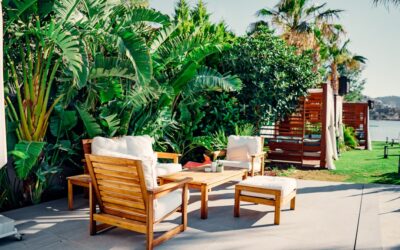
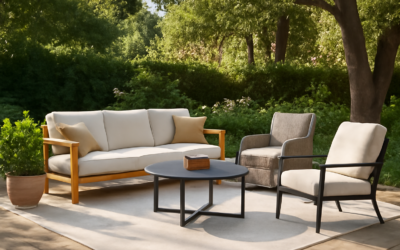
The term has a real specification behind it. Deep seating pieces have an overall depth around 30 to 38 inches, an interior seat depth of 24 inches or more once the back cushion is in place, seat heights of 14 to 18 inches (lower than dining height, like an indoor sofa), and back cushions tall enough to support shoulders. The geometry produces a lounging posture — hips slightly below knees, back reclined 10 to 15 degrees — that dining furniture physically can’t. Typical pieces include club chairs, loveseats, three-seat sofas, sectionals, ottomans, and swivel gliders, usually sold as conversation sets of four to seven pieces around a coffee or fire table.
Comfort test if you can sit before buying: your feet should rest flat with thighs supported to near the knee, and the back cushion should catch your shoulder blades, not stop at your lower back. If you’re tall, prioritize interior seat depths of 26-plus inches; petite users often prefer 22 to 24 inches so the front edge doesn’t cut behind the knees.
Frames: Where Longevity Is Decided
Aluminum is the benchmark outdoor frame — rust-proof, light enough to rearrange, and durable when the welds are solid. Look for powder-coated, fully welded aluminum with wall thickness you can feel; flimsy tube frames flex when you lift one end. Expect quality aluminum sets to start around $1,500 for four pieces. Steel is cheaper and sturdier-feeling but rusts at any coating scratch, which is why $600 big-box conversation sets bloom rust at the weld points by year three in humid climates; touch up chips immediately if you go this route.
Resin wicker deserves its own caution. Quality “all-weather wicker” is HDPE (high-density polyethylene) strand woven over an aluminum frame — brands weave it thick, it flexes without cracking, and it shrugs off UV for 10-plus years. Cheap sets use PVC or PE film wicker over steel, which turns brittle and starts snapping strands in two to four seasons. Ask specifically for HDPE over aluminum. Teak is the premium natural option ($3,000-plus for a set): it weathers to silver-gray, lasts decades, and needs nothing but an annual scrub. Eucalyptus and acacia imitate teak at half the price but demand yearly oiling to avoid checking and gray-out.
Cushions: The Real Difference Between $800 and $3,000 Sets
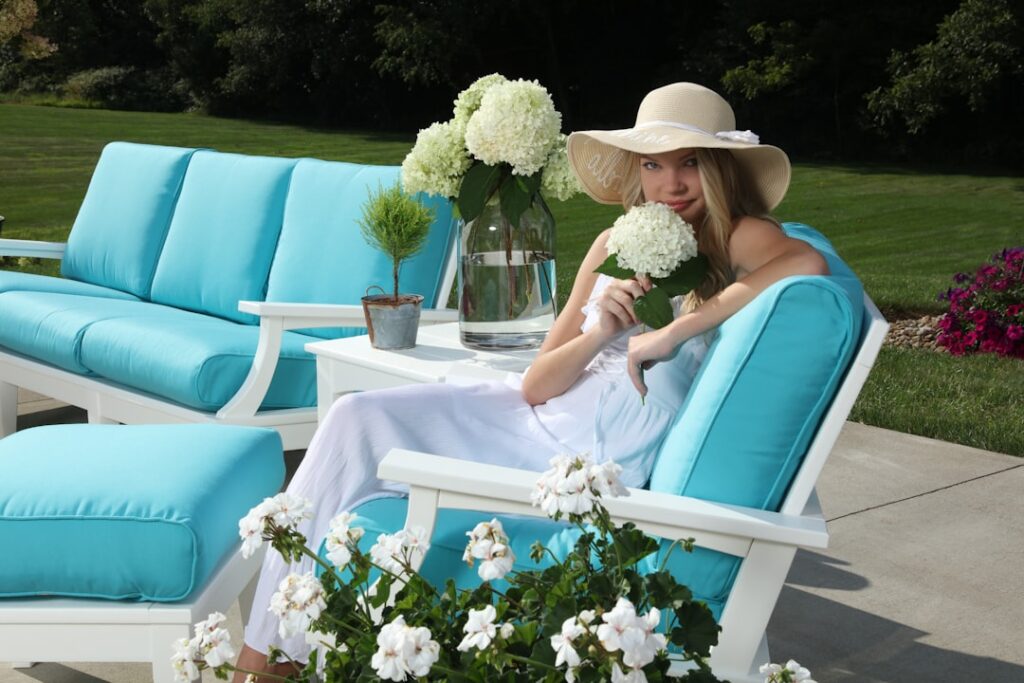
Cushions fail before frames on most sets, so put your inspection effort here. Three components matter. The fill: quality deep seating uses high-resiliency foam cores (1.8 lb density or better) wrapped in polyester fiber, or better yet open-cell reticulated foam that drains rain-through in hours. Bargain sets use loose polyfill that mats flat within a season — press the cushion; if your hand sinks to the frame, walk away. The fabric: solution-dyed acrylic is the gold standard, with Sunbrella the reference brand — the color runs through the fiber, so it survives 500-plus hours of UV testing and takes bleach for mildew cleaning. Solution-dyed olefin is the value alternative at 80 percent of the performance for less money. Printed polyester covers fade visibly in one to two summers. The construction: look for boxed-and-welted seams, ties or straps that anchor cushions to the frame, and zippered covers you can remove and wash.
Replacement economics argue for buying good fabric up front: recovering a four-piece set in Sunbrella runs $600 to $1,200, which is why a cheap set with dead cushions usually just gets thrown out.
What Deep Seating Actually Costs
- $500-$900: Entry 4-piece sets — steel or thin wicker frames, olefin or polyester cushions. Two to four seasons of good looks; fine for renters and mild climates.
- $1,200-$2,500: The value sweet spot — welded aluminum or HDPE wicker, solution-dyed olefin or entry Sunbrella cushions. Brands like Hampton Bay’s upper lines and better online direct brands live here.
- $2,500-$5,000: Specification-grade — thick-gauge aluminum or teak, full Sunbrella with HR foam, 5- to 15-year frame warranties. Polywood sectionals and mid-tier showroom brands.
- $5,000-plus: Luxury showroom sets (Brown Jordan, Gloster) with commercial-grade everything.
Timing matters: patio furniture discounts 30 to 50 percent from late July through September as retailers clear floor space, and the previous year’s colorways go cheaper still in early spring.
Layout: Make the Set Fit the Space
Deep seating eats square footage. A club chair occupies about a 3-foot square; a three-seat sofa runs 78 to 90 inches long and 36 inches deep. Leave 18 inches between seating and the coffee table, and 30 to 36 inches for walkways behind or beside pieces. In practice, a conversational four-piece set (sofa, two chairs, table) wants a minimum 10-by-10 foot area, and an L-shaped sectional wants 12-by-12. On small balconies, two deep club chairs with an ottoman beat a crammed loveseat set every time. Orient primary seating toward the yard’s best view or the fire feature, and put the sofa’s back to the house wall for wind shelter where afternoon gusts are a factor.
Weather Strategy: Covers, Storage, and Placement
Even all-weather sets last dramatically longer with basic protection. Fitted covers ($60 to $200 per piece for quality vented ones) matter most where the set sits unused for months; ventilation flaps prevent the condensation-mildew cycle that ruins cushions under cheap tarps. In snow country, stack cushions in a deck box (a 120- to 150-gallon box holds a four-piece set’s cushions, $150 to $300) or bring them into a garage for winter. Under open sky in the Sun Belt, fade is the enemy — position the set under a pergola, umbrella, or shade sail, because even Sunbrella looks better at year eight when it hasn’t taken seven hours of direct July sun daily. Hose and scrub frames each spring, wash cushion covers on cold, and re-treat fabric with a water-repellency spray like 303 Fabric Guard every couple of seasons.
Features Worth Paying For — and Skipping
A few upgrades genuinely improve daily use. Swivel gliders are the sleeper hit of the category: they let two chairs serve both the conversation circle and the sunset view without dragging furniture, and they add only $50 to $100 per chair on quality sets. Adjustable chaise ends and reclining backs matter if you nap outside; check that the mechanism is stainless or coated aluminum, because bare-steel recliner hardware is the first thing to seize outdoors. Ottomans earn their space — most people use them more than the coffee table — and a matching fire table turns a three-season set into a four-season one in much of the country.
Skip-worthy extras: built-in cup holders molded into arms (they crack and collect water), thin “toss pillow” bundles used to pad out piece counts, and glass-topped coffee tables in hail or falling-branch territory — a slatted aluminum or concrete-look top survives what glass doesn’t. And be skeptical of “quick-dry foam” claims on sets under $1,000; the phrase is unregulated, and only genuinely reticulated open-cell foam drains the way the marketing implies.
Bottom Line
Deep seating patio furniture is the one outdoor category where comfort specs and materials science are both worth reading closely. Insist on 24-plus inches of interior seat depth, welded aluminum or genuine HDPE wicker or teak underneath, and solution-dyed fabric over resilient foam on top. Spend in the $1,200 to $2,500 band for the best durability per dollar, buy at end-of-season pricing, and protect the cushions like they’re half the purchase price — because they are. Get those pieces right and the patio genuinely becomes the extra room the catalogs promise.