
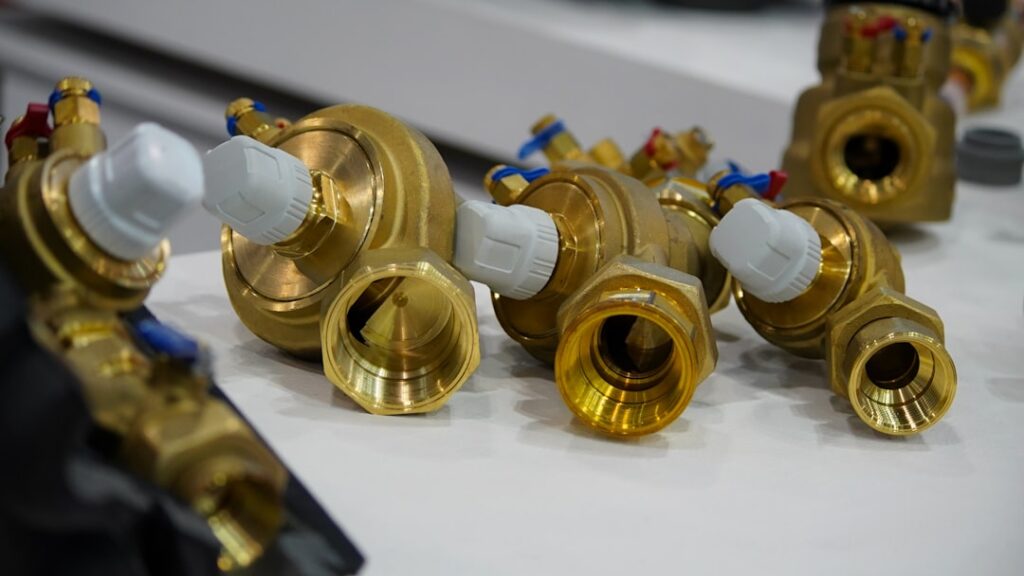
Every homeowner should be able to find and operate a shutoff valve before a burst pipe forces the lesson. Knowing the different types of water valves in your house, what each one does, and when to reach for which turns a plumbing emergency into a minor inconvenience and helps you talk intelligently with a plumber. Valves aren’t interchangeable: a ball valve is built to shut water fully on and off, while a globe valve is made to throttle flow, and using the wrong type in the wrong spot leads to leaks and premature failure. This guide breaks down the common valves in residential plumbing, how each works, and where each belongs.
- Ball Valves: The Reliable On-Off Standard
- Gate Valves: The Old Standard
- Globe Valves: Built to Throttle
- Check Valves: One-Way Flow Only
- Fixture Shutoff and Angle Stop Valves
- Pressure-Reducing and Specialty Valves
- Valve Materials and How Long They Last
- Signs a Valve Needs Replacing
- Knowing Your Home's Valves
Ball Valves: The Reliable On-Off Standard
The ball valve is the modern workhorse of home plumbing shutoffs. Inside is a metal ball with a hole bored through it; a quarter-turn of the lever rotates the ball so the hole either lines up with the pipe (open) or turns sideways to block it (closed). That quarter-turn action makes it fast to operate and easy to see at a glance, if the lever is in line with the pipe it’s open, if it’s perpendicular it’s shut.
Ball valves seal tightly and rarely leak, which is why they’ve largely replaced older gate valves for main shutoffs and appliance connections. Their one limitation is that they’re designed for full-open or full-closed service, not for finely throttling flow; running one partway open for long periods can wear the seals. For a dependable on-off valve you can operate in a hurry, this is the type to install.
Gate Valves: The Old Standard
Gate valves were the default shutoff for generations and still appear in older homes. Turning the round handle raises or lowers a wedge-shaped gate inside the body, opening or closing the flow. Fully open, they allow unrestricted flow with almost no pressure drop, which is why they were popular on main lines.
The catch is age and reliability. Gate valves take many turns to open and close, and after years of sitting in one position they tend to seize, or the gate corrodes and won’t fully seat, leaving a valve that won’t shut all the way when you finally need it. If your main shutoff is an old gate valve you’ve never touched, it’s worth testing it and considering a ball-valve replacement before an emergency reveals it’s stuck.
Globe Valves: Built to Throttle
Where ball and gate valves are on-off devices, the globe valve is designed to regulate flow. Inside, a movable disc presses against a stationary ring seat; as you turn the handle, the disc moves toward or away from the seat, precisely controlling how much water passes. The S-shaped internal path is what gives it fine control at the cost of some pressure drop.
You’ll find globe valves where adjustable flow matters, such as outdoor faucets, hose bibs, and utility sink supplies. They can be run partially open indefinitely without damage, unlike a ball valve. The tradeoff is that the winding internal path restricts flow more than a ball or gate valve, so they aren’t ideal for a main line where you want maximum flow when fully open.
Check Valves: One-Way Flow Only
A check valve does something the others don’t, it allows water to flow in only one direction and automatically prevents backflow. There’s no handle; the valve opens under forward pressure and closes when flow reverses, using either a swinging flap or a spring-loaded disc inside. This protects your system from contaminated water flowing backward into clean supply lines.
Check valves are essential on sump pumps, where they stop pumped water from draining back into the pit, and on water heaters, well systems, and anywhere backflow prevention is required by code. Because they operate automatically, a failed check valve often goes unnoticed until you see water running backward or a pump short-cycling, so they’re worth inspecting during plumbing service.
Fixture Shutoff and Angle Stop Valves
The small valves under sinks and behind toilets are fixture shutoffs, often called angle stops or straight stops. They let you cut water to a single fixture, a faucet, toilet, or dishwasher, without shutting off the whole house, which is invaluable when you’re repairing or replacing that one fixture. Angle stops turn the water 90 degrees; straight stops keep it in line.
Older versions use a multi-turn compression design that can seize or leak with age; newer quarter-turn stops use a ball-valve mechanism and are far more reliable. If you’re replacing a faucet or toilet, it’s smart to swap an old compression stop for a quarter-turn model at the same time, since a stuck or dripping stop is a common source of small, chronic leaks.
Pressure-Reducing and Specialty Valves
Beyond the basic shutoffs, a few specialty valves manage the system as a whole. A pressure-reducing valve (PRV), usually installed near the main line, lowers incoming municipal water pressure to a safe household range, typically 50 to 60 psi, protecting fixtures and appliances from the damage high pressure causes. If your faucets hammer or leak, high pressure and a failed PRV are common culprits.
Other specialty valves include the temperature-and-pressure relief valve on your water heater, a critical safety device that releases pressure if the tank overheats, and mixing valves that blend hot and cold to a set temperature. These operate largely in the background but are essential safety and control components you should know exist.
Valve Materials and How Long They Last
The metal a valve is made of affects both its price and its lifespan. Brass is the workhorse for household water valves because it resists corrosion, handles both hot and cold lines, and lasts for decades; a quality brass ball valve can outlive the plumbing around it. Bronze offers similar durability on higher-end and larger applications, while chrome-plated brass is common on visible fixture stops for looks.
Cheaper valves use plastic or pot-metal bodies that cost less upfront but fail sooner, cracking or seizing after a few years, so they’re a poor choice for anything you rarely operate and desperately need to work in an emergency. When you replace a main shutoff or a fixture stop, spending a few extra dollars on a full-brass quarter-turn valve is cheap insurance, because the failure mode of a corroded valve is discovering it won’t move at the exact moment water is spraying across your floor.
Signs a Valve Needs Replacing
Valves give warnings before they fail outright, and catching them early prevents emergencies. A handle that’s stiff, grinds, or won’t turn fully signals internal corrosion or mineral buildup, common in older gate and compression valves that have sat untouched for years. A valve that drips from the stem or won’t fully stop the water when closed has worn out its internal seals and should be replaced rather than nursed along.
Test your key valves once or twice a year by operating them through their full range, especially the main shutoff and the fixture stops you’d reach for in a leak. If a stop won’t budge or weeps when you close it, swap it for a modern quarter-turn model while it’s a planned $10 to $25 part rather than an emergency plumber call. Knowing the different types of water valves and keeping them working turns the day a pipe bursts from a disaster into a quick trip to the shutoff and back.
Knowing Your Home’s Valves
Start by locating and testing your main shutoff, usually where the water line enters the house, near the meter, or in a basement or utility area, so you can kill the water fast in an emergency. Then identify the fixture stops under each sink and toilet, and note whether your main is a modern ball valve or an aging gate valve that may need attention.
Understanding the different types of water valves lets you shut off exactly the water you need, choose the right valve when something needs replacing, ball valves for shutoffs, globe valves for throttling, quarter-turn stops at fixtures, and recognize when a corroded gate valve or failed check valve is quietly setting you up for trouble. A little valve knowledge is one of the cheapest forms of home insurance there is.


