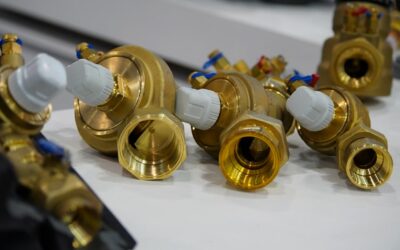
When a pipe bursts at 2 a.m., knowing which valve to turn, and how it works, can save you thousands in water damage. Understanding the common types of valves in plumbing helps you shut off water fast, choose the right replacement part, and communicate clearly with a plumber. Each valve is designed for a specific job, from a simple on-off shutoff to controlling flow direction, and using the wrong one can lead to leaks, drips, or premature failure.
Ball Valves
The ball valve is the modern workhorse of residential plumbing and the type you will encounter most in new construction. Inside is a metal ball with a hole through the center; turning the lever 90 degrees rotates the ball to either align the hole with the pipe (open) or block it (closed). A quarter turn is all it takes.
Ball valves are prized for their reliability, durable seal, and instant visual status, when the lever is parallel to the pipe it is open, when perpendicular it is closed. They make excellent main shutoffs and isolation valves. Expect to pay $8 to $25 for a quality quarter-inch to one-inch ball valve.
Gate Valves
Gate valves are the older style common in homes built before the 1990s. A round handwheel raises and lowers an internal gate to start and stop flow. You turn the wheel multiple full rotations to fully open or close it, which makes them slower to operate than a ball valve.
These valves work well for fully-open or fully-closed service but should never be used to throttle flow partway, since that erodes the gate and seat. Their biggest drawback is age-related failure: old gate valves corrode internally and may not fully close when you need them most. If your main shutoff is a stuck gate valve, replacing it with a ball valve is a worthwhile upgrade.
Check Valves
Unlike shutoffs you operate by hand, a check valve works automatically to allow water to flow in only one direction. An internal flap or spring opens with forward flow and snaps shut against backflow, preventing contaminated or used water from reversing into clean supply lines.
You will find check valves on sump pumps, where they stop pumped water from draining back into the pit, and on well systems and backflow preventers. Proper orientation is critical: an arrow on the body shows the required flow direction, and installing one backward blocks the line entirely. They are essential for protecting potable water from contamination.
Globe and Gate Comparison for Flow Control
When you need to regulate flow rather than just switch it on and off, the globe valve is the right tool. Its internal baffle and movable disc let you finely throttle water volume, which is why globe valves appear on outdoor hose bibs and anywhere partial flow is useful. The trade-off is a built-in pressure drop from the winding internal path.
Here is a quick reference for the main hand-operated valves:
- Ball valve: fast on-off, durable, best general-purpose shutoff
- Gate valve: on-off only, slow, common in older homes
- Globe valve: precise flow control, throttling, hose bibs
- Check valve: automatic one-way flow, backflow prevention
Fixture and Angle Stop Valves
The small valves under your sinks and toilets are fixture shutoffs, also called angle stops or supply stops. They let you cut water to a single fixture for repairs without shutting off the whole house. Older versions are multi-turn compression stops, while newer ones are quarter-turn ball-style stops that are far more reliable.
If a supply stop is stuck, drips, or will not fully close, replace it, since a frozen shutoff turns a simple faucet swap into a whole-house water-off job. Quarter-turn angle stops cost $6 to $15 each and are the type plumbers recommend installing during any fixture upgrade.
Specialty Valves You Should Know
A few specialty valves handle specific household needs. A pressure-reducing valve (PRV) on the main line lowers high municipal water pressure to a safe 50 to 60 psi, protecting your pipes, fixtures, and appliances from stress and leaks. If your faucets bang or fixtures wear out fast, a failing PRV may be the culprit.
Other specialty valves include the thermostatic mixing valve that blends hot and cold to prevent scalding at showers, the float valve inside your toilet tank that controls refill, and frost-proof sillcocks that protect outdoor spigots from freezing. Each solves a particular problem you may encounter as a homeowner.
Choosing and Maintaining the Right Valve
When selecting a valve, match it to the job: ball valves for shutoffs, globe valves for throttling, check valves for backflow protection, and quarter-turn stops at fixtures. Also match the material and connection type, brass and bronze for longevity, plus the correct sweat, threaded, push-fit, or PEX connection, to your existing plumbing.
Maintenance is simple but important. Exercise your shutoff valves once or twice a year by turning them fully off and on, which keeps them from seizing through years of disuse. Knowing the types of valves in plumbing in your own home, especially the location of your main shutoff, means you can act fast in an emergency and tackle minor repairs with confidence.
Valve Materials and Connection Types
A valve is only as reliable as its body material and how it joins your pipes. Brass and bronze are the gold standard for residential water valves, resisting corrosion and lasting decades. PVC and CPVC valves suit specific plastic-pipe systems and cost less, while stainless steel appears in high-pressure or specialty applications. Avoid cheap pot-metal valves, which fail early.
Connection type must match your plumbing. Sweat (solder) connections join copper permanently, threaded connections screw onto galvanized or fitted pipe, push-fit fittings like SharkBite snap on without tools for fast repairs, and PEX crimp or expansion fittings serve modern flexible tubing. Pick the valve whose connection matches your pipe material, or use a transition fitting to bridge two systems cleanly.
Where to Find the Valves in Your Home
Knowing valve locations before an emergency saves precious minutes. Your main water shutoff is usually near where the supply line enters the house, often in the basement, a utility closet, the garage, or near the water heater; there may also be a curb-stop valve at the property line that requires a special key. Label it so anyone in the household can find it fast.
Beyond the main, every sink and toilet has its own angle-stop shutoff underneath, the water heater has a shutoff on its cold inlet, and outdoor spigots each have a sillcock. Walking your home once to locate and test each valve is a 20-minute exercise that pays off enormously when a supply line bursts and you need to stop the flow immediately.