Most shower buying mistakes happen before a single tile goes up, because homeowners shop for the pretty parts and ignore the valve buried in the wall. A shower faucet set bundles everything into one matched package: the rough-in valve, the trim kit, the handle, and usually the shower head and arm. Buy the pieces separately and you risk a trim plate that will not fit your valve, a finish that does not match, or a return trip mid-renovation. Here is how the components work together, what separates a $90 set from a $600 one, and the specs that actually matter.
Part of our Bathroom Remodeling & Flooring guide — explore the full guide →
What Comes in a Shower Faucet Set
A complete set has two halves. The rough-in valve is the brass body that gets soldered or crimped to your hot and cold supply lines inside the wall — it does the actual mixing. The trim kit is everything you see: the escutcheon plate, handle, shower head, arm, and flange. Tub and shower sets add a spout and a diverter to switch water between the two.
Manufacturers sell these together for a reason. Trim kits are brand-specific and often valve-specific, so a Kohler trim will not bolt onto a Delta valve. Some listings say “trim only” in small print and assume you already own the matching valve — check before you click buy, because the valve is roughly a third of the total cost.
Pressure-Balancing vs Thermostatic Valves
Valve type is the single biggest quality decision in the set. Pressure-balancing valves are the standard: a spool or diaphragm inside compensates when someone flushes a toilet, keeping the mix within about 3°F so you do not get scalded. They control temperature and volume with one handle and cover most homes just fine at $60 to $150 for the valve portion.
Thermostatic valves hold an exact set temperature — you dial in 102°F and it stays there regardless of flow. They allow separate volume control, support higher flow for multi-head showers, and dominate the $400-and-up market. If you are building a custom shower with body sprays or a rain head plus handheld, a thermostatic valve with separate diverter is worth the premium. For a standard tub and shower combo, pressure-balancing is plenty.
Why the Rough-In Valve Matters Most
Trim goes out of style; the valve stays in the wall for 20 years or more. That is why plumbers push universal valve platforms. Delta’s MultiChoice, Moen’s M-PACT, and Kohler’s Rite-Temp bodies accept multiple generations of trim, so you can swap a dated chrome kit for matte black in 30 minutes years later without opening the wall. If you are choosing between brands, the site’s Delta shower faucet guide breaks down the MultiChoice ecosystem in detail — Delta and Moen are the two easiest platforms to re-trim down the road.
Look for valves with integral stops. These small screw-down shutoffs let you service the cartridge without killing water to the whole house — a $15 upgrade that pays for itself the first time a cartridge fails.
Shower Heads, Flow Rates, and Spray Options
Federal law caps shower heads at 2.5 gallons per minute; California, Colorado, and several other states enforce 1.8 GPM. Sets sold nationally usually ship the compliant head for your region. Within those limits, spray engineering varies wildly:
- Single-function heads — one spray pattern, fewest parts to fail, standard on budget sets
- Multi-function heads — 3 to 8 patterns from massage to mist, common in the $200 to $400 tier
- Rain heads — 8 to 12 inches wide, gentle full coverage, best ceiling-mounted or on a long arm
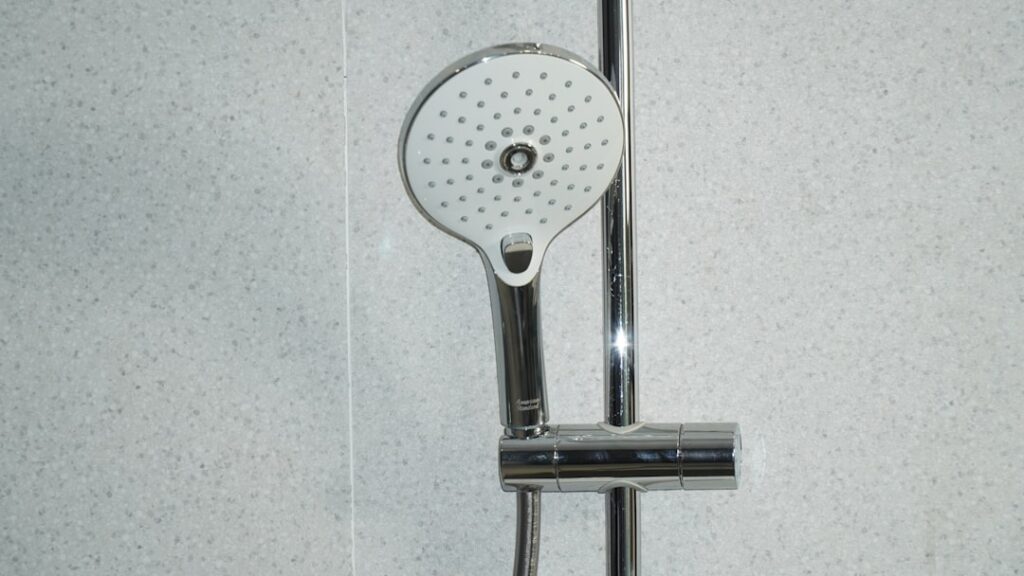
- Handheld combos — a slide-bar or bracket-mounted wand, essential for rinsing kids, pets, and tile
Delta’s H2Okinetic and Moen’s Magnetix are examples of genuine engineering in this space — the former shapes water into a wave pattern that feels like more volume, the latter docks the handheld with a magnet instead of a fiddly clip.
Finish Choices and Durability
Chrome remains the cheapest and most scratch-resistant finish, and it hides water spots better than its reputation suggests. Brushed nickel adds $20 to $60 to a set and forgives fingerprints. Matte black and brushed gold carry the biggest premiums — often 30 to 50 percent over chrome for the same hardware — and quality matters more here, because a cheap black coating can wear through at the handle within a couple of years. Look for PVD (physical vapor deposition) finishes rather than paint or powder coat; PVD is molecularly bonded and shrugs off cleaners that would dull lesser coatings.
What a Shower Faucet Set Costs
Budget hard, because the spread is wide. Big-box house brands and entry Glacier Bay or Project Source sets run $80 to $150 with valve included — fine for a rental, though cartridge replacements can be hard to source in ten years. The $200 to $400 middle tier is the sweet spot: Delta, Moen, Kohler, and Pfister sets with lifetime-warrantied cartridges, PVD finishes, and universal valve bodies. Thermostatic and multi-outlet custom systems start around $600 and climb past $1,500 for a full body-spray setup before you pay a plumber.
Installation is the other half of the bill. Swapping trim on an existing compatible valve is a DIY afternoon. Replacing the valve itself means opening the wall, and a plumber will charge $375 to $800 for the job depending on access — showers backed by a closet are cheap; showers on an outside tiled wall are not.
Installation and Ownership Notes
Set the valve depth carefully. Every rough-in valve has a marked plaster-ground range showing where finished wall surface must land; miss it shallow and the trim plate will not seat, miss it deep and the cartridge sticks out past the escutcheon. Dry-fit the trim over a scrap of your tile and backer board before soldering anything.
Center the valve 38 to 48 inches off the floor for a shower stall, or about 28 inches for a tub combo, and put the shower head arm at 78 to 80 inches so taller users are not ducking. If your set includes a handheld on a slide bar, mount the bar so the lowest position works for seated use — a small move that future-proofs the bathroom.
A shower faucet set is a 20-year relationship, so check the parts story before you commit. Delta, Moen, and Kohler cartridges are stocked at every hardware store in America; a Delta RP19804 or Moen 1222 costs $20 to $50 and swaps in 20 minutes with the water off at the integral stops. Off-brand Amazon sets often use unmarked cartridges that vanish from the market within five years, turning a $5 drip into a full valve replacement behind tile. Hard-water households should plan on a cartridge every 8 to 12 years and an annual soak of the shower head in white vinegar to clear mineral scale from the nozzles — silicone-nubbed spray faces let you rub deposits off with a thumb.
Warranty terms differ more than marketing suggests. The big three cover cartridges and finish for the original homeowner’s lifetime and will mail parts free with a model number and a photo. House brands typically offer 5 to 10 years with receipt required. Register the set the week it goes in; a two-minute form beats hunting for a 2026 receipt in 2038.
Buying Checklist
Run through these five points before ordering any shower faucet set and you will avoid nearly every common return:
- Confirm the listing includes the rough-in valve, not trim only
- Choose a universal valve platform (MultiChoice, M-PACT, Rite-Temp) so future trim swaps are easy
- Match GPM to your state — 1.8 where required, 2.5 elsewhere
- Pick pressure-balancing for standard showers, thermostatic for multi-head systems
- Verify the cartridge carries a lifetime warranty and is stocked at local hardware stores
Get the valve right and everything else in the set becomes a style choice you can change later. Get it wrong and you will be looking at a tile saw and a plumber’s invoice to fix it.