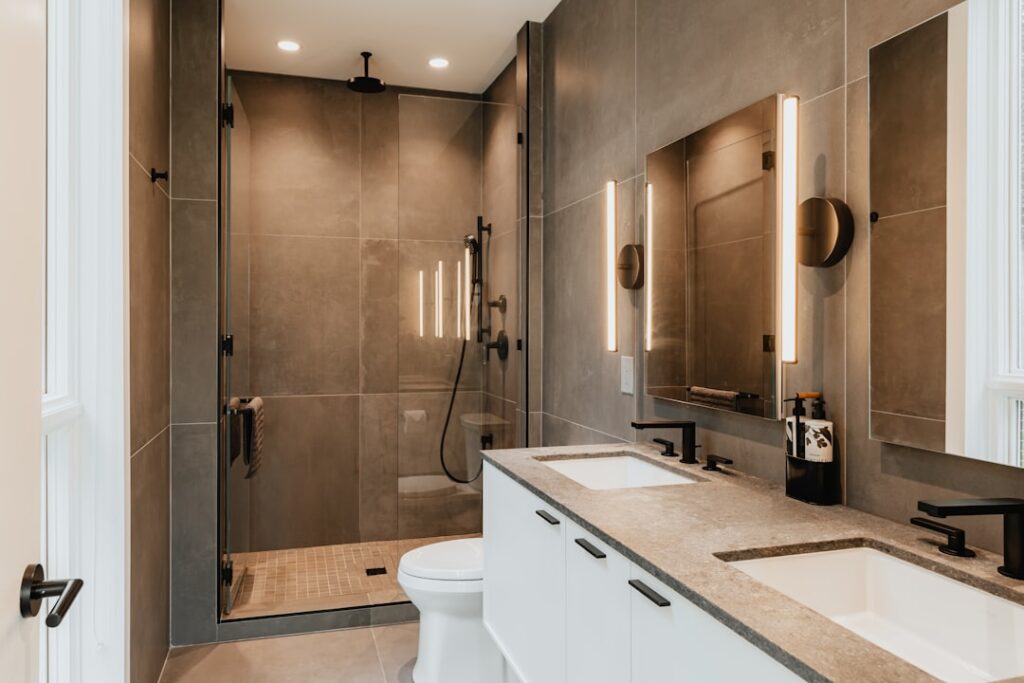
Swapping your shower head and handle is one of the fastest ways to freshen a dated bathroom, but it comes with a catch most people don’t expect: the handle (trim) has to match the valve buried in your wall. A coordinated shower head and handle set costs $80 to $400 and can transform a tired shower in an afternoon, as long as you understand what’s behind the wall before you buy. Get the valve compatibility right and it’s a simple job; get it wrong and you’re opening tile.
Part of our Bathroom Remodeling & Flooring guide — explore the full guide →
I’ve done this replacement more times than I can count. Let me explain how these sets work, how to check compatibility, and when a simple trim swap becomes a full valve replacement.
Trim vs. Valve: Know the Difference
Here’s the concept that saves people the most grief. Your shower has two parts: the valve (the brass or plastic body inside the wall that mixes hot and cold and controls flow) and the trim (everything you see and touch, meaning the handle, escutcheon plate, and shower head). The valve is meant to stay in the wall for decades. The trim is designed to be replaced.
So when you buy a “shower head and handle” set, you’re usually buying trim. That trim only fits a valve from the same manufacturer’s compatible family. A Moen handle won’t clamp onto a Delta valve. This is why brand and valve series matter more than color or style when you’re shopping.
Pressure-Balance vs. Thermostatic Valves
Two valve types dominate US showers, and the trim you buy must match yours:
- Pressure-balance: The standard single-handle valve. It keeps water temperature steady by balancing hot and cold pressure, so you don’t get scalded when someone flushes a toilet. One handle controls both temperature and flow. Most homes have these.
- Thermostatic: A premium valve, usually with two handles or dials, that holds an exact set temperature regardless of pressure changes. Common in higher-end and multi-spray showers.
You cannot put thermostatic trim on a pressure-balance valve or vice versa. Look at your current setup: one handle usually means pressure-balance, while separate temperature and volume controls point to thermostatic.
Identifying Your Existing Valve
Before ordering anything, figure out what’s in your wall. The easiest tell is the brand stamped on the handle, plate, or shower head. Common families include:
- Moen: The Posi-Temp (single-function pressure-balance) and Moentrol series. Trim must match the specific cartridge type.
- Delta: The Monitor 14 and 17 series. The 17 adds separate volume control.
- Kohler: The Rite-Temp valve platform.
If you can’t tell, pull the handle and escutcheon and photograph the cartridge and valve body, then match it to the manufacturer’s trim guide. When in doubt, a plumbing supply counter can identify a valve from a clear photo in a minute.
Replacing Just the Trim (The Easy Path)
If your existing valve is a compatible modern type and it works fine, you only need new trim. This is a homeowner-friendly job:
- Turn off the water, either at the shutoffs behind the trim (if your valve has them) or at the main.
- Remove the old handle set screw, pull the handle, and unscrew the escutcheon plate.
- Leave the valve body and cartridge in place if they’re in good shape.
- Install the new escutcheon and handle from your matching set, following the maker’s torque and orientation notes.
- Unscrew the old shower head from the arm and thread on the new one with fresh PTFE tape.
- Restore water and test hot, cold, and flow.
A trim-only swap runs $80 to $250 for the parts and takes about an hour. No tile gets touched.
When You Need a Full Valve Swap
Sometimes trim alone won’t do it. You need to replace the valve when you’re switching brands (say, from an old off-brand valve to Moen), when the valve is leaking internally or the cartridge is obsolete, or when you want to go from pressure-balance to thermostatic. This is the bigger job because the valve is soldered or connected to the pipes inside the wall.
Replacing a valve usually means cutting an access hole in the shower wall or working from behind, sweating or crimping new connections, and often patching tile. Expect $350 to $900 with a plumber, and more if tile repair is extensive. If your wall backs up to a closet, you may get lucky with rear access and avoid tile work entirely.
Flow Rates, Spray, and Project Budget
While you’re choosing a head, pay attention to flow rate. Federal standard caps shower heads at 2.5 gallons per minute (GPM), and many states like California and Colorado cap it lower at 1.8 GPM. A quality low-flow head uses pressure and spray design to still feel strong while cutting water use, which trims both your water and heating bills. If your household loves pressure, look for a head that stays close to the legal max and uses a wide-bore or turbo spray pattern.
Spray options add real value. Multi-function heads offer settings from a drenching rain to a focused massage to a water-saving trickle for shaving. Rain-style heads, usually 6 to 10 inches across, give a soft overhead soak but feel gentler, so tall showers often pair a big rain head with a handheld for rinsing. Match the head’s mounting to your arm: a heavy 10-inch rain head may need a braced or brass arm to stay level over time. If your water pressure is naturally low, avoid the biggest rain heads, since spreading a limited flow across a wide face leaves you with a weak, disappointing drizzle.
Knowing the real cost tiers also helps you plan the job. Here’s roughly what to expect:
- Trim and head only, DIY: $80 to $250 in parts, about an hour of your time.
- Trim, head, and plumber labor: $250 to $450 total.
- Full valve replacement with tile access: $350 to $900, sometimes more.
The single biggest cost driver is whether tile has to come out. If you can identify a compatible valve already in the wall, you stay in the cheap, fast lane. That’s why the identification step at the start pays off so heavily. Spend ten minutes confirming your valve before you spend money, and you’ll avoid the expensive surprise of discovering mid-project that your new trim doesn’t fit. It’s also smart to buy your set before you shut off the water, so you’re never stuck with the shower out of commission while a replacement part ships.
Finishes and Style Matching
Once compatibility is handled, finish is where you get to have fun. Keep the head and handle in the same finish family for a clean look:
- Chrome: Timeless, easy to clean, and the least expensive.
- Brushed nickel: Warm, hides water spots and fingerprints well, extremely popular.
- Matte black: Modern and bold, though it shows hard-water spotting.
- Brushed gold or bronze: Trendy accents that pair well with warm tile.
Buy the head and handle as a coordinated set from one brand so the finish and design language line up exactly. Mixing brands often means slightly different shades of “brushed nickel” that look mismatched up close.
Making the Right Call
For most homeowners, the ideal scenario is a compatible existing valve and a simple trim-and-head swap: an hour of work, a couple hundred dollars, and a shower that looks brand new. Start by identifying your valve, confirm whether it’s pressure-balance or thermostatic, then buy a matching set from that manufacturer’s family.
If you’re changing brands or the valve is failing, budget for the full replacement and consider hiring a plumber unless you’re comfortable working inside a wet wall. Either way, a fresh, matched shower head and handle is one of the highest-impact, lowest-cost bathroom updates you can make. Nail the compatibility question first, and the rest is straightforward.