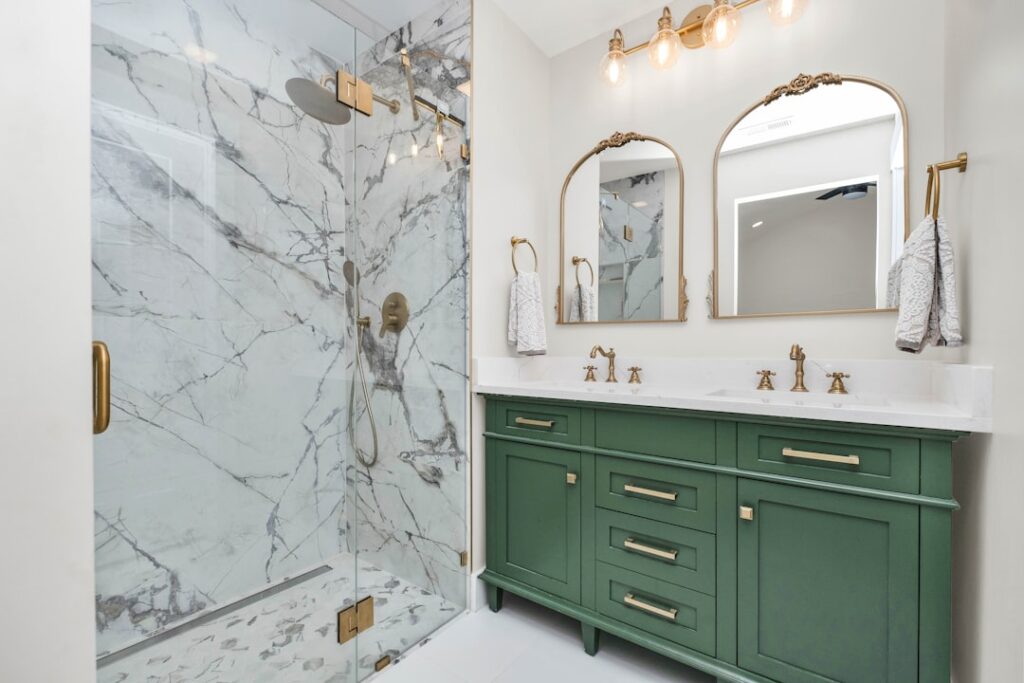
The standalone shower head and single-handle valve combo that defined bathrooms for 50 years has been largely replaced by a new category that bundles rainhead, handshower, body sprays, thermostatic controls, and diverters into a coordinated package. A shower system kit arrives in a single box with matching finishes, preset pressure ratings, and a unified install diagram — eliminating the guesswork of mixing components from different manufacturers. Pricing ranges from $280 chrome starter kits at Home Depot to $3,500 polished nickel Kohler Anthem systems, and choosing correctly depends far more on your plumbing rough-in than on finish preference.
Part of our Bathroom Remodeling & Flooring guide — explore the full guide →
What Comes in a Typical Kit
A mid-range shower system kit from Moen, Delta, Kohler, Pfister, or Grohe typically includes a 10-12 inch rainhead, a handshower with 60-72 inch hose and mounting bracket or slide bar, one or two body sprays, a pressure-balanced or thermostatic valve cartridge, a trim plate, and a three- or four-way diverter. Premium kits add digital controls, music-integrated speakers, steam heads, and multiple water modes per spray.
Confirm whether the valve and rough-in body are included. Many online listings show only the trim kit, meaning you also need to buy a $180-$420 rough-in valve (Moen M-Pact, Delta MultiChoice, Kohler Rite-Temp) for the install to actually work. Mid-tier bundles include both; budget kits often do not.
Pressure-Balanced vs Thermostatic Valves
A pressure-balanced valve (the standard type) adjusts mixing ratios as hot and cold supply pressures fluctuate — toilet flush, washer start — to keep shower temperature stable. This is the baseline for any modern shower and is code-required (ASSE 1016) in all new construction.
A thermostatic valve adds precise temperature memory. Set the valve to 104°F, turn off the water, come back two hours later, turn it on, and water emerges at 104°F immediately. Thermostatic is essential for multi-head systems because flow changes dramatically when you toggle between rainhead and body sprays. Expect $350-$900 for a quality thermostatic rough-in like the Hansgrohe iBox or Grohtherm.
Flow Rates and Local Code
Federal law caps single shower head flow at 2.5 gpm. Several states (California, Colorado, Washington) are stricter at 1.8 gpm. Multi-head systems get complicated — California Title 24 treats a shower “tower” with simultaneous rainhead and body sprays as one fixture, so total flow must still stay under the cap unless each head is on an independent diverted zone.
Plan the system around your jurisdiction. Many kits sold online ship with 2.5 gpm heads that exceed state limits. Moen and Delta publish state-specific versions with lower-flow inserts. Ask before ordering or risk a plumbing inspection failure on a permit pull.
Rough-In Requirements and Wall Depth
A standard single-head shower needs a 2×4 wet wall cavity (3.5 inches deep). Multi-function kits with body sprays usually require a 2×6 cavity (5.5 inches deep) to house the manifold and separate body spray supplies. Rainshowers fed from the ceiling need joist space above for the supply line and secure mounting — plan this during framing, not during tile setting.
Retrofit into existing 2×4 walls is possible with shallow-body valves (Delta MultiChoice Universal fits 2.5-inch walls) but complicates body sprays. A full gut remodel is the cleanest path for any premium shower system kit with three or more heads.
Popular Kit Tiers
- Budget ($280-$600): Moen Engage Magnetix combo, Delta Trinsic shower trim, Kohler Katun — chrome or brushed nickel, pressure-balanced valve, rainhead + handshower
- Mid ($650-$1,500): Moen Align multi-function, Delta Stryke, Grohe Rainshower SmartControl — thermostatic valves, slide bars, premium finishes
- Premium ($1,700-$3,500): Kohler Anthem digital, Hansgrohe RainDance, Brizo Jason Wu Series — digital controls, multiple body sprays, steam-compatible
- Luxury ($4,000+): Dornbracht Shower Tower, Kohler DTV+, ThermaSol steam integration — custom programming, ceiling-mount rainheads, chromatherapy LEDs
Installation Realities
Installation is not a straightforward DIY project for most homeowners. A licensed plumber and typically a tile setter are both involved. The plumber rough-ins the valve body and body sprays to the tile face within manufacturer-specified depths (Delta specifies 1/2-inch tolerance), pressure-tests the lines, and caps them. The tile setter completes tile work to the finished wall thickness. The plumber returns to set the trim.
Budget $900-$2,800 in labor for a single-head plus handshower install. Multi-head systems with thermostatic valves run $1,800-$4,500 in plumber labor alone, plus tile and electrical if digital controls are involved.
Digital and Smart Options
Kohler DTV+, Moen U, and Delta HydraChoice offer app-controlled presets that let each user save a preferred temperature, flow pattern, and duration. Touch a button, the shower warms to temperature in the wall, then alerts you when ready. Typical cost is $1,500-$3,000 for the control unit plus a compatible rough-in; electrical service is required at the valve location.
For households with multiple users or accessibility needs, digital systems earn their cost through consistent temperatures and memorized settings. For a single user in a guest bath, the added complexity rarely pays back.
Common Buying Mistakes
Mismatched flow between components — a 2.5 gpm rainhead paired with 1.8 gpm body sprays — starves one head when both run simultaneously. Confirm total system flow matches the supply capacity. Also check water heater size: a whole-body shower system comfortably uses 4-6 gpm, which drains a 40-gallon tank in 7-10 minutes. A 60-80 gallon tank or tankless upgrade may be required for acceptable performance.
Finish compatibility across manufacturers is trickier than it looks. Moen “brushed nickel” and Delta “brushed nickel” are visibly different. Buy the entire shower system kit from one brand, and add coordinated vanity faucets, towel bars, and robe hooks from the same finish line.
Kohler Shower Systems vs. Delta Shower Systems
Kohler shower systems and Delta shower systems both cover the full range from a basic rainhead and handshower combo to digital multi-head setups, but they differ most in how the valve and trim fit together. Delta builds much of its lineup around one universal rough-in valve, while Kohler pairs its trims with dedicated valve bodies. That difference matters more for a remodel than finish or spray style, because the valve is the part that lives inside the wall for decades.
| Point to compare | Kohler | Delta |
|---|---|---|
| Core rough-in valve | Rite-Temp pressure-balancing valve body, with separate thermostatic valve options | MultiChoice Universal rough-in, which accepts several trim series |
| Upgrading later | Often means matching a new trim to the existing valve family | Pressure-balance, dual-function and thermostatic trims fit the same universal body |
| Multi-head and digital | DTV+ and Anthem digital controls for preset multi-outlet showers | HydraChoice body sprays for multi-head setups; check the maker’s current lineup for digital controls |
| Contractor familiarity | Common, though some systems need brand-specific experience | Very common with plumbers |
Why the Valve Decides the System
With Delta, a universal rough-in installed during a remodel keeps future options open: you can start with a simple pressure-balance trim and later move to a trim with separate volume and temperature control, or a thermostatic one, without opening the wall, as long as the trim is listed as compatible. Kohler’s approach is just as reliable but asks for more planning up front, since the valve family should match the trims and features you want, including any thermostatic or diverter functions.
How to Choose Between the Two
- Existing valve in the wall: stay with that brand if the valve is sound, since a matching trim replacement avoids tile demolition.
- Multi-head plans: confirm the valve supports the number of outlets and the diverter positions you need before choosing a finish.
- Finish matching: keep the shower, tub spout and nearby faucets within one brand’s finish line, since similar finish names differ between makers.
- Support and parts: ask your plumber which brand’s cartridges and repair parts are easiest to get locally.
Both brands change models and compatibility often, so check the maker’s current spec sheet for the exact valve, trim and flow rating before ordering any shower system.
Final Selection Checklist
Confirm the valve type, rough-in depth, flow rating, finish family, included components (valve vs trim only), warranty terms, and installer familiarity with the brand. Moen and Delta dominate contractor comfort levels; Grohe, Hansgrohe, and Kohler require plumbers familiar with those specific systems. A well-specified kit with a competent install delivers 15-25 years of reliable service — far longer than the mix-and-match alternative.