
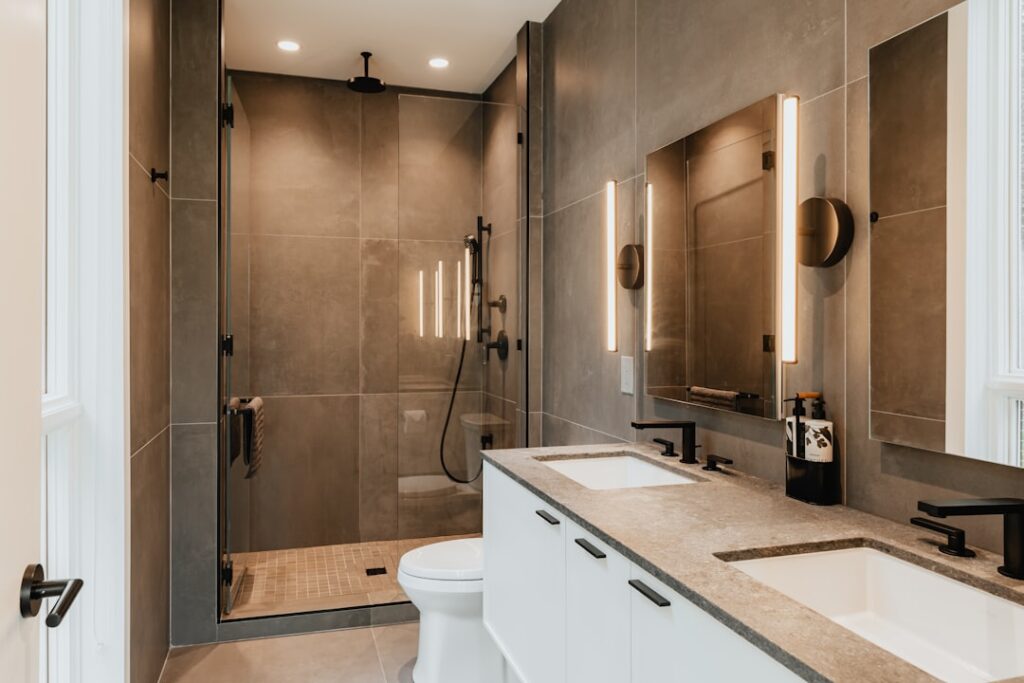
A Grohe shower head is where German engineering meets your morning routine — the brand builds some of the most consistent, well-pressured showers on the market. From wide rain heads to multi-spray handhelds, the range is deep, and the specs (GPM, spray patterns, mounting type) decide whether you get a drenching spa shower or a disappointing trickle. This guide breaks down the lineup, the flow-rate math, and installation, with heads priced from about $50 to $500.
Part of our Bathroom Remodeling & Flooring guide — explore the full guide →
Why Grohe Stands Out
Grohe’s reputation rests on a few engineering details. Its DreamSpray technology distributes water evenly across every nozzle so you don’t get strong-and-weak zones. SpeedClean silicone nozzles let you wipe away limescale with a finger, keeping spray patterns crisp for years. And the brand’s StarLight chrome finish resists scratching and tarnish. These aren’t marketing throwaways — they’re the reasons a Grohe head tends to feel and perform consistently over a long life.
Types of Grohe Shower Heads
Grohe organizes most of its heads under the Rainshower, Euphoria, Tempesta, and Vitalio lines. What matters is the form:
- Fixed rain heads: Large round or square heads (Rainshower) that mount overhead for a soft, drenching rainfall. Sizes from 6″ up to a huge 12″ or ceiling-mounted panels.
- Handheld showers: Detachable heads on a hose (Euphoria, Vitalio) with multiple spray patterns, great for rinsing, cleaning, and flexible use.
- Combo sets: A fixed head plus a handheld on a slide bar or diverter — the most versatile setup.
- Body sprays and shower systems: Full thermostatic systems (SmartControl) combining rain head, handheld, and body jets.
Spray Patterns
Most Grohe handhelds and many fixed heads offer multiple spray modes you switch with a button or twist. Common patterns include Rain (a full, gentle soak), Jet or SmartRain (a stronger, focused stream), and a massage or pulsing mode. The Rainshower heads focus on a single, wide, even rainfall rather than gimmicky modes. Decide whether you want one perfect rain spray or a versatile head that switches between soaking and targeted rinsing.
GPM and WaterSense
Flow rate is the spec that most affects your experience and your water bill. Federal law caps shower heads at 2.5 GPM at 80 psi, and WaterSense-certified models go down to 1.8 to 2.0 GPM while maintaining pressure through clever nozzle design. Grohe offers heads across this range:
- 2.5 GPM: Maximum allowed flow, the most drenching feel — good if your water pressure is modest.
- 1.8 to 2.0 GPM (WaterSense): Saves water and money; Grohe’s EcoJoy models hold pressure well at lower flow.
If your home has low water pressure, choose a 2.5 GPM head or a design engineered for low-pressure performance; a 1.8 GPM head on weak pressure can feel thin. Rain heads especially need decent pressure to feel full, since the water spreads over a wide area.
Sizing a Rain Head to Your Shower
Bigger isn’t automatically better. A 6″ to 8″ rain head suits standard showers and fits most arms. A 10″ to 12″ head delivers a true drenching rainfall but needs good pressure and enough ceiling or arm clearance to sit over your head, not behind it. For a wall-mount rain head, a longer shower arm (an “S” arm or extended arm) angles the head so water falls straight down rather than against the wall. Ceiling-mounted heads give the most rain-like drop but require in-ceiling plumbing planned during construction.
Mounting Types
- Wall-mount: Screws onto your existing shower arm — the easiest retrofit, no wall opening needed.
- Ceiling-mount: Drops straight down for maximum rainfall effect; needs plumbing run into the ceiling.
- Slide-bar handheld: Mounts on an adjustable rail so the head height moves for different users.
Most homeowners upgrading a shower choose a wall-mount head or a handheld on the existing arm, both of which install in minutes.
Installing a Grohe Shower Head
Swapping a wall-mount head is a ten-minute, no-plumber job:
- Unscrew the old head from the shower arm (turn counterclockwise; use a cloth-wrapped wrench if it’s tight).
- Clean the old plumber’s tape off the arm threads.
- Wrap the threads with two or three turns of fresh Teflon (PTFE) tape.
- Hand-thread the Grohe head on, then snug it a quarter-turn with a wrench — don’t overtighten.
- Run the water and check for drips at the connection; add a wrap of tape if it seeps.
A handheld set adds a hose and mounting bracket but installs the same way. Full shower systems with valves are a bigger job best left to a plumber.
Maintenance
Grohe’s SpeedClean nozzles make upkeep easy — rub the silicone tips to shed limescale. For deeper cleaning, unscrew the head and soak the face in white vinegar for an hour to dissolve mineral buildup, then rinse. Doing this a couple of times a year keeps the spray even and the pressure strong.
Cost Summary
- Basic fixed or handheld Grohe head (Tempesta, Vitalio): $50 to $120
- Rainshower and Euphoria mid-range: $120 to $300
- Large rain heads and SmartControl systems: $300 to $500+
Grohe vs. Other Premium Brands
Grohe competes with Hansgrohe, Moen, Delta, and Kohler at the mid-to-premium end, and each has a personality. Grohe and Hansgrohe (separate companies despite the similar names) are the German engineering pair, prized for even spray distribution, solid feel, and finish durability. Moen and Delta are the American mainstays, often more affordable and easier to find replacement parts for, with features like Moen’s Magnetix docking and Delta’s H2Okinetic spray. Kohler leans into design and matching full-bath suites. Where Grohe justifies its price is consistency: the DreamSpray distribution, StarLight scratch-resistant chrome, and SpeedClean anti-limescale nozzles mean the head performs and looks the same years in. If you want a coordinated Grohe bathroom, the brand’s faucets, valves, and heads share finishes and styling for a unified look.
Pairing a Head with the Right Valve
A shower head is only as good as the valve behind the wall. For a simple head swap, your existing valve is fine. But if you’re building a shower system with a rain head, handheld, and body sprays, you need a valve that can supply enough water and a diverter to switch between outlets. Grohe’s thermostatic valves hold your set temperature steady even when someone flushes a toilet elsewhere in the house — a genuine comfort upgrade over a basic pressure-balance valve. A thermostatic valve also lets you preset a comfortable temperature and turn the water on to that setting instantly. If you’re renovating the shower anyway, upgrading the valve at the same time as the head is far cheaper than opening the wall again later.
Improving a Low-Pressure Shower
If your shower feels weak, the head interacts with your home’s pressure in ways worth understanding. First, rule out a clogged head — mineral scale on the nozzles chokes flow, and a vinegar soak often restores it. If pressure is genuinely low throughout the house, choose a 2.5 GPM Grohe head rather than a water-saving 1.8 GPM model, since the higher flow gives a fuller feel at the same pressure. Large rain heads are the most pressure-hungry because they spread water over a wide face, so a smaller 6″ to 8″ rain head or a focused handheld will feel stronger than a 12″ panel on weak pressure. Grohe’s EcoJoy and pressure-optimized designs are engineered to maintain a satisfying spray at lower flow, which helps in low-pressure homes. If nothing improves matters, the fix may lie upstream — a partially closed shutoff, an old galvanized supply line, or a whole-home pressure issue a plumber can diagnose rather than the head itself.
A Grohe shower head is a reliable upgrade whether you spend $60 or $400 — match the GPM to your water pressure, size a rain head to your ceiling and arm, and you’ll get the even, well-engineered spray the brand is known for. For most people, a mid-range Rainshower or a Euphoria handheld combo hits the sweet spot of feel, features, and price.


