
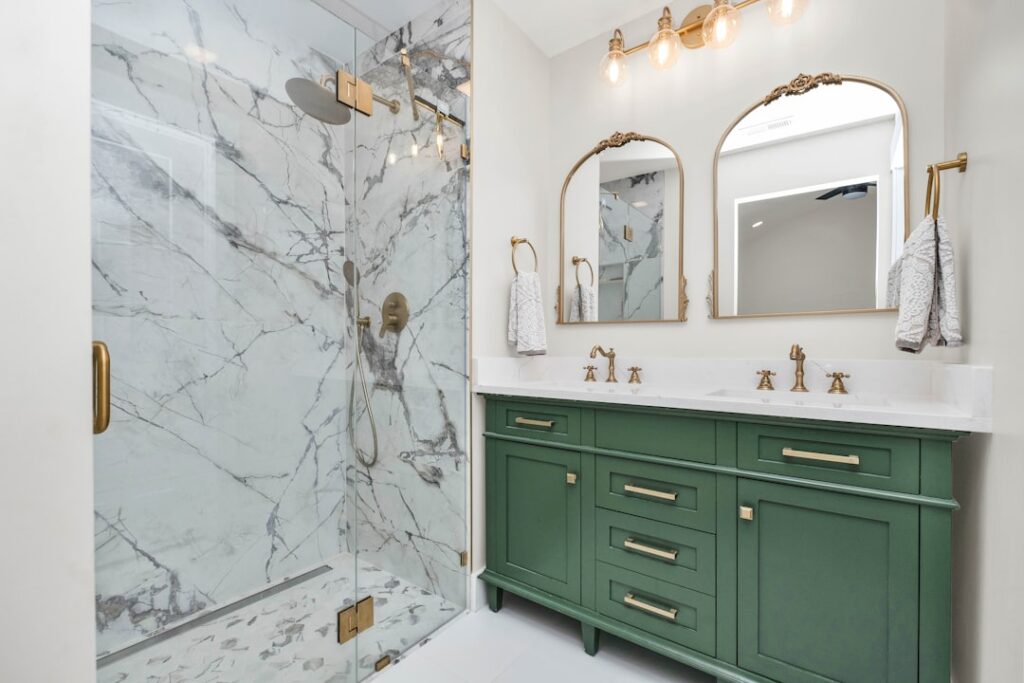
Upgrading a tired bathroom often starts overhead, and the sparkpod shower head has earned attention for its high-pressure spray, rainfall coverage, and tool-free installation. This guide breaks down the flow rates, features, installation steps, and maintenance so you can decide whether this style of fixture is the right fit for your shower.
Part of our Bathroom Remodeling & Flooring guide — explore the full guide →
- What It Is
- Flow Rate and Water Use
- High-Pressure Design
- Self-Cleaning Nozzles
- Rainfall Coverage
- Finish Options
- Easy Installation
- Step-by-Step Setup
- Cost and Value
- Cleaning and Maintenance
- Fixed vs Handheld Versions
- Spray Pattern Settings
- Compatibility With Your Plumbing
- Improving a Low-Pressure Shower
- Water Conservation Considerations
- Matching the Head to Your Bathroom Style
- Troubleshooting a New Install
- Common Mistakes to Avoid
- Longevity and What to Expect
- Comparing to Premium Fixtures
- Final Thoughts
What It Is
This is a wall-mounted rainfall-style shower head designed to deliver broad, drenching coverage with strong pressure. It typically features a wide square or round face, an adjustable ball joint for angling the spray, and a finish range that includes chrome, brushed nickel, and matte black. The design aims to mimic a luxury spa experience at a budget-friendly price.
Flow Rate and Water Use
Like most modern shower heads sold in the United States, these units are built to the federal maximum of 2.5 gallons per minute, with some regions requiring 1.8 GPM. The internal design channels that regulated flow to maintain a strong-feeling spray. Choosing a WaterSense-labeled model, where offered, cuts water use while preserving pressure through efficient nozzle engineering.
High-Pressure Design
The appeal of this fixture is its ability to feel powerful even at a capped flow rate. It achieves this by directing water through precisely sized nozzles that increase velocity. If your home has low water pressure, a pressure-optimized head like this can noticeably improve the shower feel compared with a basic builder-grade fixture, though it cannot exceed your home’s actual supply pressure.
Self-Cleaning Nozzles
The face is usually lined with flexible silicone rubber nozzles that you can rub with a finger to dislodge mineral buildup. This self-cleaning feature is valuable in hard-water areas, where limescale otherwise clogs jets and weakens the spray. Regularly wiping the nozzles keeps the water pattern even and the pressure consistent over the life of the fixture.
Rainfall Coverage
The wide face, often 6 to 8 inches across, produces a rainfall pattern that covers more of the body than a compact head. Combined with the angled ball joint, this delivers an immersive, soaking shower. The larger surface area is what gives the fixture its spa-like character, making it popular for those who want a relaxing, drenching experience.
Finish Options
Available finishes typically include polished chrome, brushed nickel, oil-rubbed bronze, and matte black. Matching the finish to your existing faucet, handle, and towel bars creates a cohesive bathroom look. Matte black and brushed nickel hide water spots better than polished chrome, which shows fingerprints and mineral marks more readily and needs more frequent wiping.
Easy Installation
One of the biggest selling points is tool-free installation that most homeowners complete in a few minutes. Unscrew the old head from the shower arm by hand or with a wrench, wrap the arm threads with plumber’s tape to prevent leaks, then hand-thread the new head on and snug it. No plumber is required for a standard threaded shower arm.
Step-by-Step Setup
First, turn the shower arm counterclockwise to remove the old head, holding the arm steady so you do not loosen it from the wall. Clean any old tape and debris from the threads. Wrap fresh plumber’s tape clockwise around the threads two or three times. Thread the new head on by hand until snug, then test for leaks and tighten slightly more if needed.
Cost and Value
These heads are positioned as an affordable upgrade, commonly priced from $20 to $50 depending on size and finish. That places them well below premium designer fixtures while offering a similar rainfall look. For the money, they deliver a meaningful improvement over a basic fixed head, which is why budget-conscious remodelers favor them.
Cleaning and Maintenance
In hard-water homes, rub the silicone nozzles periodically to clear scale. For a deeper clean, unscrew the head and soak it in a bowl of white vinegar for 30 minutes to dissolve mineral deposits, then rinse. Wipe the finish with a soft cloth to prevent water spots. This simple routine keeps the spray strong and the fixture looking new.
Fixed vs Handheld Versions
These heads come in both fixed wall-mounted and handheld styles, and some kits pair a large rainfall head with a detachable handheld on a slide bar. Fixed heads deliver the classic drenching overhead experience, while a handheld adds versatility for rinsing, cleaning the shower, or bathing children and pets. If you want both, a combo setup with a diverter lets you switch between the rainfall head and the handheld wand as needed.
Spray Pattern Settings
Many models offer multiple spray modes selected by rotating the outer ring, typically including a full rainfall drench, a concentrated massage pulse, and a gentler mist. The massage setting concentrates flow through fewer nozzles for a stronger, targeted stream, useful for sore muscles. Having several patterns in one head lets different household members tailor the shower to their preference without swapping fixtures.
Compatibility With Your Plumbing
These heads fit the universal 1/2-inch threaded shower arm found in virtually all American homes, so compatibility is rarely an issue for a straightforward swap. If you have a handheld setup or an unusual arm, verify the connection type before buying. Homes with very low static water pressure, below about 40 PSI, will still see limited results, since no head can create pressure the supply does not provide.
Improving a Low-Pressure Shower
Before blaming the fixture, rule out other causes of weak flow. A clogged filter screen at the head inlet, a scaled-up spray face, or a partially closed supply valve can all sap pressure. Some users also remove or clean the internal flow restrictor where legal to boost flow, though this increases water use. A pressure-optimized head plus a clean supply path usually yields the strongest possible shower for your home.
Water Conservation Considerations
Even a high-pressure head must respect federal flow limits of 2.5 gallons per minute, and some states cap it lower. A WaterSense-labeled model, where available, uses no more than 2.0 gallons per minute while maintaining a satisfying spray, potentially saving thousands of gallons a year for a family. Choosing an efficient head lowers both water and water-heating bills, making the modest purchase price pay back over time while still delivering a strong shower feel.
Matching the Head to Your Bathroom Style
The shape and finish of the head should complement your bathroom’s design. A large square face reads modern and architectural, while a round head feels classic and soft. Coordinate the finish, chrome, brushed nickel, matte black, or bronze, with your existing faucet, handle, and towel bars for a cohesive look. Since the head is a focal point at eye level, matching it to the room’s style elevates the whole space beyond just improving the spray.
Troubleshooting a New Install
If your newly installed head leaks at the connection, the fix is almost always more plumber’s tape or slightly snugging the joint by hand. Weak or uneven spray right out of the box usually means the packing plug or a protective film was left in place, or debris entered during install. Remove the head, check for obstructions, and rinse it before reattaching. Most first-install issues resolve in minutes without any special skill or tools.
Common Mistakes to Avoid
Skipping plumber’s tape leads to drips at the threaded joint. Overtightening can crack the plastic connector. Ignoring nozzle cleaning lets hard water clog the jets and kill the pressure. And expecting a shower head to overcome genuinely low household water pressure sets false expectations, since the fixture works with, not against, your supply.
Longevity and What to Expect
Budget rainfall heads are generally durable for their price, with the main wear points being the silicone nozzles and the threaded connector. With regular descaling, a quality unit lasts several years of daily use. The finish may show water spots or fade faster than on premium fixtures, but the spray performance holds up as long as the nozzles stay clear. Setting realistic expectations for a value-priced head means appreciating strong everyday performance rather than heirloom-grade construction.
Comparing to Premium Fixtures
Against designer shower heads costing several hundred dollars, a budget rainfall head trades some finish quality and warranty coverage for a dramatically lower price. Premium fixtures use solid brass bodies and refined internal engineering, while value heads rely more on quality plastics. For most bathrooms, the difference in daily shower feel is modest, which is why budget rainfall heads have become popular for rental units, guest baths, and cost-conscious remodels where the spray matters more than the badge.
Final Thoughts
The sparkpod shower head offers a budget-friendly path to a rainfall, high-pressure shower with tool-free installation and self-cleaning nozzles. Wrap the threads with plumber’s tape, keep the nozzles clear of scale, and match the finish to your bathroom, and you will enjoy a noticeable upgrade for a modest price.


